


















A new survey from EVA England has found that the cost of public charging is the biggest barrier to EV transition.
The survey of 1,668 drivers found that EV drivers were overwhelmingly satisfied, but those without driveways were facing higher costs, lower confidence and major barriers to switching.
While nearly nine in 10 (87%) of drivers with driveways found their EV “much cheaper” to run compared to a petrol or diesel car, only half (50%) of drivers without a driveway agreed. EVA England says the gap risks leaving millions of households behind in the country’s transition to EVs.
The findings come from its annual Steer the Conversation survey which, for the first time, included not only EV drivers but also hybrid, petrol and diesel drivers.
Similar to last year’s survey, EV drivers reported overwhelming satisfaction rates: 95% would recommend an EV to friends and family, and 69% felt the public charging network has improved in the past year. Among petrol and diesel drivers, two-thirds (66%) said they are considering a switch to electric, while 62% of hybrid vehicle drivers said their next purchase would be fully electric.
However, 60% of petrol and diesel drivers without off-street parking said they would never consider an EV; versus 43% of those with a driveway.
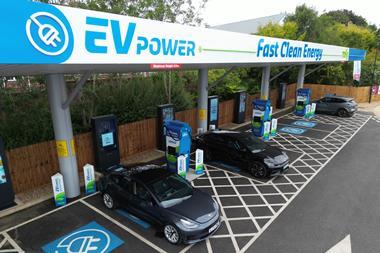
Public charging remains substantially more expensive than home charging, costing up to 10 times more: average prices for public charging are 48p per kWh compared to 32p at home, but in some cases can reach 98p per kWh, while home charging can be as low as 8p per kWh. Public charging also carries a fourfold VAT penalty, taxed at 20% compared to 5% for domestic electricity.
One EV driver surveyed described the situation as deeply unfair: “With the exception of public charging costs, EVs are great to drive. But they still need to vastly improve the infrastructure and drastically reduce the cost of public charging, which, currently is obscene.”
Another said: “An EV makes no financial sense for people who don’t have access to home charging.”
EVA England chief executive, Vicky Edmonds, says: “If this transition is to be truly fair, affordable and accessible, it must work for every driver, wherever they live and whatever their circumstances. The driver’s voice needs to be at the centre of how we build the electric future.”
While the report acknowledges that the government is taking steps to expand access, it warns that the pace of progress must accelerate.