














Greater use of unmanned sites, upweighted loyalty schemes, and technology adoption to reduce costs, are among our sector specialists’ predictions for how forecourt retailing will change in 2026.
Gordon Balmer, executive director of the Petrol Retailers Association
As we turn our thoughts to 2026 there will be further challenges to be overcome, however I believe our sector can adapt to these and grow. As I have travelled around the UK, I have been pleased to hear that demand for acquiring forecourts is extremely high. UK and international investors are still after good quality real estate to develop the latest on roadside retail offers.
I expect to see:
- Further development of the roadside retail offer making forecourts a destination shoppers will want to include as part of their daily shopping mission
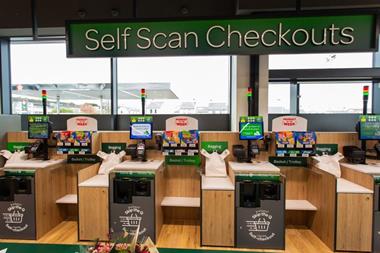
- The requirement to cut operating costs which can be achieved through implementing technology such as self-scanning checkouts and electronic shelf labels
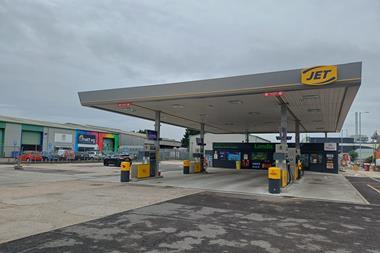
- Conversion of existing manned forecourts into unmanned
- Using data to identify and reward loyal customers
- Lower oil prices with many commentators predicting prices to fall below $60
- Further tax rises on the back of minimal growth in the economy
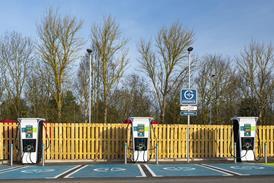
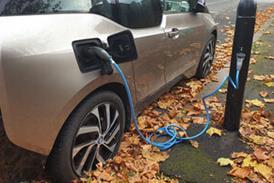
- Slowing down of demand for EVs, with increased tax
- There are strong rumours that the EU will be pushing back the date by when new ICE vehicles can be sold from 2035 to 2040. This may put pressure on our government to review this again
As our sector has shown previously it is resilient and can adapt to change and therefore, I am very confident that we will continue to have a bright future.
Tom Buckley, Pricewatch Group’s general manager
My main prediction for 2026 is that forecourt operators will increasingly look to non-fuel, high-margin services to protect profitability, with jet wash becoming a bigger focus. Rising costs and limited availability of labour mean operators will favour assets that can operate reliably with minimal staffing while still delivering strong returns from relatively small footprints.
Naz Zokiuddin, chief executive of Refuel Forecourts
I think 2026 will really show the difference between operators who modernise and those that stick to old models. Costs are rising, staffing is tough, and customers want a quick, simple, reliable service – so we’ll see a much bigger move towards tech-driven, lower-overhead sites. Automation will become far more normal. It’s a big change, but a positive one that makes businesses stronger and gives customers exactly what they expect today.
Tom Dant, Gill Marsh Forecourts’ managing director
Trading might start to get a bit more challenging in 2026, with volumes already having tightened up a bit last year with the effect of the Budget kicking in and people having less money. As a result, we are more sensitive on our prices, providing value for money to make our stores more of a destination, rather than for distress purchases.
Ramsay Macdonald, industry consultant
We have to see what transpires with the Fuel Finder scheme as and when it launches. I am as sceptical as anyone else, and don’t see any benefits for drivers. Without fines being imposed on operators, I can’t see how it can pay for itself. The comment in the Budget on ‘rip-off’ fuel retailers just sounded like pure deflection from HMG. It may be time to reconsider whether having a price sign at all locations is necessary, and to question whether displaying pole prices is now the most effective way to communicate your pricing message. I remember when Shell replaced all prices on pole signs with advertising in the 80s.
Steve Rodell, managing director – retail & leisure, Christie & Co
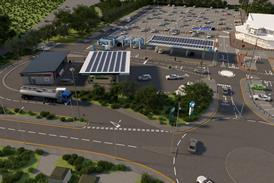
Despite challenging conditions for high street retail, the forecourt sector thrived in 2025, attracting strong demand from both operators and investors. In 2026, we expect this momentum to continue, driven by consolidation within the sector as smaller sites are repurposed and larger sites redeveloped to create multi-purpose destinations with enhanced convenience offerings.
Encouragingly, banks remain confident in lending for acquisitions and redevelopment, supported by the sector’s diversification and the extended relevance of fuel-powered vehicles amid delays in EV adoption due to limited incentives and consumer constraints. This financial backing reinforces the market’s stability and adaptability, positioning forecourts as resilient, multi-revenue assets.
We expect demand will continue to outstrip supply in 2026, maintaining the ‘seller’s market’, and we anticipate more group deal activity over the coming year. Overall, we view these trends positively, as they present opportunities for operators to diversify, innovate, and future-proof their businesses.
Guy White, managing director of The Laurels
2026 will be the time to really analyse the business and where possible make it fitter. It’s time for the gym, to ensure we are in the best possible position. From till rolls to toilet rolls we need to be buying correctly, and making sure that our suppliers are giving us the best possible deal. We need to see if we can negotiate better terms for ourselves and give more loyalty. Obviously we have major challenges ahead, all business has: rising costs, rising crime, Fuel Finder, business rates, staff increases. We really need to take more time with our systems, and ensure we are doing absolutely everything we can to make us efficient as possible.
Shilan Raja, director of Highway Stops Retail
Highway Stops Retail predicts that the Fuel Finder government scheme will be a waste of time and effort, and will cost the industry money for no gain to any stakeholders, including customers. Fuel retailers do not try to hide pricing from consumers, hence the six/eight metre poll signs in front of forecourts clearly displaying the price.
EG On The Move’s commercial director Ilyas Munshi
For me, it will be interesting to see how the government’s proposed Fuel Finder scheme will operate and be received by forecourt operators and motorists. The commitment is there from all stakeholders, but whether it will drive pump prices down or make them more competitive, only time will tell. However, I am looking forward to drivers being able to have access to live fuel price information through third-party apps and navigation systems.
Vicky Hennessy, chief executive of Penny Petroleum
A positive prediction would be for the UK government to match Europe with regards to the roll-out of ICE cars until 2040, giving stability to both the car manufacturers and those in our industry. Regardless of this, there will continue to be continued diversification within the sector, as the full breadth of services continue to be explored and provided. This will be further supplemented by companies such as ours embracing technology to drive performance and efficiencies in the face of ever rising costs of business.