











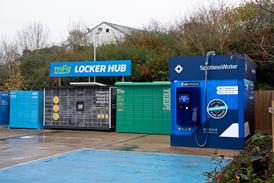








Park Garage Group (PGG) is the first forecourt operator to use the full Evenlode Edison scoping service to establish likely EV charging demand at a specific location, in a move that it says will help justify its ambitious electric roll-out programme to its shareholders.
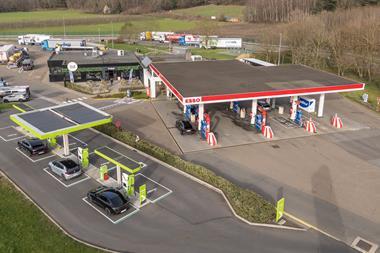
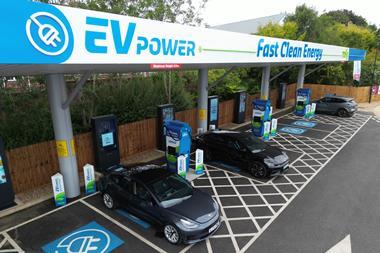
The Top 50 Indie has identified charging as an area of development, having launched a best in class blueprint hub at Blackpool last autumn. It used the Edison ‘demand model’ to identify the opportunity at its Yeoman Service Station in Maidstone, one of several sites it has chosen to follow in its self-funded programme this year.
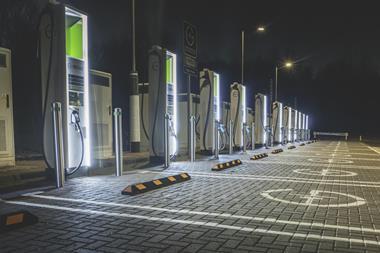
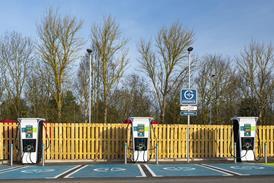
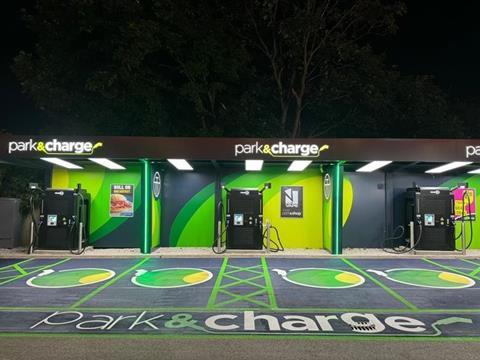
Given the size of the investment – Blackpool cost the operator upwards of £100,000 for a new sub station, three double-sided 480kW ultra-fast chargers, and a lit canopy – Evenlode says that it was important to establish likely charging demand for the next few years both at the Maidstone location, and the wider area.
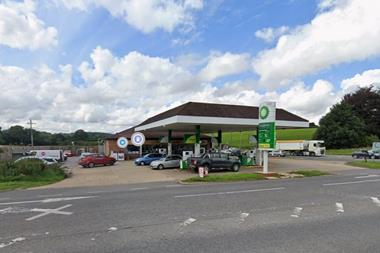
The Shell/Park & Shop site on the A20 Ashford Road is one of half a dozen sites to use the fledgling service which was launched last year, but it is the first to ask for an in person onsite and local assessment, as well as the standard desktop report.
The plan is for PGG to introduce EV charging at Yeoman Service Station by November, alongside expanding the shop, upgrading the valeting offer, and introducing new pumps.
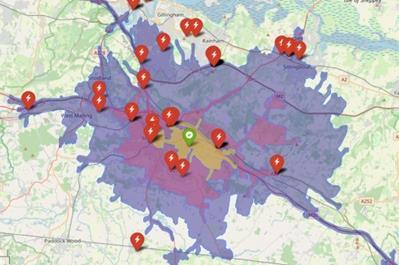
Property consultancy Evenlode says that its Edison model, developed with not-for-profit low carbon specialist Cenex is the “only truly independent assessment” which can show the number of electric vehicles in a specific trading area, and how this is expected to grow. This is based on demographics, as well as current and future competition, including home charging.
It uses various forms of licensed data to provide a report. This includes input on EV vehicle uptake by region, various chargepoint registries, local authority charging availability, journey types, traffic flows, prominence of vehicle types and battery capacities, and driver behaviour studies.
Evenlode managing director Philip Reese says that actually visiting locations adds another level of insight. “We spent the day at Yeoman and drove the trade area to both sense check the model data but to get a first-hand feel for how the site served fuel, shop and coffee customers as well as the best location for the chargers and the optimal number of chargepoints,” Reese says.
Industry consultant Ramsay MacDonald, who has been involved in the project, says that applying Edison across a clutch of operators so far has uncovered some interesting insights, including that around 60% of people charging their vehicles are likely to purchase items from the shop. “Contrary to popular belief, you will make more money on the energy than the shop,” says MacDonald. “Not everyone who buys a charge goes into the shop.”
Also, MacDonald says, many electric vehicles will not benefit from higher capacity chargers, and are only capable of taking a 100kW charge, which might determine the capacity of chargers that are put on sites.
“The real cost is not from the chargers themselves but in getting grid connection, and an operator asking for 800kW for four chargers may well be able to get away with 400kW. Of course, they may feel that they want to be ready when more cars have greater charging capability.”
“We are not telling operators what to do, rather we are saying here are some stats and figures to help inform decisions on how to approach EV charging,” says MacDonald.
As part of the service, PGG was given a live demonstration, followed by a deep-dive report, recommending margins for the charging and spin-off shop sales. PGG directors Manoj and Hemant Tandon were advised on the number of chargers to install, when customers were likely to charge, as well as likely turnover for the energy and shop for the next 10 years.
Significantly, the research identified what level of investment would give a payback in three to five years, says MacDonald, which he argues is “crucial information retailers have been lacking on EV installations”.
Other sites that PGG has identified for EV charging this year are Mogador in Surrey, and its flagship site in Rushden in Northamptonshire, also to be complete by November. Thinford in County Durham will follow later. And in an emerging market like EV providing limited market data to work from, PGG has been grateful for the Evenlode Edison service.
“The Evenlode team know our industry and do offer that independent approach without pushing a particular product or angle,” says operations director Hemant Tandon. “We already had an idea on what we might expect at Yeoman, but it was really very useful to see the demonstration of the Edison model and to really get a detailed view of the current and likely future increase in the number of BEVs [battery electric vehicles] in the trade area and where the competition is now and is likely to be,” he adds.
PGG finance director Manoj Tandon continues: “The live demo really helped and the quality and detail of the outputs, particularly on likely timing of charging and overall peak demand helps give comfort to our funders and shareholders that we are doing the right thing. I certainly learned more about how much the car dictates the speed of charge and I was even able to use some of the data in our annual report.”