













Convenience stores now account for over half of all cider sales as shoppers increasingly trade up to premium options. With independent retailers leading growth and premiumisation accelerating, the category offers significant opportunities for those willing to expand their ranges.
1. Cider and convenience go hand-in-hand
2. Cider is ready for the premium spotlight
3. Who is buying beer and cider?
4. Next-level premiumisation
5. Price-marked packs help with cost concerns
6. Does low and no still justify its space?
7. Multi-pack opportunity is growing
1. Cider and convenience go hand-in-hand
Beer and cider are always expected to perform well in convenience but cider is ready for its time in the sun.
According to the 2026 Westons Cider Report, the convenience channel accounts for 51.7% of total cider sales, up from 51.1% last year, while also outperforming the wider market with value growth of +1.8% year-on-year, compared with +0.6% across the category overall.
Sally McKinnon, head of marketing & strategy at Westons Cider, explains how vital the channel is for cider. “Convenience retailers are playing an increasingly important role in the cider category. As shoppers drink less but trade up in quality, the channel is well placed to meet demand for premium cider, trusted brands and formats suited to everyday drinking occasions.
“What’s particularly exciting is the scale of opportunity still ahead. With cider currently purchased by just 39.6% of UK households, more than 60% of shoppers remain outside the category, creating significant headroom for retailers to recruit new drinkers.”
Drilling further down in the channel, cider value sales in independents have grown +6.5% year-on-year, well ahead of the category overall. Symbol groups are also delivering growth, with value sales up +3.7%, while convenience multiples have declined slightly.
Despite this success, Westons believes there is more to come, particularly when it comes to premiumisation. Crafted cider currently accounts for just 18% of value sales in independent convenience stores, compared with 25% across the total category.
“Independent retailers are already outperforming the market and are in a strong position to unlock even greater value from cider,” says McKinnon. “Expanding premium ranges and giving greater prominence to quality apple and crafted ciders can deliver significant growth in the years ahead.”
Back to top
2. Cider is ready for the premium spotlight
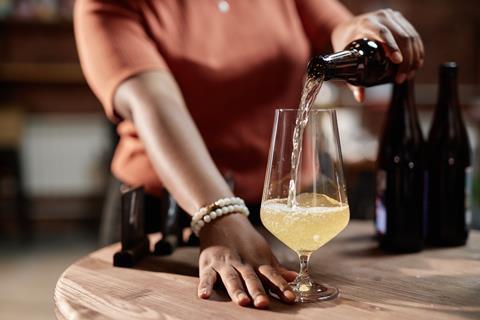
The average price per litre across cider has risen from £2.60 to £2.82 over the past two years, reflecting both inflation and a clear trend towards premiumisation.
It is the fastest-growing part of the market, increasing +7.6% year-on-year overall and +10.4% in convenience.
McKinnon adds: “Crafted cider is delivering disproportionate value growth. With a significantly higher price per litre than the category average, it taps directly into what today’s drinkers are seeking — drinks with provenance, authenticity, and flavour.
“Prioritising bestselling premium brands and ensuring strong availability represents a clear opportunity for convenience retailers to drive both value and margin.”
Alexander Wilson, category & commercial strategy director at Heineken UK agrees and adds that apple is still the key flavour trend. “Heineken UK has identified that apple cider is growing ahead of flavoured cider, with premium options also doing exceptionally well, even in times of economic hardship, when people don’t have as much disposable income to hand. This should signal to retailers that despite customers cutting corners in other categories, cider is potentially where they are willing to trade up.”
Back to top

3. Who is buying beer and cider?
Although one of the key categories in convenience, beer and cider needs to attract newer customers and retailers need to stay on top of what younger adults are looking for.
Steve Behan, general manager of Duvel Moortgat UK explains the importance of looking to the future. “Younger adult drinkers are reshaping the category. They’re more intentional in how they drink, seeking moderation without compromising on flavour, which is driving demand for lower-ABV and alcohol-free options. At the same time, they’re also more adventurous, actively looking to explore new styles, origins and flavour profiles, rather than sticking to the same few brands.”
Back to top
4. Next-level premiumisation
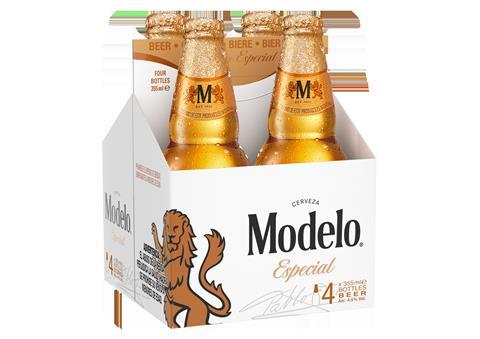
Not content with just premium as a sub-category, we’re now looking at ultra-premium options. Modelo Especial is launching into the UK off-trade. Modelo Especial is available in the grocery and convenience channels in a 12-pack and 4 pack of 355ml glass bottles, a four-pack of 440ml cans and 620ml single glass bottles.
Mark Wingfield Digby, UK off trade director of Modelo, explains: “We believe it is the right time to introduce Modelo Especial to UK consumers who value both tradition and modernity. With over 100 years of Mexican brewing expertise behind it and a contemporary, premium positioning, it is well placed to delight consumers in the UK, and we’re excited to build its footprint and share what we truly believe is a very special beer.”
Back to top
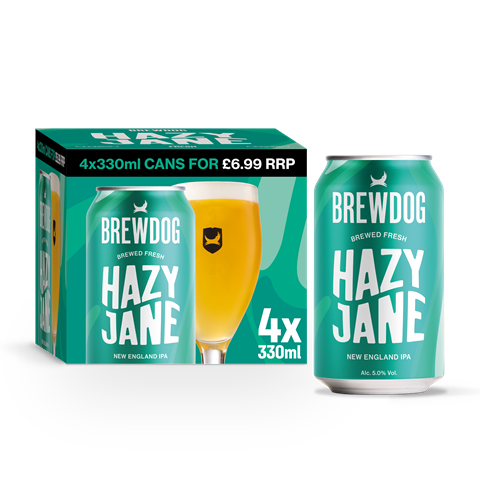
5. Price-marked packs help with cost concerns
PMPs certainly aren’t new to the category but their role is no less important in these cash-strapped times.
Georgia Ladbrook, shopper marketing manager – impulse at BrewDog, explains how PMPs have helped the category reduce consumer concerns.
“Beer is doing well across the convenience channel, but we know that shoppers continue to look for the best value as cost-of-living pressures remain. Luckily for the off-trade, this seems to have more impact on spend in the on-trade, with consumers choosing to stay home for their beer drinking occasions.
“However, with value a high consideration, we are seeing a lot more support for price-marked packs, which is driving solid growth for the beer category, delivering a higher perception of value to shoppers by providing clear and transparent communication of price from retailer to consumer.
”By displaying the price directly on pack, it removes any uncertainty or hesitation around cost, which is particularly important in independent retail environments where shelf-edge labelling can be inconsistent or unavailable. Price-mark packs also simplify execution for retailers, without the need for shelf-edge labelling and enabling a consistent price across all outlets, so they can be confident of the margin they will receive.”
Behan adds that consumers are looking for that affordable treat. “As cost-of-living pressures continue, a drink at home is seen as an affordable treat for consumers. Shoppers are becoming more intentional, they’re drinking less, but drinking better. That’s driving demand for beers that feel worth the spend, whether that’s through quality ingredients, heritage or a more distinctive flavour profile.
“Belgian beers are a good example of this, as they naturally deliver on both quality and value, giving shoppers a sense of occasion even in a single-serve convenience purchase. For brands like Chouffe where UK volumes are in strong growth, that’s where heritage and storytelling really come into play.”
Back to top
6. Does low and no still justify its space?
Low and no has been on an upward curve over the past few years, but according to Ladbrook, it still hasn’t peaked.
She says that more consumers are focusing on moderation or even abstention, with 43% reducing the alcohol content of the drinks they consume. This has led to a generational shift, with almost 40% of 18-25s not drinking alcohol at all vs 22% in 2019.
Moderation is now mainstream with three in four of us moderating our alcohol intake to some degree and the number of people looking to moderate alcohol consumption is similar in size to the number who consume alcohol once a week (77%).
“With the continued demand, we expect the low and no category to grow further and play a stronger role in shopper’s repertoire,” says Ladbrook. ”In fact, as more sober-curious shoppers expand their search for alternatives into additional channels, ensuring you have a quality range of low & no products to meet this demand, alongside alcoholic options is vital.”
With so many options available and space at a premium, how should retailers prioritise?
“We recognise that the AF [alcohol-free] range available currently is broader than the demand in this channel, so it can be difficult for retailers to know what and how many alcohol-free options is best for their store,” adds Ladbrook. “As a minimum stocking at least one alcohol free option for each style of beer available, such as alternatives to popular brands, will appeal to the new generation of drinkers and help contribute to overall sales growth.”
Behan says that the category is now looking at premium low and no options.
“Low and no continues to grow strongly in convenience and the wider category, driven by moderation trends and the need for more flexible drinking occasions. What’s key is that consumers aren’t willing to compromise on flavour, so brands that can deliver a full taste experience in alcohol-free formats are winning.
“That’s why we’re seeing strong interest in premium alcohol-free options that reflect the same brewing expertise and flavour profiles as their full-strength counterparts. For example, we’ve just evolved Chouffe Alcohol-Free to a full 0.0% ABV, alongside the launch of Chouffe Cherry 0.0%, extending those authentic Belgian flavours into more occasions without compromising on character.”
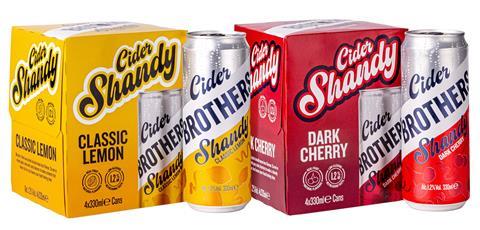
Even cider is getting in on the low and no opportunity. Brothers Drinks Co. is to launch a Cider Shandy range to complement its existing line-up of flavoured ciders.
Available in 330ml cans, Classic Lemon and Dark Cherry 1.2% ABV Brothers Cider Shandy variants will roll out during May, in time for the key cider season and ahead of the World Cup. Presented in four-pack card outers, the two flavours will retail on shelf at between £2.80 and £3.00.
Back to top
7. Multi-pack opportunity is growing
With summer about to hit and some major sporting tournaments approaching, more is more for shoppers and retailers. Wilson outlines where retailers should focus their attention.
“All pack formats in beer experience a massive jump in sales during peak seasons, including summer occasions, such as sporting events and festivals, alongside Christmas and New Year, where premium nights in come into the spotlight.
“We are seeing this growth in smaller and medium pack sizes, especially of cans, being driven by people making smaller, but more frequent, visits to stores. Smaller pack sizes are also more accessible for those who are walking to their local store, especially those located in busy town and city centres, where taking home larger multipacks might not be accessible.”
Asahi UK is looking to capitalise on this trend with a new 10x440ml format for Peroni Nastro Azzurro and a fourx440ml pack for Asahi Super Dry.
Rob Hobart, marketing director at Asahi UK, says: “Premium 440ml multipacks are the single biggest opportunity for convenience retailers’ take-home lager sales. The evolution of our multipacks marks our commitment to giving our retail partners the tools they need to drive sales and profits in a changing economic landscape.”




No comments yet