


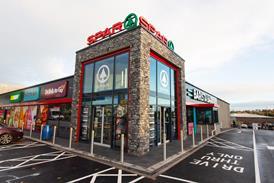


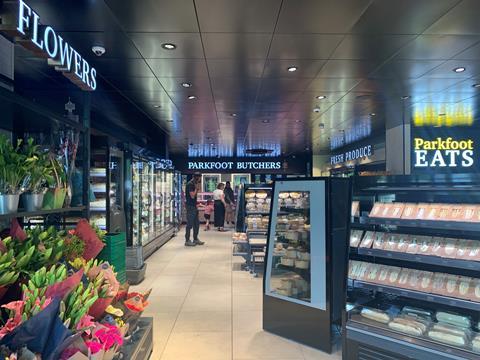
When David Charman revealed his £1m refit of his award-winning Spar Parkfoot Garage, he told Forecourt Trader that his biggest indulgence, and pride and joy, was the lighting.
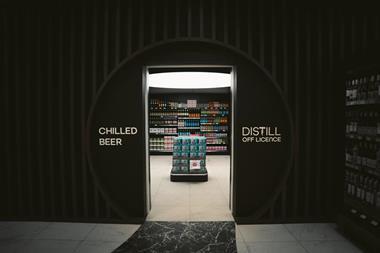
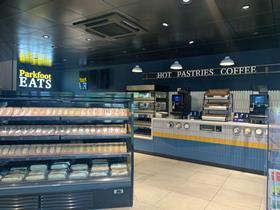
It comprises recessed lighting in a black ceiling which he says gives a “moody feel” to the store, with additional spotlights showing off the butcher and deli counters. Pendant lighting is used to make a feature of the hot food and drink station.
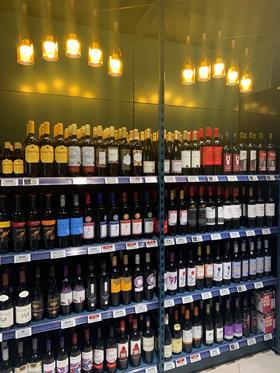
He wanted to avoid the harsh glare of bright white lighting seen in some stores, introducing a softer approach with a golden pocket of light in the premium wine section, where there are hanging faux wine bottle light fixtures.
We spoke to Charman and four other forecourt operators to get their tips on creating ambience, balanced against the security benefits of a brighter look.
David Charman, managing director of Spar Parkfoot Garage in West Malling, Kent:
“Lighting in convenience stores has become a vital part of the design. It’s been more than a decade since the changeover to LED saving us all money, but now there is an opportunity to make lighting really interesting and striking.
“The trend away from incredibly bright white light now means we can make our stores truly unique by lighting just the product and leaving darker areas that retain mood and contrast.
“This does come at a price, possibly 25% more expensive, but overall it is well worth it to stand out in the crowd.”
Patrick Sewell, managing director of Sewell on the go:
“I think natural light plays a part, for practicality and cost effectiveness, but then you need to be careful that the sunlight does not heat up the store and products.
“Feature lighting is important to disrupt customer missions and highlight products.
“Efficiencies of when lights are needed and are not should be a consideration, and being able to switch off certain lights is a good idea.
“Historically, I’ve sometimes struggled to justify upgrades and retrofits to lighting, but every time we have done so it has instantly improved the look and feel of the store.”
Naz Zokiuddin, chief executive Refuel Forecourts
“In a 24/7 forecourt, lighting is fundamental to how the shop performs. It determines how quickly customers understand the layout, read prices, and engage with promotions, while giving staff full visibility of the shop floor at all times. If lighting is inconsistent, customers hesitate, spend less time browsing, and higher-risk areas become harder to control.
”That’s why removing shadows, improving sightlines, and clearly defining key categories are non-negotiable in any refit. With lighting operating continuously, efficiency, reliability, and ease of maintenance are built into decisions from the outset to protect long-term costs and standards.
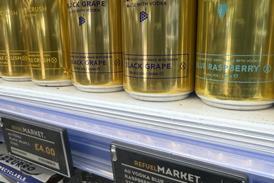
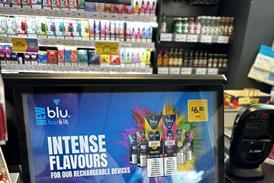
”Feature lighting is used with intent. We focus it on high-value and regulated categories such as alcohol and vaping, as well as promotional bays and front of store fixtures. Targeted lighting improves product and price visibility, supports compliance, and highlights promotions without relying on excessive signage or clutter.
”Our aim is a store that feels easy to shop, and well organised at any hour. Effective lighting helps customers move confidently through the space, quickly engage with key categories, and make faster decisions. From an operational perspective, it also supports security and staff confidence, particularly during late-night trading. When done well, lighting quietly supports saes performance and overall store perception.”
Jamie Wheeler, retail sales director at Tankerford:
”We go for a blend of modern LED linear lighting to keep aisles bright enough for a clean shopping experience for the customer, while using spotligts to highlight feature areas like in store bakery and promotional ends to give them some style.
”In some of our recent developments, we have used colour changing LED strips around the perimeter to appeal to a younger audience and add some theatre. Where we have features like Cook ready-meals we use other feature lights to make a statement on these areas.
”With LED lighting being so much more efficient than it used to be, the cost effectiveness of using lighting to enhance the overall refit is far easier than it used to be.
”We are always looking at how we can use lighting effectively in our future developments to set us apart from our competition.”
Sajeev Gowrinathan, director of Shinon Group:
”Great lighting makes a huge difference in shops. Personally, I hate any dark spots in the shop. Also I believe there is science behind how lighting influences customers’ purchasing behaviours.
“If we take Marks & Spencer or Waitrose, for example, they have different ’temperature’ lights at different categories. Fruit and vegetables will have warm ambient lighting where it uplifts the product appearance and make the products stand out.
“In our future shop developments, we will be focusing more on lighting and we will do work behind the pyschological piece that lighting has in customer purchasing behaviour.”