








Two suppliers of hot food vending machines, popular in universities, hospitals and train stations, are turning their attention to forecourts, as operators look to offer around-the-clock food to go.
SAR365 – the name stands for smart automated retailing – says unmanned sites, standalone electric charging facilities, as well as conventional petrol stations, will be among its targets when it introduces a revamped version of its existing machine later this autumn.
Backed by a new investor, the Mansfield-based business has developed what it describes as a next-generation oven that will heat a range of par-cooked and branded products, such as chicken wraps, pizza, and oriental food.
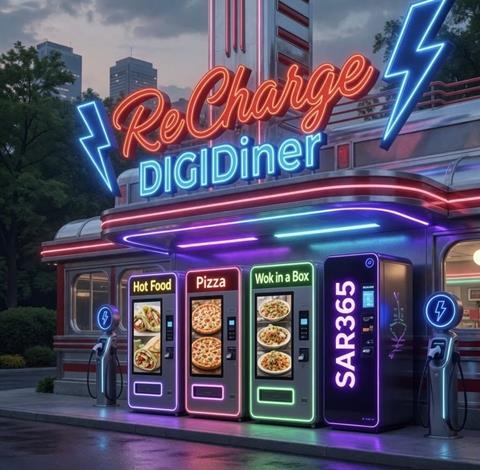
The vending specialist is developing a pick and mix ’ReCharge DigiDiner’ modular concept in which four or five machines create a fast food hub – with options for Chinese food, hot and cold drinks, soft serve ice-cream, and smoothies.
Co-founder Walter Gill says that by heating food that is already 80% cooked the equipment will deliver a more satisfactory eating experience than microwave and infra-red models on the market.
“We have got a better way of reheating products – and are working with two major brands, one of which is already in the forecourt sector, and the other that wants to be, which will be announced next month,” says Gill.
“Our job is to make sure that the food is as good as or better than is available in a shop – with a cooking method for a wide range of products which fits with customers not wanting to wait for any longer than three or three and a half minutes. For if a consumer has a bad experience then they won’t come back.”
While hot food vending machines are still an infant technology in the forecourt sector, ME Group has already entered the market, having introduced hot pizza machines at a handful of SGN urban sites.
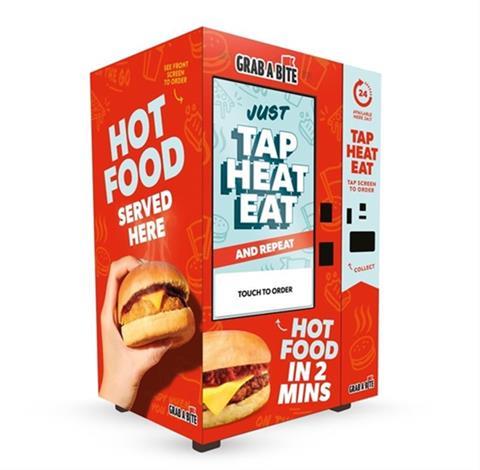
Kepak, responsible for the Rustlers burger and hot snacks brand, has its own machine live in a variety of sectors across the UK. It is yet to enter the forecourt world with the concept which it has identified as an area of potential growth.
So says its account controller – automated retail & new business, foods divsion, Carl Hunter: “Hot food vending has the potential to become a significant growth channel across UK forecourts.”
He adds: ”The scale now emerging in the US shows how automated food-to-go can increase choice, convenience and sales without the space or staffing requirements of a traditional kitchen. With an 11-product range, our machines can generate up to £40,000 a year and with a potential rollout to 45 UK sites in early 2027, we believe the opportunity is substantial.”
Matt Cundrick, chief executive of food to go consultancy FTG Navigator, says that in the UK hot food vending has already “stopped being a novelty and started being infrastructure”.
“ME Group’s Revolution Pizza units have shown what happens when you put a proper hot product into dead space on a forecourt: induction-baked, in the customer’s hand in under five minutes, at two in the morning, with no colleague on the floor,” he says.
He points out the success SAR365 has had in the healthcare sector, including with outsourcing company Sodexo at the Royal Stoke University Hospital, where it has created an automated food court to feed nightshift staff after the canteen has closed.
”That is the real lesson for our sector,” he says. ”Vending does not compete with your food to go counter; it trades the hours your counter cannot. A forecourt open 24 hours with a hot offer available 14 of them is leaving money on the pavement.”
He adds: “As we’ve said many times at FTG Navigator, the winners in forecourt food-to-go over the next three years will not be the ones with the biggest kitchens. They will be the ones who work out how to trade hot food profitably at 3am with nobody behind the counter.”