













The new Deposit Return Scheme (DRS) for drinks containers is coming to all parts of the UK, with a launch date of October 1, 2027. Robert Botkai, senior partner at Winckworth Sherwood, explains how the scheme will work and what it means in practice for forecourt operators.
What is a Deposit Return Scheme?
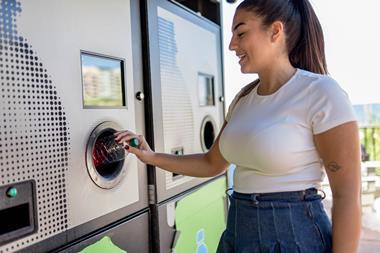
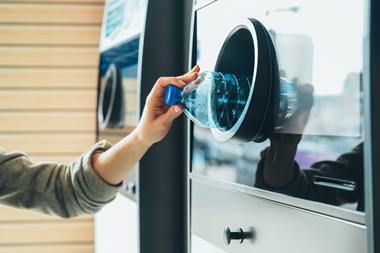
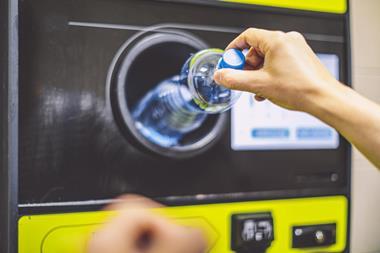
The DRS will charge consumers a deposit when they purchase drinks in single-use containers — such as plastic bottles or cans — which is refunded when the container is returned. Customers will be able to return empty containers either to a shop or to a reverse vending machine (RVM).
DRSs are common across Europe. Germany has demonstrated that a return rate of up to 98% can be achieved on both plastic and glass containers, with the European average starting at 90%. Indeed, those old enough to remember may recall smaller-scale deposit return schemes run by individual companies in the UK in the 1960s and 70s.
Why is the government introducing a DRS?
The concept of the DRS was first introduced by the then Conservative government in its 25-year Environmental Plan, published in 2023. According to that Plan, UK consumers use approximately 14 billion plastic drink bottles and 9 billion cans annually, and the government expects the DRS to reduce litter and improve recycling.
How will the scheme be run?
The UK Deposit Management Organisation (DMO) was appointed in May 2025 to run the scheme in England, Northern Ireland and Scotland, setting deposit levels and overseeing compliance. The DMO is trading under the name Exchange for Change and is currently running a series of informative webinars for stakeholders to learn more about the scheme.
Environmental regulators will be responsible for enforcing the scheme, including the Environment Agency, Trading Standards and their equivalents across the devolved nations. Businesses who fail to comply with the DRS may be liable to a fine.
Which containers are caught?
In England, Northern Ireland and Scotland, single-use drinks containers between 150ml and three litres made from PET plastic, steel and aluminium will be included. Glass will not be included due to concerns regarding safety, storage and recycling quality. Wales, however, will include glass bottles in its scheme — initially without a deposit — and also plans to introduce a re-use scheme as part of its DRS.
The deposit
The DMO has announced that the deposit will be set at 20p per container. The DMO has taken into account factors including the size of containers, whether they are sold individually or in multi-packs, collection targets, buying behaviour, consistency of communication, and affordability and fairness.
The handling fee
The DMO has also announced that the fees that will be paid to retailers (the Return Handling Fee) will operate on a tiered basis as follows:
- Tier one: 5p per container, up to 225,000 in-scope items returned annually
- Tier two: 1.3p per container, for annual in-scope returns in excess of 225,000
What do forecourt operators need to do?
Retailers must host a return point for drinks containers (unless they qualify for an exemption), register with the DMO, pay the deposit back to customers at the point of return via voucher, cash or card, and store returned containers for collection — either manually or via an RVM. They must also display information about the DRS, display the cost of the deposit separately from the cost of the drink, calculate the unit price exclusive of the deposit, and ensure that all scheme containers sold carry the DMO logo and the correct barcode.
Businesses in urban areas with retail space under 100m² are automatically exempt from hosting a return point. Others may apply for an exemption if they are nearby another return point or if it is not practical to host one due to factors including the design, size or construction of the premises. There is, however, no clear definition for ’nearby’ or ‘urban’, and the criteria for a successful exemption application are not yet known.
The DMO has also proposed a further exemption whereby it is intended that all urban retailers between 100m² and 199m² of sales area and rural retailers under 200m² of sales area would be able to apply on this ground for exemption on the basis of their physical space limitations.
A retailer selling own-branded drinks caught by the DRS will be considered both a retailer and a producer and will effectively have to charge a deposit to itself and then pay itself back the deposit. Further clarification from the DMO is awaited on how this will work in practice.
Food-to-go and on-site consumption
Many forecourt businesses now include food-to-go outlets or cafés. Businesses selling drinks for immediate consumption on the premises are exempt from the requirement to host a return point and charge customers a deposit. However, these businesses should still store and collect scheme containers sold to reclaim the deposits they paid to the producer, manufacturer or wholesaler when purchasing stock. To reclaim those deposits, hospitality businesses have two options: either charge the deposit at the point of sale and install an RVM, or collect and store containers and account for these to the DMO to reclaim their deposits.
Online sales
Online retailers are under the same obligation to charge deposits as physical retailers. Customers can return their containers to any physical return point, but the government is encouraging businesses to register with the DMO as a takeback service provider, collecting the empty containers from the point of delivery.
Proposed Grant Scheme
The DMO is intending on developing a targeted grant scheme which will be aimed at small, independent retailers to assist with the cost of RVMs.
The grant is proposed as £6,000 per site, structured as three annual payments of £2,000. The DMO will set aside a total of £60m to provide grants over the first three years of scheme operation.
The eligibility requirements to obtain the grant are not yet known.
Practical considerations
Businesses may need to amend the layout of their premises to accommodate collection points, which could trigger a requirement to apply for a minor variation to update the layout plans attached to their premises licence. Forecourt operators should consider early on where an RVM or manual collection point could be sited on their premises.
The government has proposed introducing permitted development rights for the installation of RVMs, meaning that retailers will not need to submit planning applications. This follows the position already in place in Scotland, where permitted development rights allow for the installation of RVMs of specified measurements in shops without a full planning application.
The government is also proposing special VAT rules to cover the application of VAT on goods caught by the DRS, in order to avoid complex VAT adjustments for every deposit refunded throughout the supply chain.
For franchise businesses, the DMO has confirmed that it is the responsibility of the franchisee, not the franchisor, to register with the DMO and comply with the regulations. We expect this to apply equally to the commission operator model and we are in touch with the DMO to see how this will work in practice.
We are concerned that retailers could be left holding non-compliant stock on October 1, 2027. This seems onerous and we are waiting for the DMO to confirm that there will be a run-off period for retailers to sell off stock that is not DRS ready. This will lead to a two-tier price point in stores, so watch this space for more information on this.
Conclusion
Registration will begin through portal access on the DMO’s website later in 2026, and all producers and retailers must register before October 1, 2027. The scheme represents a significant operational and logistical shift for the trade. Now that the deposit has been confirmed at 20p per container, forecourt operators should begin planning for the changes — considering where return points will be sited, how containers will be stored and collected, and whether any planning applications or premises licence variations will be needed.
We will be watching developments closely and updating readers as more detail emerges. Let us hope that the DMO and the government provide sufficient lead-in time so that the trade is not caught short!
- Robert Botkai is the senior partner and head of Commercial Real Estate and Licensing at Winckworth Sherwood LLP.
Neither of Winckworth Sherwood or Forecourt Trader shall be liable for any decision or action taken on the basis of this column. Nothing in this article constitutes legal advice or gives rise to a solicitor/client relationship. Specialist legal advice should be taken in relation to specific circumstances.