




















Many, many years ago I got the lead in the school play, the production of which was overseen by a husband-and-wife teacher duo who would alternate taking our weekly rehearsals. The problem this presented was that one week the wife would tell us to do one thing, while the following week her husband would tell us to do the opposite, making knowing how to act rather challenging. Bear with me on this, because there are distinct parallels with UK EV policy.
Only last week we saw the capital’s mayor, Sadiq Khan, announce that, from next year, electric cars will no longer be exempt from the Congestion Charge. Okay, so EVs will get a slight discount over other cars, and sure, even Londoners avoid driving in the centre of town if they can, but optics matter, and this wasn’t the only new cost for battery-powered cars to have made headlines of late.
Tax, tax and more tax
Earlier in the month it was reported that the forthcoming Budget will see pay-per-mile road pricing introduced for EVs to offset the revenue from the fuel duty they don’t generate, while the exemption from road tax for new EVs ended in April this year, hitting them with the same annual £195 rate that’s applied to everything from a Rolls-Royce to a MINI. There’s also the ‘expensive car’ road tax supplement, which now also applies to EVs, adding an annual £425 to their cost if they were £40,000 or more when new.
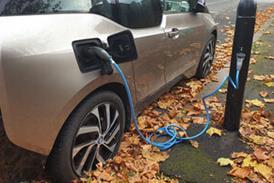
We must consider VAT on charging, too, with an attractive 5% rate for home leccy, and a punitive 20% one for public points. And the latter are only set to get pricier, as changes to business rates mean chargepoint providers will soon have have to pay tax on the land from which they operate, with these costs ultimately passed down to drivers.
Before they even begin to think of what car they might want, any would-be EV convert is therefore likely to have myriad browser tabs open as they weigh up the potential tax implications of making the switch.
On the other hand, bungs galore
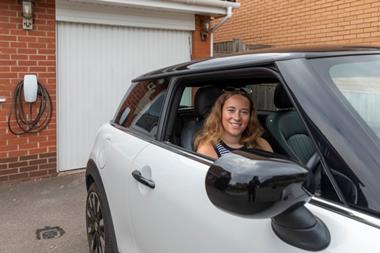
Yet while the government taketh away, it also giveth: this summer the Department for Transport launched a new £650m grant for private EV buyers that knocks up to £3,750 off the cost of a new car, while those who enjoy salary sacrifice schemes continue to get vast bungs that can cut the cost of these cars in half.
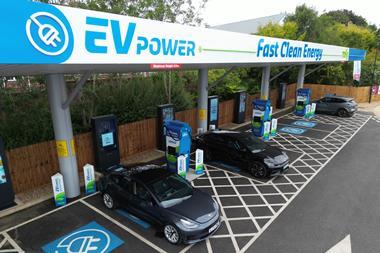
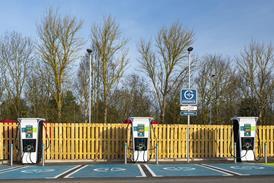
Add in the £400m chargepoint fund to bolster public plugs, the £200m earmarked to encourage electric HGVs, the 100% first-year capital allowance on business EVs and the workplace charging tax exemption, and, just authorities apply countless charges to electric cars, there appears to be no end to the river of cash that flows towards them.
It must cost many millions to administer these schemes, which inefficiently give money out from and put money into what is ultimately the same central pot of taxpayer cash. But I suppose this contradictory financial landscape shouldn’t be a surprise, because the UK’s EV project has been dysfunctional from day one.
I was working on the newsdesk of a motoring magazine when Michael Gove took to Radio 4 in 2016 to announce, seemingly off the top of his head, that petrol and diesel cars would soon be extinct. There were no documents to accompany this significant pronouncement, no briefings to journalists and no clarity from government press officers, who seemed as in the dark as I was when I phoned them (“Hybrids? Erm, not sure.”)
With at least six changes to the main 2030/2035/2040 (which one is it this week?) policy since then, and the hodgepodge of tax rules detailed above, businesses and consumers alike continue to be treated just as my acting cohort was back in the 1990s, pulled from pillar to post by those in charge.
Symptoms of a deeper malaise
I suspect this political psychodrama is partly down to the short-term thinking intrinsic to our five-year parliamentary terms (minus one year to settle in, and another to campaign for re-election) and partly due to the hold-your-nose distaste cars seem to provoke amongst ministers, but there’s also a bigger issue at play.
The constant tax tweaks and contradictory messages that surround EVs are indications that the foundational policy of banning sales of new petrol and diesel cars is simply wrong. There would be no need for such tinkering if most people wanted these cars, but they don’t, because while great for some, electric cars don’t suit the majority of drivers’ requirements. Ministers must therefore try to push water uphill by forcing the market, which is a fool’s errand if ever there were one.
This is all the more frustrating given the UK’s 34m cars put out so little carbon dioxide in global terms that two large coal-fired power stations (Bełchatów in Poland and Vindhyachal in India) dwarf their emissions each year.
It is high time those at the top change the script, allowing, at the very least, hybrids to be sold in perpetuity. Because while the artistic tension of my rehearsals resulted in a well-received play, this is real life, and we’re not at school any more.