


















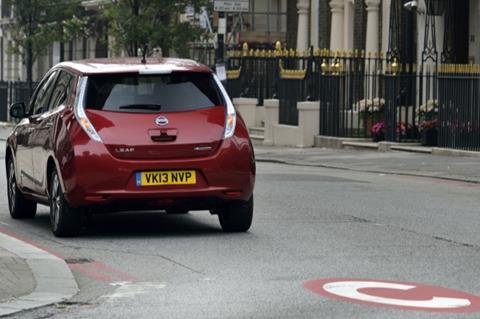
Transport for London has announced that drivers of battery-powered cars will have to pay the Congestion Charge from next year, when the cost of the tariff will also increase by 20%.
As well as EVs being subject to the Congestion Charge (CC) for the first time, January 2, 2026 will see the charge’s fee rise from £15 to £18, with the Mayor of London, Sadiq Khan, claiming the measures are necessary to prevent “2,200 more vehicles using the congestion charging zone on an average weekday next year”.
EV drivers will get a 25% discount on the charge from 2026 to 2030, bringing the cost down to £13.50, with a 12.5% discount applying from the new decade, for a £15.75 charge.
While the Congestion Charge Zone covers a small area of central London, its introduction in 2003 by then-mayor Ken Livingstone was both symbolic, and preceded other charges and restrictions for traffic in the capital, including the Ultra Low Emission Zone and Low Traffic Neighbourhoods. Similarly, while petrol-electric hybrids used to enjoy exemption from the CC, this was subsequently phased out.
The fee, meanwhile, has risen from its original £5, with next year’s £18 tariff representing a 260% increase in a little over two decades. Other cities, including Birmingham, Bristol and Oxford, have since followed suit and introduced charges for drivers.
The end to the CC exemption for electric cars is one of a number of new costs being introduced for drivers of battery vehicles. Earlier in the month we reported that the 2025 Budget is likely to see a pay-per-mile charge for EVs announced, while electric cars first registered on or after April 1, 2025 are no longer exempt from road tax, attracting an annual rate of £195.
Sadiq Khan said the Congestion Charge “has been a huge success since its introduction”, and that increasing its cost would “ensure it stays fit for purpose”.
He added: “We must support Londoners and businesses to use more sustainable travel, so I’m pleased that substantial incentives will remain in place for Londoners who switch to cleaner vehicles, as we work to build a greener and better London for everyone.”
The news was greeted with disdain from motoring experts. The AA’s president, Edmund King, described it as “a backward step” that “sadly will backfire on air quality in London” due to drivers being discouraged from EVs, while Steve Fowler, electric vehicles editor for The independent, said it was “a real kick in the teeth for electric car owners”.