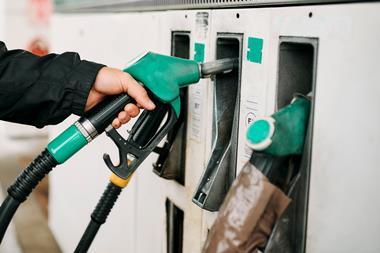

















Generational panics that see older people fret about younger ones have been around since God’s dog was a puppy. From rock-and-roll and bell bottoms to computer games and tattoos, the idea that those who follow us are lazy, incompetent or corrupted repeats more often than The Simpsons. But to suggest young people are frightened of petrol stations, as a recent survey has done, stretches this cliché to breaking point.
The research comes from online car marketplace Cazoo, which commissioned a survey, covered by The Times and The Independent no less, purporting to have discovered that 62% of ‘Gen Z’ drivers (aged 18 to 24) are frightened of filling up, with concerns including misfuelling, nozzle hygiene, and parking close enough to the pump island.
While I have no wish to critique Cazoo I do have questions about its survey, as well as the message that younger people are so delicate as to have a fainting fit at the mere sight of a forecourt. First, having studied statistics in the past, I can confidently say that surveys are notoriously finicky and should be treated with utmost caution.
Number crunching
How samples – IE those being surveyed – are selected should be scrutinised to the nth degree, as should the demographics of those sampled and the raw data they generate. Were participants selected at random? Have their geographical locations, incomes and education levels been adjusted for? If we’re getting technical, what p-value was used to test the statistical significance of the results?
And while a survey of 2,000 people – the size of the sample here – is a reasonable number for some applications, extrapolating this to the UK’s 42 million driving-licence holders is ambitious, shall we say.
The design of the survey itself is also worth considering. While I haven’t seen the questions Cazoo set, one that asks “What colour is associated with unleaded petrol pumps?” would bring very different results to one that asks “On a scale of one to 10, how worried are you about filling your car with the wrong fuel?”
Both those questions could be used to determine how confident people are at selecting the correct grade of fuel, but I’d wager most drivers would reply ‘green’ to the first question. Conversely, subjects typically shy away from selecting the extreme ends of scales (a phenomenon known as ‘centrality bias’), making it likely a decent proportion would choose ’six’ when responding to the first question – voila, you’ve got yourself some nervous refuelers.
I’m not interested in picking apart every figure Cazoo’s survey generated, but one in particular did stand out. Apparently, 39% of all adults (not just Gen Z drivers) have ‘refuel anxiety’, with a quarter of those said to suffer from this reporting they have run out of fuel on the road.
This statistic is easier to break down than a car with an empty tank. With 42m licences in the UK, 39% of drivers having ‘refuel anxiety’ means 16.4m people are nervous about petrol stations. And if, as the survey suggests, a quarter those anxious people have run out of fuel on the road, this equates to a little over four million drivers. Four million people running out of petrol? In today’s traffic? Aside that not passing the smell test, so many sputtering cars would clearly cause enough chaos to have been widely noticed and reported on.
If one result can be called into question so easily the entire data set must be treated with scepticism, but away from research methods and statistics, the sentiment that young people are somehow compromised compared to those who came before them is not one I have much time for.
The kids are alright
We read about such concerns all too often: young people are workshy; they don’t like speaking on the telephone; they’re obsessed with social media – and so on.
First – and I say this as someone who must scroll down a fair bit when selecting my birth year from dropdown menus – such worries are not really about younger generations, but older ones. The notion that those who follow us are somehow doomed is a symptom of anxiety about our own limited lifespans and the world we’re handing over to our children – this is not really about younger people.
Second, have you met any young people recently? When I talk to my children’s friends, am served by a teenager in a shop or read about some preposterously young startup founder, I am typically impressed and reassured by their friendliness, articulacy and authenticity.
As much as we like to tie ourselves up in knots about the state of world, every generation has its trials and tribulations. The Black Death killed off half Europe’s population while, in modern history, two World Wars and the threat of mutually assured nuclear destruction gave people fair reason to worry about what the world had in store for those who came next.
Today’s young adults are stoically picking up the pieces after their education and childhoods were decimated by covid, while the housing and job markets that face them are hardly straightforward. They have enough challenges, in other words, but telling green from black is not one of them.