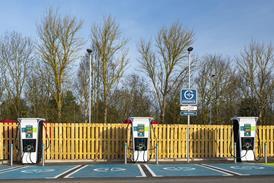

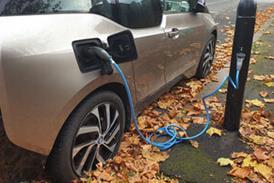



















Last week the Department for Transport released a set of statistics showing there are now “considerably more” public EV chargepoints in the UK than there are petrol pumps. But this isn’t the ‘win’ some consider it to be – instead, it’s a damning indictment of the electric car.
Digging briefly into the figures, the DfT looked at Zapmap data to determine there are 116,052 public charging points in the UK, then calculated there are 60,802 fuel pumps by combining data from Deloitte and the Energy Institute showing the average forecourt has 7.3 ‘filling positions’, with numbers from the Petrol Retailers Association showing there are 8,329 forecourts in the UK.
So far, so good, until one pauses and considers the ratio of fuelling points per vehicle.
There are currently 34m cars in the UK, of which 1.85m are electric. To fill up 32.15m petrol/diesel/hybrid cars therefore requires one fuel pump per 529 vehicles.
By contrast, powering 1.85m EV requires one public socket per 16 electric cars, meaning EVs require 33 times more fuelling points – and far more once one factors in domestic driveway chargers.
Those in the EV sector maintain there are not enough public sockets, and that this is hindering the cars’ uptake. But even if the current ratio of EV sockets to EVs were sufficient, to fuel 34m pure electric cars (which, by logic, we will have within a couple of decades of new petrol/diesel cars being banned from sale) will require 2.1m public chargepoints, almost a 20-fold increase on what we currently have.
Sure, use cases for petrol pumps Vs EV chargers are very different, just as there are different infrastructure demands for the two fuelling points. But while getting planning permission for new petrol stations is notoriously difficult, grid connections for new EV hub installations are often no picnic, with lead times of a year or more in some cases, and costs of as much as £500,000 for installing a single device – a figure that would go a decent way towards building a new forecourt.
None of this is to undermine the work those involved in rolling out huge numbers of chargers have undertaken. But for the government to promote electric cars by using so daft a comparison as EV chargepoints versus petrol pumps only serves to highlight the shortcomings of battery power.