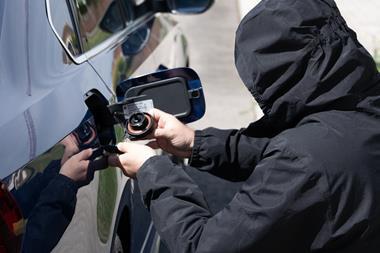




















The other day I was interviewed on the radio (this isn’t a boast – broadcast news relies on an endless stream of talking heads) about fuel theft, which has risen by around a quarter since prices spiked following the start of the Iranian conflict.
One of the issues that came up was that police are typically unwilling to investigate drive-offs, sending automated emails effectively closing cases as soon as they receive reports, regardless of there often being bullet-proof evidence in the form of crystal-clear CCTV footage showing suspects, vehicles and number plates.
I made the point during this chat that while the law should clearly be enforced, the reality is that if police apprehended every fuel-theft suspect, the time required to process arrestees would take officers away from front-line duties for an unacceptable amount of time, and some kind of fast-tracking of these processes should be considered.
A quick bit of maths shows how time-hungy this issue would be for police to fully tackle: there are around 1.5m fuel-theft incidents each year in the UK, spread across drive offs and bogus no-means-of-payment claims, with the latter being more common.
Let’s say, for the sake of simplicity, that there are half a million drive-offs annually, and let’s also assume each is perpetrated by an easy-to-identify suspect using legitimate number plates on a vehicle registered to their home address, where the thief happens to be when constables come a-knocking.
Conservatively, it would take two officers one hour to apprehend each drive-off suspect, with one of those officers spending a further hour processing the perp through custody, followed by another hour filling out the paperwork necessary for the case to proceed.
That’s four officer hours per incident, and with half a million drive-offs a year, it would take 2m hours of police time, or roughly 2,300 full-time officers (equivalent to a medium-sized constabulary), just to tackle this one crime type. In short, this isn’t practicable, especially given police numbers have historically been falling.
So if there is hope, it doesn’t lie with the police, and while forecourt-security firms do sterling work in both prevention (EG vehicle blacklists) and cure (debt recovery), the reality is that despite advances in technology, drive-offs remain a perennial problem.
One solution would be to implement pay at pump across the sector, but forecourt operators don’t need me to tell them that this would be a hammer blow to their bottom line, with in-shop purchases vital to the UK’s fuel-retail industry. I don’t think customers really want pay at pump, either, because if on-site stores get less and less custom, they will eventually dwindle back to the bad old days when most were little more than portacabins selling crisps and cigs.
If police can’t stop the scourge of fuel theft and tech firms offer only partial solace, we need a fresh approach. And, for a change, Fuel Finder could actually be helpful to the sector. My proposal looks like this:
Expand the scope of the system, integrating all existing vehicle-registration blacklists into Fuel Finder, creating a national database of number plates linked to fuel theft.
Treat stealing fuel in the same manner as unpaid road tax, with automatic penalties and debt-repayment demands issued to perpetrators, alongside voided insurance and vehicle clamping if these are unpaid.
Sure, there will be issues to work through: forecourts would need ANPR/CCTV cameras that meet certain specifications for their footage to be strong enough to meet evidential thresholds, while security firms might need some persuading to share their proprietary blacklists.
New legislation would also need to be put before parliament. Some might see this as an insurmountable barrier, but let’s not forget how the Treasury likes taking cash from our pockets. It should be straightforward enough to point out to HMRC that if £100m worth of fuel is stolen annually, fuel theft is costing them around £50m in lost tax every year.