












The fees forecourt operators will be paid for handling returned empty plastic bottles and cans under the Deposit Return Scheme could leave many out of pocket.
That is the warning from the ACS after Exchange for Change, the organisation charged with delivering the initiative across England, Scotland and Northern Ireland, revealed a two-tier retail handling fee structure for the DRS when it is introduced in October 2027.
Sites that collect bottles and cans manually will be paid 3p per container, while those with reverse vending machines will be given 5p per container for the first 225,000 returned annually, and 1.3p after that.
This follows Exchange for Change’s announcement that the deposit to be applied on soft drink purchases and then refunded on return of the container will be 20p.
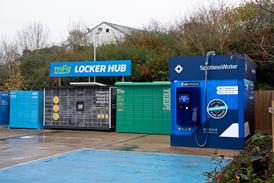
The ACS warns that thousands of retailers will not be able to cover their annual costs of hosting the machines, which could be more than £10,000. It means operators would have to collect at least 4,000 containers a week or 208,000 a year to break even, and this will not be achievable for some, says the trade association.
The ACS goes on to question Exchange for Change’s recommendation that all businesses expecting to collect more than 2,000 containers a week should opt for a reverse vending machine due to the complication of handling such volumes manually.
ACS chief executive Ed Woodall says: “Hosting a return point should be cost neutral for local shops, but the handling fees announced today will mean some neighbourhood convenience stores will be net losers under the deposit return scheme or force them to run burdensome manual return points.
“Convenience retailers want to be part of the scheme and providing those services in the community, but they should look closely at handling fees to optimise the network of return points for customers and all convenience retailers.”
Forecourt operator Goran Raven agrees. “Revelations about the cost of running this scheme to be incurred by retailers is just another nail in our industry’s coffin. Costs are increasing from every angle, and now we are expected to carry the cost of a government initiative, with no perceived benefit,” he says.
“The apparent lack of planning and forethought is staggering. The idea in itself is good, but the implementation of it is totally sub-optimal,” adds Raven, who runs a Shell forecourt in Abridge, Essex.
Exchange for Change has confirmed that it will review the retail handling fee in early 2027, and annually thereafter, to account for new data from producers and retailers.
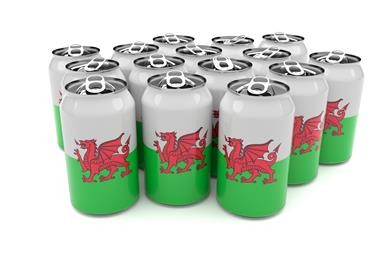
To date, the Welsh government has not appointed a scheme administrator for a DRS, despite also opting to go live in October next year. Unlike the scheme in England, Scotland and Northern Ireland, its scheme will cover glass.
In the rest of the UK, single-use drinks containers between 150ml and three litres made from PET plastic, steel, and aluminium will be included. Glass is excepted due to concerns over safety, storage, and recycling quality.
Businesses in urban areas with retail space under 100m² are automatically exempt from hosting a return point. Others may apply for an exemption if they are nearby another return point or if it is not practical to host one due to factors including the design, size or construction of the premises. There is, however, no clear definition for ’nearby’ or ‘urban’, and the criteria for a successful exemption application are not yet known.
Exchange for Change has also proposed a further exemption for urban retailers with between 100m² and 199m² of sales area and rural retailers with under 200m² of sales area on the basis of their physical space limitations.
You can read more about the DRS in our recent Legal Doctor article.