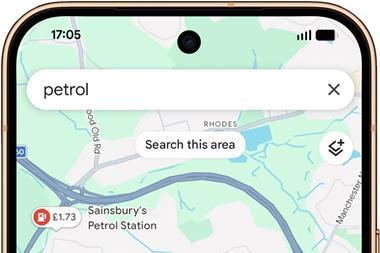























Given parliament took the time to pass legislation mandating fuel retailers share their prices with the government, it is curious that with almost a third of forecourts in breach of the new law, the government’s response has been to shrug its shoulders.
I’m not saying that the 2,500 or so forecourt firms that are either not registered or not sharing prices with Fuel Finder should be fined for these breaches – the project has been beset with too many delays and glitches for that to be close to reasonable.
Instead I’m arguing the approach the establishment has taken to this scheme and its enforcement cheapens the law.
Briefly, while legislation now mandates firms must share their prices with Fuel Finder, the Competition and Markets Authority (CMA), which has been tasked with enforcing the rules, says that until May it won’t actually do so, instead working with companies to help them comply.
That is, on the surface, a reasonable approach. But given the Motor Fuel Price Regulations 2025 dictate all forecourts had to have been registered with the scheme by 2 February 2026 and, at time of writing, around 1,200 filling stations have yet to do so (yet more are not sharing prices), it is difficult to see how this predicament does anything but undermine the authority of parliament.
Fuel Finder is not the only area where such an argument can be made. Around two thirds of adults are said to break the law each year by doing things like speeding, littering, and illegally downloading films or music.
But while speeding convictions, for example, are treated as an “administrative penalties” (they don’t need to be disclosed on criminal-records checks, after all), the ‘statutory instrument’ backing Fuel Finder up is legislation with teeth – theoretical teeth at least – as it allows firms to be fined up to 30% of their annual UK turnover for breaches.
Given the volumes of petrol and diesel filling stations dispense each year, not to mention hefty fuel duty attached to these litres, even a fairly modest forecourt can expect to turn over a seven-figure amount, and a 30% fine would put all but the most fiscally robust firms out of business.
With so many companies in breach of the rules, the law being as it is and the penalties as they are, were it so minded the CMA could technically bring the forecourt sector to its knees, or at least have a good go at it.
I appreciate the watchdog has said that 30% turnover penalty will apply only to the most serious regulatory breaches, and that we’re talking theoreticals.
But laws themselves comprise only the specific arrangement of the letters of the alphabet, agreed in a specific way by specific people, so ultimately the law itself is a theoretical construct. As such, without enforcement, it is fragile and can be easily broken.
When I asked the Department for Energy Security and Net Zero what it was doing about poor Fuel Funder compliance, it took what I term a Bing Crosby approach to PR, accentuating the positive and eliminating the negative, repeating its prediction that the scheme “will see working families save around £40 a year at the pump” while meekly adding: “we encourage remaining retailers to register now to ensure compliance with this mandatory scheme.”
While I appreciate not every law can be enforced all the time, and that doing so would be undesirable, it strikes me that to introduce a new law, make a massive fuss about it (Rachel Reeves even touted Fuel Finder in her Budget), then do the square root of naff all when thousands ignore it, does none of us any good.