Two rival chargepoint firms have, in two separate pieces of research, looked at the effect drivers’ wealth has on the likelihood of them owning an electric car, and found that more chargepoints are the way to solve the rich Vs poor EV divide.
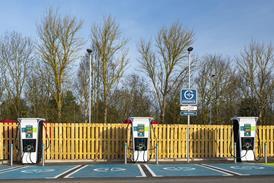
Be.EV analysed publicly available data from local councils charting the number of chargers in specific areas and found wide disparities. For example, while there are 405 public chargers per 100,000 people in Merton, the London borough in which Wimbledon sits, there are just 52 per 100,000 people in Hartlepool, County Durham.
Overall, Be.EV found that the richest 20% of councils have 151 public sockets per 100,000 people, while the poorest fifth have 101.
Be.EV also found that areas where residents had more disposable income were home to more electric cars. In Kensington and Chelsea, London, 6.45% or private cars are electric, compared to 0.8% in Blaenau, Gwent. Overall, in the top 20% of councils by wealth, 2.4% of cars are electric, against 1.8% in the bottom fifth areas.
Asif Ghafoor, chief executive of the chargepoint company Be.EV says that to tackle the issue it would be necessary to make “public EV charging as affordable and accessible as possible in areas where people live in flats and public charging is limited”.
Different research, similar conclusions
The second piece of research was conducted by another chargepoint firm Chargy, and New Automotive, a think thank that mainly receives funding from “foundations with an interest in climate change”.
These outfits looked at data from the Department for Transport, Office for National Statistics, and local authorities, and found that people in the richest areas are 330% more likely to own an electric car than those in the poorest parts of the country.
The study also concluded, though, that while “between 2021 and 2022, growth in EV adoption was heavily concentrated in the least deprived half of the country”, in 2025 “growth in EV adoption is now occurring across almost all deprivation deciles, with only the 10% most deprived areas showing notably slower progress”.
Like Be.EV’s boss, John Lewis, who is chief executive of Chargy, thinks more chargepoints are the answer, saying: “The focus now must be on ensuring those most disadvantaged communities aren’t left behind by expanding reliable, affordable on-street charging where it’s needed most.”
Ben Nelmes, chief executive of New Automotive, was more evangelical, believing “the people’s car is increasingly an EV”, and that “motorists the length and breadth of the country are now going electric as the second hand market booms and more affordable models become available in the new market”.
Analysis: what’s really behind the EV divide?
It is unsurprising that firms that install chargepoints think more chargepoints are a good idea, but while the more money you have, the more likely you are to own an electric car is an unquestionable fact, several other factors effect this trend.
First, it is worth noting that around nine out of 10 new EVs are purchased by businesses – either leasing firms, small companies or corporate fleets – which receive huge tax incentives to do so. Without these government bungs the market for electric cars would be almost non-existent.
Second, the salary-sacrifice market for people who obtain an EV through leasing firms that have contracts with their employers is huge. Drivers can effectively knock as much as 50% off the cost of a battery car by choosing this route, but if you’re a low earner you won’t be able to access this discount, as sacrificing too much of your salary would effectively put your earnings below the minimum wage, which is illegal.
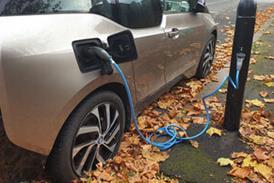
Next we must consider time and convenience, two of life’s biggest luxuries. If you have a home with a driveway, you’re likely to be richer than someone without a driveway, and can easily recharge at home. The person without the driveway must give up their time to find a public charger, then pay significantly more for their electricity due to the commercial costs and higher VAT rate public electricity is subject to. If you’re on an hourly wage, you will likely resent this additional cost and loss of leisure/work time, especially given those with driveways don’t have to face this issue.
This divide also raises its head if an ‘ultra-rapid’ charger is needed for topping mid-journey. If you have a white-collar job and are able to work from your phone/laptop, you should be able to integrate this into your working life with little hardship. If you are paid by the hour and/or have to be at your workplace in person, again, you’ve lost either work time or leisure time.
One can’t avoid the issue of virtue signalling, either. If I had a pound for the number of times I have heard people say they bought an EV ‘to do their bit for the planet’ I would have enough for a monthly PCP repayment.
But while questioning whether a brand-new car with batteries of questionable origin really is good for the planet, the idea of being able to signal one’s virtue in this manner is a luxury comparable to showing off you have bought conflict-free diamonds, or organic, homegrown avocados – not something someone on a tight budget will have much time for.
It’s also worth considering geography, as a resident in Kensington and Chelsea, aside from likely having far more money than a resident of Blaenau, Gwent, will be far less disadvantaged by the limited range of an electric car given the distances urban dwellers cover on a daily basis compared to those living in rural areas.
One must also question if local councils in deprived areas should really be putting public funds into EV chargepoints rather, say, than fixing potholes, or improving social-care provision.
Finally, it’s worth noting that while pure-EV car showrooms are what politicians want, they are incontrovertibly not what most motorists desire, as shown by registration data demonstrating that even with vast government incentives, over three quarters of drivers choose cars an internal combustion engine, with or without supplementary batteries.
The problem is not that poor people aren’t buying EVs – it’s thinking that electric cars are a good thing to mandate people to buy. Comparing government policy with new-car sales data, those in power clearly think they know better than the electorate; this is rarely a good thing.