









Next year’s Deposit Return Scheme that mandates retailers take back empty drinks containers represents a big opportunity for forecourt firms due to increased footfall and bigger customer baskets, industry experts have advised.
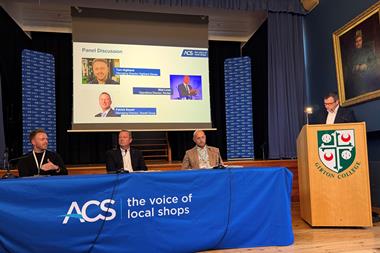
Speaking at the National Convenience Show, Sondre Henningsgård, managing director UK TOMRA, which makes reverse vending machines (RVM) that can automatically process returned containers, said the highest-volume DRS collector in Europe is a filling station in Ireland, where a scheme was introduced in 2024.
“The biggest return point in Europe today is a petrol forecourt in Ireland. A small, small shop that decided ‘I’m going to make this a business’. He now has three of our multi-feed machines, taking back roughly 10m containers.”
@killeshin.gaa Today we recycled our bottles in Ireland’s first bulk bottle returns machine in Newcastle Service Station in Dublin. #killeshingaa #return @Newcastle Service Station ♬ original sound - Killeshin GAA
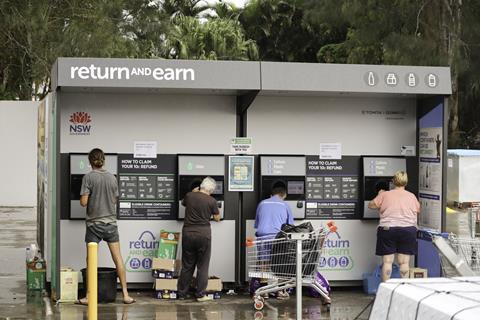
An RVM machine in Dublin has received viral attention on social media after a Gaelic football team returned its clubhouse’s empties
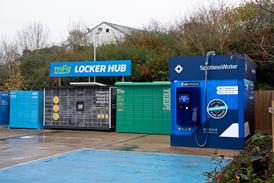
Henningsgård indicated the outside space forecourts offer make them prime candidates for automated machines, adding: “There are other ways of looking at it rather than fitting something into a shop – it doesn’t necessarily have to be in the inside.”
He also pointed to market research that indicates people returning bottles and cans often do so as part of a planned trip so tend to carry out bigger shops, adding that a third of people who have a bad experience with returning containers (such as finding a dirty or broken RVM) will go elsewhere next time they need to recycle.
These sentiments were echoed by Raymond Gianotten, interim operations development lead for Exchange For Change, the non-profit tasked with running the DRS in England, Northern Ireland and Scotland, who said retailers offering return points in countries that already have DRSs have seen an increase in custom.
“It can be a real benefit when you think about footfall,” Gianotten said. “If you organise yourself well and well in advance, it can be a great asset. Instead of saying you want to be exempt, you could consider you do want to collect because you can help your customers and keep your customers instead of them going to another store that does have a return point.”
Speaking on the same panel, Samantha Walker, DRS project lead for Coca-Cola Europacific Partners, said retailers in Ireland that have embraced the scheme “have really won”, though she warned operators should be aware customer preferences may change as the UK’s DRS beds in.
“We find sometimes in markets that smaller water packs lose a bit of sales in the short term, and people trade into bigger bottles – you just need to know that and make sure you’re offering the choice of different products to help navigate that short-term change.”
Walker also advised retailers to manage their stock levels carefully as the DRS go-live date approaches because container labels will change, with drinks cans and bottles having to wear barcodes for RVMs to read, while they must also display the Exchange For Change logo.
DRS requirements, grants and exemptions
From October 2027 customers will pay a small (20p seems likely) surcharge when buying a drink in a single-use container made from plastic or metal (plastic milk bottles are exempt), receiving this back in cash, card payment or voucher when they return the container.
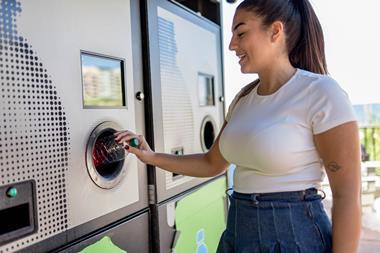
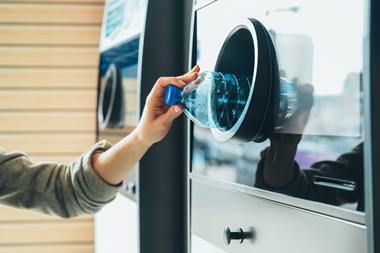
Shopkeepers who sell such drinks must offer a facility to receive empty containers and return customers’ deposits; this can be done manually by shop staff, or via an automated reverse vending machine.
Such machines come with a heavy cost – around £30,000 for larger units – but smaller, cheaper options, taking up as little as half a square metre, are available, while grants of up to £6,000 are being offered to small independent retailers.
There are automatic exemptions for urban shops with under 100m2 (1,076sq ft) of retail space, which won’t have to take part in the DRS, while urban shops with 100m2 to 200m2 (2,152sq ft), and rural shops with under 200m2 can apply for exemptions.
Retailers will receive handling fees for running DRS return points, with these expected to cover the cost of handling empty containers and maintaining RVMs, which need regular maintenance including cleaning, emptying, and printer-paper replenishment.
Unlike England, Scotland and Northern Ireland, Wales has opted to include glass containers in its DRS, which will add complication both to how the scheme operates, and the types of RVM needed. Wales has also yet to appoint a scheme manager, rejecting Exchange For Change’s bid to run it.