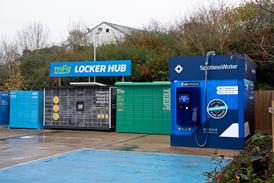
The complexities implicit in devolved governments are writ large upon the forthcoming Deposit Return Scheme, which will now see glass bottles included in the Welsh DRS, unlike the schemes that will run in Scotland, England, and Northern Ireland.
Regardless of the wisdom or otherwise of developing four separate programmes for the UK, the Deposit Return Scheme will see shoppers pay a small premium (expected to be 20p) when buying drinks in single-use containers, with this cost being returned when they recycle said containers at shops using automated machines.
The scheme is due to go live on October 1, 2027, and will require all shops selling drinks in single-use containers to process returned bottles and cans, unless a store comprises under 100 square metres (roughly 1,076sq ft) of retail space.
Scotland, Northern Ireland and England had all agreed to only include PET plastic bottles, and aluminium and steel cans in the scheme, excluding glass containers due to the additional sophistication returns machines would require to process the material, and the fact glass is one of the more recycled packaging types in the UK.
But the Welsh government was insistent it wanted to include glass, and threatened to pull out of the DRS scheme entirely if it did not get its wish.
Now, the UK government has relented, bowing to Wales’ wish for glass to be part of the DRS and granting it an exception under the Internal Markets Act. The inclusion is not straightforward, however, as while the material will be included in the scheme from the 2027 launch, the 20p deposit will not be applied to glass bottles until 2031. Similarly, drinks firms and consumers will have to work with two different DRS schemes.
Concerns have been raised that the inclusion of glass in Wales will leave the scheme open to fraud, as glass bottles bought in England, Scotland or NI without the expected 20p deposit being applied could potentially be taken over the border to Wales, where a 20p payment could be made upon their return.
Andy Bagnall, director general at the British Soft Drinks Association, says the Welsh government must “engage with industry to resolve the issues inherent in different schemes for glass on either side of the border – including the risk of substantial fraud – to remove the cliff edge in four years’ time when the transition period ends.”
James Lowman, chief executive of the Association of Convenience Stores says that while his organisation supports the DRS project, “the decision to include glass containers in Wales will result in additional costs and operational burdens for local shops, and confusion for customers who will have no incentive to return glass containers to shops until 2031”.