







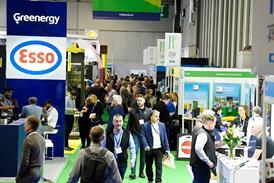
From key cutting to canine washing machines, this year’s Forecourt Show and co-located exhibitions did not disappoint with their array of innovation aimed at giving operators additional profit opportunities.
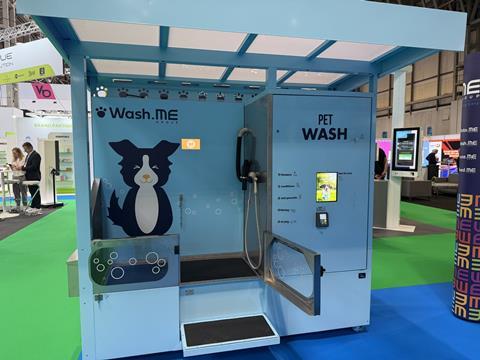
Among the highlights of the three-day event – held at the NEC as part of The UK Food and Drink Shows and which finishes today – was a dog grooming station concept from the ME Group, featuring anti-parasite cleaning, hypoallergenic shampoo, and coat conditioning options.
The Wash.ME Pet Wash-branded unit has two settings – an eight or 10 minute wash and dry – to suit the size of the dog. There is a fold down step for larger pets, and hooks to tie up another dog, and to hang a bag and a coat.
The under-canopy unit, which already has orders placed with Morrisons is available on a revenue share option in which retailers take 15% of proceeds.
They complete a valeting hub, says ME Group’s head of key accounts Matt Procter, and complement the company’s laundry machines, with the same 80-strong engineering team servicing them.
“Customers have dwell time while using our laundry machines and so these dog washing machines work really well alongside them,” he says. “Sites near popular dog walking areas – rivers, beaches, National Trust locations – will do particularly well with them.”
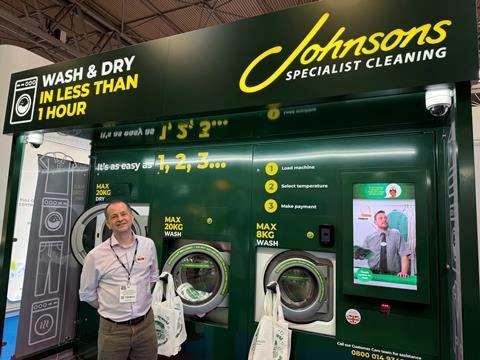
The Timpson Group used the shows to launch into the forecourt sector with its Johnsons Specialist Cleaning laundry machines, which are pre-filled with detergents.
They also have additional cleaning options including stain remover, softener and sanitiser said to kill 99% of bacteria – adding £1 to the £5.50 small wash, and £11 for a larger load.
So far, its touchscreen ordering machines – which wash and dry a full load in less than an hour – are in 10 Morrisons and Tesco supermarket carparks and shop entrances.
But the business wants to be a serious contender on petrol stations and is offering two types of revenue schemes for its units, which include an 8kg and 20kg washer, and 20kg drier.
For retailers paying for water and electricity they will receive a higher percentage of takings than if the supplier funds the utilities.
Other features include a CCTV camera for Timpson staff to monitor any damage to the machines, and a lit canopy. And a member of its 50-strong maintenance team will visit sites every week or two to remove lint from the driers and add detergent to the machines.
James Jackson, operations director at Timpson, says that the Johnsons brand, and using the same detergents as the well-known high street name, will be a big appeal to operators. “Customers know Johnsons as a specialist cleaning brand on the high street, which will really add to the appeal of these machines,” he says.
The units are currently 2.3m deep and 3.2m wide, but the company is working on a modular design, which should be launched this summer, in which operators can choose which units to include to suit the size of their site.
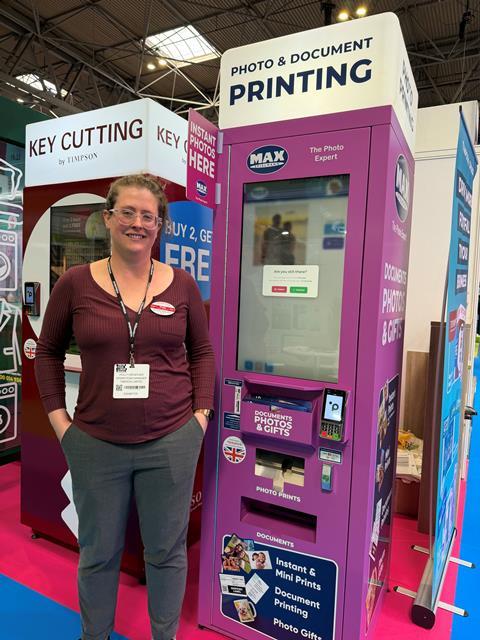
Timpson also used the event to showcase its self-service “no training needed” key cutting machines. Operations manager Polly Crowther said that 95% of keys can be cut by the machines, which can generate a typical annual income of £12k to £15k a year. Each key costs the consumer £7.
The ‘cutting by code’ technology ensures a high level of accuracy even if keys have imperfections or are worn, says Crowther.
Timpson also had on display a photo and document printing machine, taking another of its high street brands, Max Spielmann, into convenience outlets. The small-footprint units are popular with customers who do not have a printer at home and might need to print out a flight ticket, or Vinted label, says Crowther. She says operators can typically expect a £10k a year turnover.
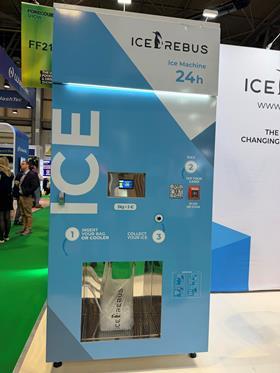
A machine dispensing bulk ice cubes for parties, barbecues or for stocking up the freezer was the idea from Croatian supplier Ice Rebus. The 2.5m tall and 1.5m2 units need a water and electricity supply to make up to 400 kilos of ice a day. The 24-hour machines, which can be installed outside, dispense three or six kilo bags, with a three-kilo bag retailing at around £2.60.
The business says that prices range from £18k to £25k, depending on the add-ons a retailer requires, such as using its own branding colourways.
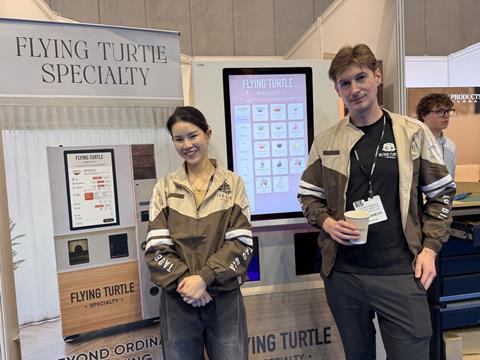
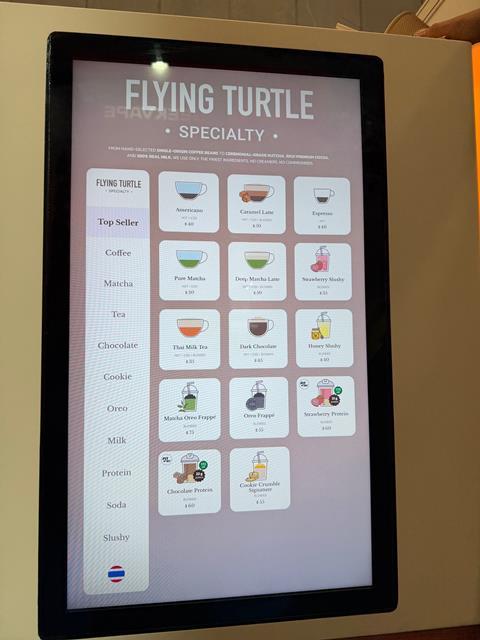
A made-to-order soft drinks and coffee machine, boasting 300-plus options from 25 ingredients, was on display with Flying Turtle.
The company says it has 9,000 of the units installed globally, and that one in 300 Thais consuming the drinks daily. It is now looking for forecourt operator partners.
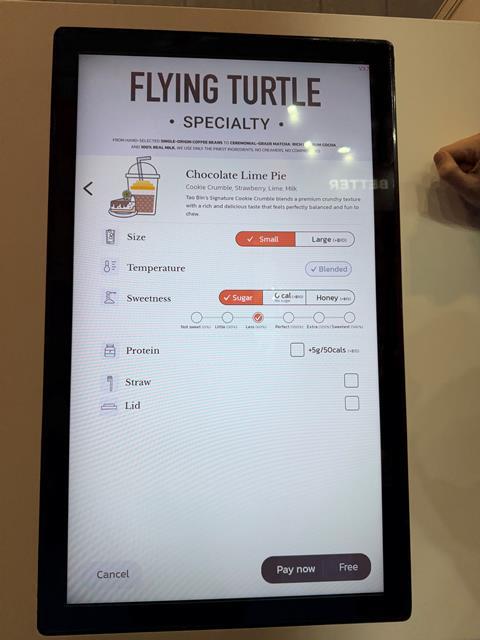
Its range includes coffee, matcha, tea, chocolate, protein, soda, slushy and speciality drinks, such as a Chocolate Lime Pie milkshake with crunchy biscuits on top.
Customers can personalise their drinks by choosing the amount of sugar, and whether to have honey, rather than sugar in their recipe. Also they can choose whether to have a straw or a lid.
The machine uses three varieties of fresh coffee beans. Retail prices for the drinks vary from £2.99 for a coffee, to £3.50 for a speciality drink, and £4.50 for a protein shake.
Thomas Morrison, managing director of Flying Turtle, translated as Tao Bin, says he would consider a leasing or revenue share model, or a combination of the two. He runs the business with his wife and co-founder Watanya (Tung) Amatanon.
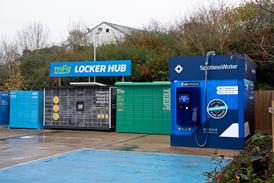
The arrival of the Deposit Return Scheme in October 2027, which mandates that retailers take back empty drinks containers, led to several suppliers showing off their version of reverse vending machines.
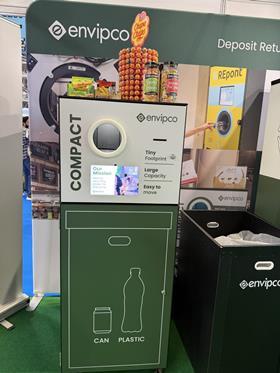
Envipco says it has the smallest unit, which at 0.42m2 has capacity to squash and store 585 plastic bottles and cans. The supplier says that multiples are already purchasing units in readiness for the scheme. Its Compact-branded unit – 600mm wide by 700mm deep – costs £10,000.
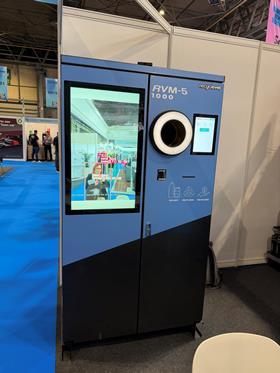
Competitor Recycler, meanwhile, was piloting an AI-powered digital screen on one of its units – which retail from £10,000 to £14,000. The technology pulls up adverts to match the age an inbuilt camera judges the user to be. This will mean that customers can be targeted with advertising that meets their age profile, says the supplier.