





















The Society of Motor Manufacturers and Traders has called for an “urgent” review of the ZEV Mandate, which each year requires a growing proportion of new cars be electric. Yet the organisation remains convinced that all new cars sold from 2035 should be zero emission.
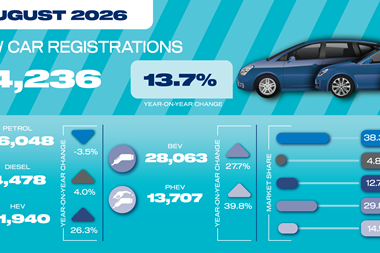
The SMMT wants the ZEV (zero-emission) Mandate reviewed before 2027’s rate of 38% kicks in. Last year 28% of new cars had to be zero emission, yet only 23.4% of sales went to pure EVs. For 2026 the requirement is 33%, yet the year-to-date proportion of actual registrations stands at just 22%.
The SMMT warns that “Britain’s transition to zero emission vehicles must urgently be reviewed”; that “the gap between policy ambition and market reality continues to widen”; and that “EV adoption has remained consistently behind government’s ambition”.
The body also notes that EV legislation was “largely finalised in 2021”, at a time when “the UK’s EV market appeared poised for rapid acceleration”.
Yet rather than call for a reconsideration of the central policy held by successive governments’ that all new cars sold from 2035 must be zero emission (IE electric), the SMMT’s chief executive, Mike Hawes, says “the destination remains unchanged: net zero by 2050, and fully decarbonised car and van markets by 2035.”
Instead of a root-and-branch course correction, the SMMT wants ministers to consider five areas:
- Market conditions, which should be changed so consumers “feel enticed, rather than forced, to embrace EVs”.
- Policy & regulation, specifically an overhaul to the Vehicle Emissions Trading Scheme, which effectively allows manufacturers to ‘buy’ EV sales from firms that exceeded the annual mandates in order to meet the targets themselves.
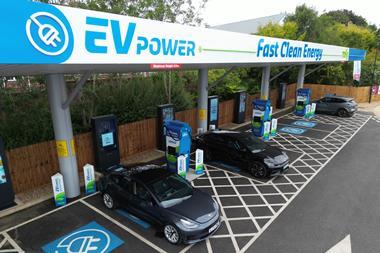
- Charging infrastructure & cost: the SMMT wants government to look at the speed of chargepoint rollout, and the costs involved in public charging.
- Energy system and permitting regime: the organisation says grid connections and capacity, and energy costs, should be looked at.
- Industrial competitiveness & international trade: this point is mainly focussed on policies dictating that a significant proportion of EV components must be made in European countries if they are to avoid tariffs, a move largely intended to offset the threat posed by Chinese EVs.
Despite not calling for any change to the central 2035 policy, the SMMT’s announcement saw companies are involved in selling electric cars and charging services react negatively. Speaking to the pro-EV think tank Transport + Energy, Fiona Howarth, founder and director of Octopus Electric Vehicles sad “weakening this policy now would be the wrong approach” and the industry should instead be “doubling down” on moving away from petrol and diesel cars.
Tanya Sinclair, chief executive of Electric Vehicles UK added that car makers wanting to change the mandates “are only hurting themselves”, and that in her opinion “drivers are increasingly choosing electric”.
Vicky Read, chief executive of ChargeUK, meanwhile, said that changing EV policy would be ”unnecessary and unwise”, while Ginny Buckley, who runs a website called Electrifying, thinks the car industry and government should speak “with one voice”, and that if they do this it will give drivers “confidence” to buy an electric car.