




















In light of increasing energy costs and news that EVs will soon attract a new per-mile tax, fuel-card company Allstar has conducted an analysis showing that firms can save as much as £560,000 a year by encouraging staff to use home and workplace charging.
The company has modelled three scenarios for firms with various vehicle-fleet sizes based on each vehicle travelling an average of 12,000 miles a year. A business with a small fleet of 20 vehicles could reduce its charging costs by 60% by “increasing the proportion of charging carried out at lower cost locations such as home or workplace”.
Using this strategy could save a business running 75 electric vehicles £170,000 a year, while for companies that operate 250 EVs, avoiding expensive ultra-rapid chargers and encouraging staff to charge at home, work, and using ‘near-home’ chargers, which tend to be slower but cheaper than public hubs, could reduce charging costs by £560,000.
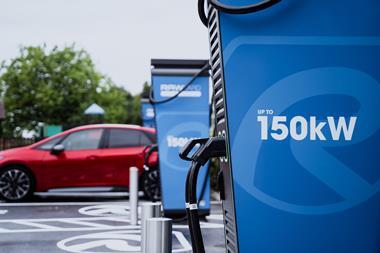
One kiloWatt hour of electricity from an ultra-rapid public charger costs an average of around 75p in the UK, partly due to the 20% VAT rate commercial electricity attracts. By comparison, domestic electricity is capped at 27.69p until the end of March, with dedicated EV tariffs bringing that cost down further, particularly during off-peak hours.
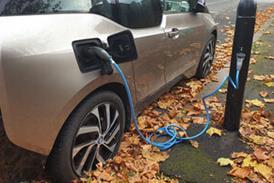
In April last year Allstar partnered with Co Charger to introduce a scheme allowing fleet drivers to rent domestic ‘wallbox’ chargers from 6,000 ‘hosts’ signed up to the programme, allowing business drivers without at-home chargers to replenish their vehicles’ batteries more economically.
Tom Rowlands, managing director of global EV solutions at Corpay, Allstar’s parent company, said that “fleets are dealing with a lot of moving parts right now”, with “energy prices, infrastructure availability and future taxation” all “adding to the complexity of running electric vehicles”.
He emphasised that “charging strategy is one area fleets can take control of today. Small changes to where and how vehicles are charged can have a material impact on costs without disrupting operations.”