











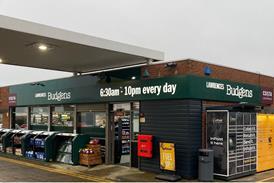








London’s petrol stations are being subjected to an average of three armed robberies a month, with no action being taken against suspects in 77% of cases, Forecourt Trader can reveal.
The Metropolitan Police recorded a total of 576 robberies across London’s 530 petrol stations between January 2022 and April 2026, with 171 of these being armed offences, meaning perpetrators wielded weapons in 30% of all petrol-station hold-ups.
Majority of armed robberies go undetected
Just 39 out of the 171 armed robberies recorded by the Met resulted in a suspect being charged, while officers recorded ‘Investigation complete, no suspect identified’ against 82 cases (48%), effectively closing them.
Evidential difficulties prevented charges being brought in 46 cases, 17 of which involved witnesses being unable or unwilling to identify a suspect.
Of the 39 individuals against whom charges were brought, 19 faced ‘alternate’ offences, which typically involves lesser charges being brought following agreement with the Crown Prosecution Service.
Perpetrators who commit armed robberies at petrol stations often wear a mask when doing so and, if using a car in the commissioning of the crime, frequently remove number plates or fit false registrations, making it challenging to identify suspects.
If a suspect is identified, witnesses – most often forecourt staff – may be unwilling to provide statements or testimony to help secure prosecutions for fear of repercussions from perpetrators.
Alternate offences explained
Armed robbery is charged under the offence of aggravated burglary, meaning perpetrators robbed a premises using a firearm, explosives or offensive weapon such as a knife.
The crime has sentencing guidelines of one to 13 years’ imprisonment, with judges able to impose life sentences for the most serious offences. The threshold for securing a conviction for aggravated burglary is high, though, as prosecutors must prove the defendant knew they had a weapon in their possession and intended to use it in the commission of the robbery.
As a result, suspects are often charged with separate offences that are more likely to result in prosecution, as happened in this Northumbrian case where a perpetrator held up a forecourt by wielding a knife at the cashier, but was charged with robbery, and possession of a bladed weapon, rather than aggravated burglary.
Police response
The Metropolitan Police told us it works “closely with the Crown Prosecution Service to ensure that we do everything possible to secure justice for businesses and victims of these serious offences”.
The force highlighted that its “positive outcomes” (when a suspect is apprehended and faces charges or other sanctions) for business-property robberies almost doubled from 7.9% in the 2024/25 financial year, to 14.4% last year.
The spokesperson added: “Charges can only be authorised where there is sufficient evidence to meet the legal threshold and provide a realistic prospect of conviction. Armed robbery investigations are often complex, with factors such as witness evidence, CCTV, forensics and suspect identification affecting outcomes.”