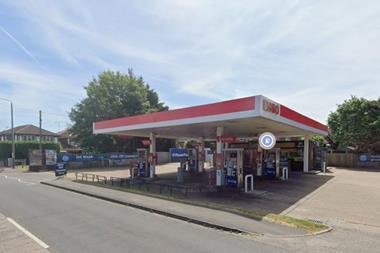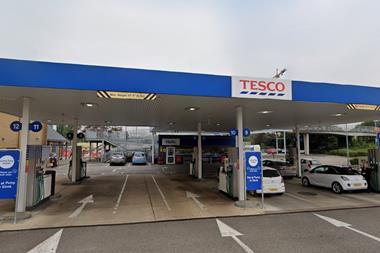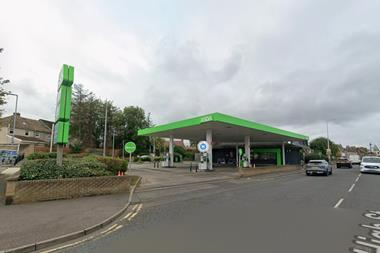











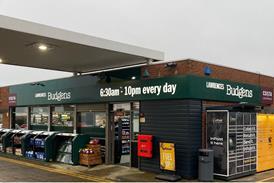







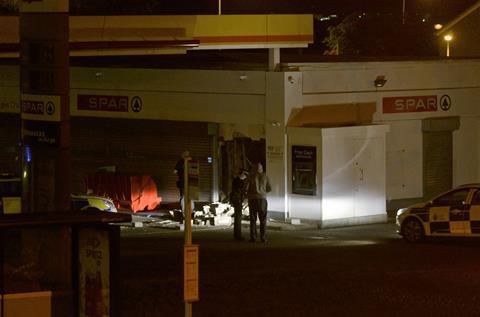
Data from 34 police forces has revealed how serious an issue crime is at petrol stations, with over 8,000 assaults, 3,200 incidents of criminal damage,1,500 burglaries and 1,800 robberies logged by officers since 2022 – yet out of thousands of forecourt crimes, just 12.5% resulted in any action being taken against suspects.
A series of Freedom of Information requests submitted by Forecourt Trader asked police how many times officers had recorded various crimes as taking place at petrol stations since 2022.
While 146,495 of the 170,571 recorded forecourt offences relate to theft, most often drive-offs, thousands of other petrol-station crimes were recorded, with assault and criminal damage the most common non-theft offences.
The majority of police forces shared data up to and including April 2026, meaning around 3,300 crimes are recorded at petrol stations every month in the UK.
London’s Metropolitan Police logged the most offences, detailing 26,490 crimes as taking place at petrol stations from 2022 to April 2026, with more than 23,000 thefts plus 1,758 assaults, 641 incidents of criminal damage and 290 burglaries. The Met also recorded 576 robberies, 171 of which were armed, and was the only force responding to our FOI request to filter out armed robberies from conventional ones. Some 15 arson attacks were also recorded at London petrol stations
Nottinghamshire Police recorded 15,000 crimes at petrol stations from 2022 to mid-2026, including 450 assaults, of which 18 were serious enough to amount to grievous bodily harm. Nottingham also recorded 107 petrol-station burglaries, 168 incidents of criminal damage, 267 robberies (theft using force or threats) and 14,516 incidents of theft.
Greater Manchester Police recorded 14,991 crimes with ‘petrol station’ as a modus operandi keyword, with 11,535 thefts, plus 11 bicycle thefts, 104 robberies, 244 incidents of criminal damage and 60 burglaries. The force also recorded 31 possession-of-weapons offences, 30 drugs crimes, of which nine involved drug trafficking, together with nine sexual assaults.
West Yorkshire Police tracked 11,620 petrol-station thefts, 808 public-order offences, 647 assaults, 229 incidents of criminal damage, 152 robberies, 104 burglaries, 37 drugs offences, 15 weapon offences and nine sexual offences.
Police Service Northern Ireland, meanwhile, documented 12 armed robberies from 2022 to mid-2026, while Lincolnshire, one of the only other forces to detail this crime in isolation, logged one.
While police recorded 42 bicycle thefts, 17 stolen cars, four mail-bag thefts, three cashpoint thefts and 6,258 instances of shoplifting at petrol stations, the vast majority of theft offences relate to stolen fuel. With high fuel prices known to bring about an increase in drive-offs, the spike in recorded crimes in 2022 and 2023 is likely linked to ballooning petrol and diesel prices brought about by the Ukrainian conflict
Around 6,000 other, less common crimes were also recorded by police, including nine instances of forgery, one homicide, one incident of blackmail and 204 ‘Miscellaneous crimes against society’, which comprise offences with no direct victim, such as absconding from custody, or handling stolen goods.
Consistently poor outcomes recorded
While the number of crimes logged as taking place at petrol stations runs to six figures, seldom is action taken over these offences.
Police consider a ‘positive outcome’ to have arisen when someone is charged, cautioned or receives a penalty, community service order or some other form of consequence for committing an offence.
The 25 forces that shared this data recorded 114,875 petrol-station crimes, yet only 14,395 positive outcomes, equivalent to a 12.5% detection rate.
In most instances crimes were marked ‘investigation complete, no suspect identified’ (ICNSID), effectively closing the cases. Not all police forces shared how times the gave crimes this classification, but for those that did, ICNSID was marked 69,065 times against 99,207 crimes, meaning 82% of recorded forecourt crimes went unsolved.
Staffordshire Police recorded 424 positive outcomes against 4,790 forecourt offences and was one of the few forces to share its outcomes broken down by crime types. The constabulary logged 34 positive outcomes for 222 assaults, a 15% rate, and only successfully detected one of the four arson attacks that took place at petrol stations on its patch – though of the seven thefts by shop employees recorded by the force, three (43%) resulted in positive outcomes.
Kent Police, meanwhile, logged 946 positive outcomes against 4,937 petrol-station offences, detecting 19% of the 4,531 thefts its recorded, 20% of the 259 assaults recorded at forecourts, and 25% of 24 robberies.