






With so much doom and gloom about it can be easy to overlook economic success stories and, where retail is concerned, sports and energy drinks are an irrepressible category.
Data bears this out: around £3bn worth of sports and energy drinks are sold annually in the UK, growing by 10.1% in value and 12.5% in volume last year according to Nielson IQ, and recently overtaking cola as the top soft drinks segment.
While established players continue to perform impressively well, newcomers into the space are catering for demographics that may previously have been overlooked, making it all the more important for retailers to keep on top of the trends in this high-octane segment.
- Keep your powder dry
- Celebrity endorsements and limited editions work
- Sports and energy drinks aren’t just a young person’s game
- Sugar and sports, energy and focus
- Space and displays
Keep your powder dry
Gymgoers have long used powders to provide the extra protein that is all important for muscle growth and repair and, given the functionality focus that sports and energy drinks are associated with, it stands to reason these too are increasingly being offered in powder format, bringing on-the-go convenience together with caffeine, vitamins and electrolytes, depending on their target market.
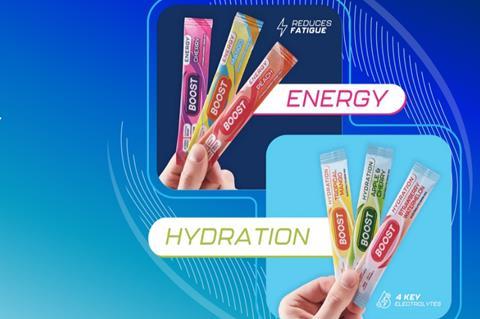
Barr’s popular range of value-focused Boost drinks can be had powder format, with a focus either on hydration or energy. With the former, the powders contain electrolytes and five daily vitamins, while the latter brings a 50mg caffeine boost per serving. Both are offered in three different fruit-based flavours and come in packs of 15.
Disrupter brand Sneak may have branched out into traditional 500ml cans or energy drinks, but began life in 2018 offering energy in powder format, which it continues to sell, and which chief executive Ashley Read says gives Sneak “credibility in formulation before we expanded into ready-to-drink”.
Read adds that energy powders “tend to attract heavier category users who want more of the product”, with customers valuing flavour availability and value. Interestingly, the brand has struck a deal with forecourt operator Rontec that means Sneak drinks are now available in 170 of Sir Gerald’s sites.
Celebrity endorsements and limited editions work
With so many limited edition drinks and snacks being offered it can be easy to lose track of the latest trends, but keeping up to speed with endorsements is worth it, because they can be highly effective.
Lucozade’s Sport Ice Kick Jude Bellingham Edition, for example, has brought in an additional £24.4m in sales according Alpesh Mistry, a sales director with Suntory, while also introducing 13% new shoppers into the sports drink segment and adding 34.6% in brand volume growth.
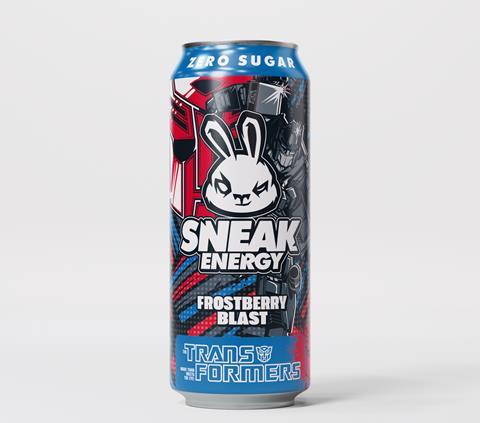
Sneak, meanwhile, considers limited editions “not a gimmick or a side project”, but a “genuine strategic lever” that can “create energy in what is otherwise a relatively low-urgency category”. Given the popularity of Sneak with the young, online crowd, its tie-up with Hasbro’s Transformers franchise makes total sense, with limited-run Frostberry Blast and Mango Meltdown flavours offered by wholesalers including AF Blakemore and Co-op Wholesale.
Market leader Red Bull, meanwhile, is looking to the virtual world, pairing up with forthcoming football game EA Sports FC 27 with the launch of the Red Bull Wings Cup, giving gamers the change to unlock in-game items after they scan QR codes on promotional cans.
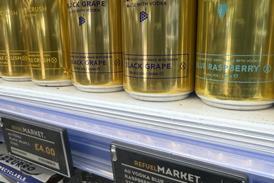
Not to be outdone, key rival and number two in the market Monster is focussing on Formula 1, teaming up with Lando Norris to help promote its Zero Sugar Limited Editon Gold Edition.
Sports and energy drinks aren’t just a young person’s game
Sports and energy drinks may have a youthful image, but given adults of all ages can be found wearing hoodies and playing video games, focussing on younger customers shouldn’t come at the expense of those who might prefer a somewhat more relaxed approach to soft drinks.
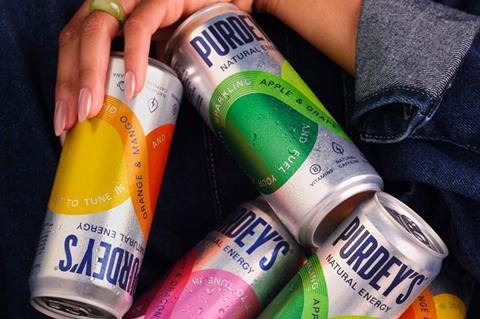
Purdey’s, for example, has long had a refined image, and was last year rebranded by owner Carlsberg Britvic to appeal to a “diverse and more health-conscious audience”, says Ben Parker, VP of sales for off-trade.
Available in three flavours (Berry & Dragon Fruit; Apple & Grape; and Orange & Mango), Purdey’s contains at least 34% fruit juice, together with natural caffeine, B vitamins, botanicals and guarana.
Also likely to appeal to a more mindful audience is Tenzing, conceived in 2016 as an alternative to high-sugar energy drinks, with its founders gaining the blessing of the family of Sherpa Tenzing Norgay, after whom the brand is named.
Offering a plant-based, natural alternative to traditional offerings, Tenzing is packaged in cans featuring restrained, tasteful mountain imagery and is available in a range of flavours including Pineapple & Passionfruit, and Raspberry & Yuzu, together with new varieties White Peach & Focus, and Fiery Mango & Lion’s Mane.
Sugar and sports, energy and focus
The nature of sports and energy drinks means a significant proportion of customers will be focussing on health – after all, many of these products are actively endorsed by sportsmen and women, and are seen on a regular basis at gyms up and down the country.
With low- and no-calorie drinks making up a staggering 70% of the soft drinks market (Nielson IQ), and sugar a key container of calories, it’s little wonder there’s no shortage of drinks that do away with the sweet stuff.
Lucozade Sport Zero Sugar, for example, comes from one of the UK’s best-selling brands in this segment, and can be had in Orange & Peach, and Raspberry & Passionfruit flavours.
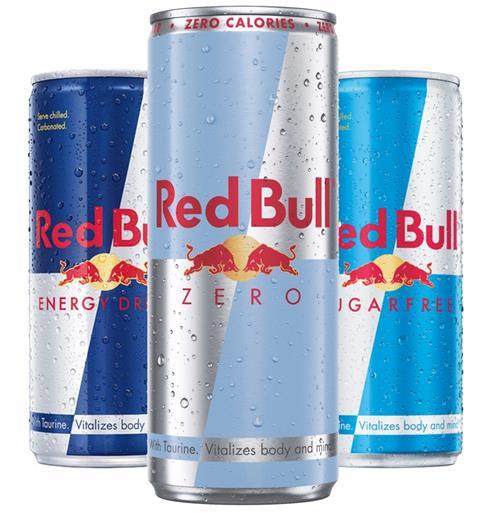
Category leader Red Bull, meanwhile, holds 37% of the segment, and offers two sugar-free options: Zero, which promises the same taste of the original drink, minus the sugar, and Red Bull Sugar Free, which has a slightly lighter taste.
There’s something of a paradox in the sports and energy category, with customers just as likely to prioritise exercise, reduced sugar content and natural ingredients as they are exciting flavours, video games, and the concentration they require.
With that in mind, Neutonic, which was recently valued at £44m, bills itself as “a smarter alternative to traditional energy drinks”, featuring a striking eyeball on its packaging, and packed with nootropoics, also know as ‘brain boosters’, which are said to improve cognitive functioning.
Neutonic says its ingredients, which include green tea, natural caffeine and citicoline (which is said to help cells repair themselves) help customers feel more focussed and productive, while survey work commissioned by the brand indicates 92% of customers feel more productive after consuming the drink.
Space and displays
Regardless of how much research one does into sports and energy drinks, a lacklustre in-store display will lose even the most well-read retailer’s sales.
A Red Bull spokesperson notes that its brand, together with Lucozade and Monster makes up 88% of all sales in the category, and that “ensuring availability and visibility of best sellers” is key.
They also concede, however, that they “understand the need to make space for NPD [new product developments] to drive excitement, trail and value into the category”, ensuring each brand “has their fair share on the shelf”.
Carlsberg Britvic’s Ben Parker, meanwhile, advises retailers use “high-impact point-of-sale materials like shelf trays, floor decals and window stickers to catch the eye of shoppers”, particularly in high-traffic impulse zones such as fridges and food-to-go areas.
Parker also advises shopkeepers to really know the category so they understand which energy drinks to cross-merchandise with lunch options, and how to pair post-workout drinks with protein bars.