

















1. Let’s drink to market growth
2. Swapping the coffee shop for the convenience alternative
4. Dairy drinks are healthy…compared with their carbonated cousins
1. Let’s drink to market growth
We may no longer be a nation of predominantly tea-drinkers, but our latter-day love of caffeinated and other cold dairy drinks goes beyond patronage of the ubiquitous branded coffee chains on every high street, with sales of these ready-to-drink (RTD) beverages continuing to soar in convenience.
According to Mintel, retail value sales of flavoured milk – one of the two big sub-categories in this market – rose from £332 million in 2022 to £414 million last year, a growth of around a quarter in 24 months. Meanwhile, coffee drinks have enjoyed a similar surge, rising from £291 million to £353 million over the same period, a 21% increase.
Antoine Hours, general manager of Yoplait UK, behind the Yop yoghurt drink brand, expects the “booming” dairy drinks category to double in size by 2028. And the good news for convenience, he says, is that it is the fastest growing part.

2. Swapping the coffee shop for the convenience alternative
RTD dairy drinks are that curious thing – an indulgent treat that delivers healthy profits for the retailer but still feels like value when compared with the alternative: a drink-in or takeaway option from one of the high street coffee shop chains. While the convenience sector might not be able to match the ambience and aromas of a coffee shop, the actual cold beverage on offer is every bit as good.
Customers shunning higher-priced coffee shops may be behind some of the growth in the RTD market, but the high street outlets have helped create our taste for chilled dairy drinks. Kate Abbotson, senior trade communications manager at Coca-Cola Europacific Partners (CCEP), behind the Costa Coffee RTD range, acknowledges that the chain’s status as the “nation’s favourite coffee shop” has a halo effect on the RTD brand.
CCEP relaunched its line-up this year, with a “silkier, smoother recipe” for its lattes, and two additions to the range: a Creamy Tiramisu Frappé and Double Shot + Caramel. Along with the new formulation, CCEP has introduced new packaging for its 250ml cans and 330ml bottles designed to “engage younger coffee drinkers who are increasingly drawn to sensorial descriptors and clear, standout signage on packs”.
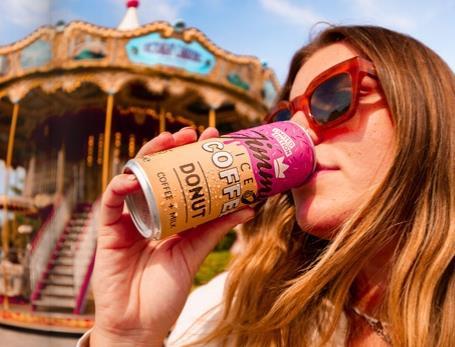
Also new to the market is a limited-edition Donut flavour for Jimmy’s Iced Coffee. The 250ml can is the latest addition to a brand pitched primarily at Gen Z consumers, to whom the combination of “the rich, bold flavour of coffee with the sweet taste of donuts” will appeal, says Russell Goldman, Carlsberg Britvic’s managing director, breakthrough brands. The launch, which has been backed by a nationwide sampling campaign, “presents a key opportunity for retailers to tap into”, he adds.
Consumers “seeking quick, energising pick-me-ups on the go” are behind the success of the iced coffee segment, according to Georgina Lightbody, brand manager at Emmi Caffè Latte. Retailers should devote half their flavoured milk shelf space to iced coffee, as the “proven hero” of the category, she recommends.
She cites research commissioned from IPSOS which she suggests identifies a “major growth opportunity” in an already strong segment. While 27% of UK shoppers consume iced coffee another 28% say they are open to trying it. This presents a “compelling case” for retailers to invest in targeted promotions and trial-driving bundles that “converts curiosity into repeat purchase”.

3. Shaking it up with protein
Mintel identifies better-for-you options, such as high-protein dairy drinks, as one of the most promising areas of the category. Products include Grenade’s new range of shakes, a spin-off from its well-known protein bars. According to Luke Morgan, the company’s head of convenience & wholesale, that legacy gives its shakes the best brand awareness among functional protein drinks.
Morgan says the Grenade drinks – which can be stored ambient but are “best served chilled” – contain more than 25g of protein per 330ml bottle with just 7g of sugar and come in the recognisable flavours of its protein bars, including the top-selling Fudge Brownie as well as the likes of White Chocolate and Strawberries & Cream. He says the range offers “the perfect alternative to higher sugar dairy options”.
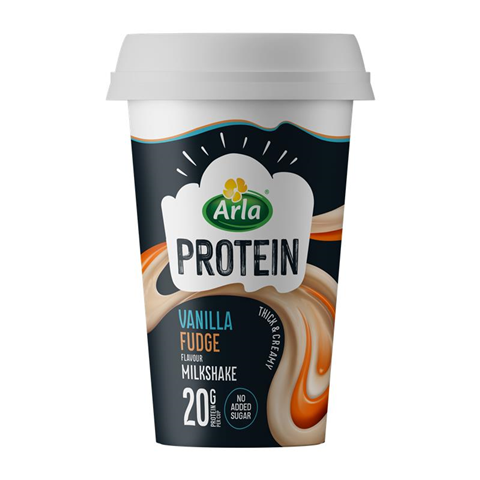
Arla has launched its first RTD protein milkshake in a 200ml cup-and-straw format. Available in Vanilla Fudge and Chocolate Brownie flavours, and with 20g protein, no added sugar, lactose free and less than 182 calories, the milkshake “makes the perfect afternoon snack or evening reward”, says the company.
Emmi, which offers a high-protein variant of its Caffè Latte, says there is a “significant surge” in the popularity of protein-enriched flavoured milks, with a 46% year-on-year growth in convenience and 44% in multiple forecourts, outpacing the total grocery market. “This trend underscores how protein is not just a health trend,” it says. “It’s a major growth engine within the dairy category.”
One retailer who has been doing particularly well with customers seeking protein in their drinks is Saeed Noorani, operations manager at five-outlet, West Midlands-based Sharma Garages, with fitness enthusiasts a key demographic. Grenade, UFIT shakes, Huel meal replacement shakes, and Nurishment are all performing strongly. He declares an interest, noting that the latter is “a very old favourite of mine that I used to have after going to the gym”.
4. Dairy drinks are healthy…compared with their carbonated cousins
While most dairy drinks may not spring to mind when one thinks of health foods, their relative better-for-you qualities are a crucial selling point for many brands. These include Mars Chocolate Milk, which Kerry Cavanaugh, general manager at Mars Drinks & Treats (MD&T), says gives consumers “a tasty drink option with 30% less sugar per serving than leading full-sugar sodas, plus the bonus of added protein”.
MD&T says that £19.3 million of its £24.6 million sales for its milk drinks range comes from the convenience channel. It claims that when stocked side-by-side, Mars Milk Drink cans – which include Maltesers, Milky Way, Twix, Snickers, and Galaxy – outsell full-sugar sodas by three to one, “reflecting a growing consumer shift towards flavoured milk as a more balanced drink option”.
This is reflected in advice from Yoplait UK’s Hours who suggests retailers offer milk and yoghurt drinks as alternatives to carbonated soft drinks in meal deals. Dan Yates, national account manager at flavoured drinks brand Delamere, seconds that recommendation. “While the dairy fixture might seem the obvious place for flavoured milks, it is worth considering selling them from the food to go fixture as part of a meal deal,” he says.
Emmi has launched a zero-sugar version of its latte range in response to a finding that 27% of consumers avoid RTD coffees because they contain too much sugar. It says the variant contains only milk and Arabica coffee beans and offers a “great-tasting, sugar-free option for those looking to moderate their intake without compromising on flavour”.
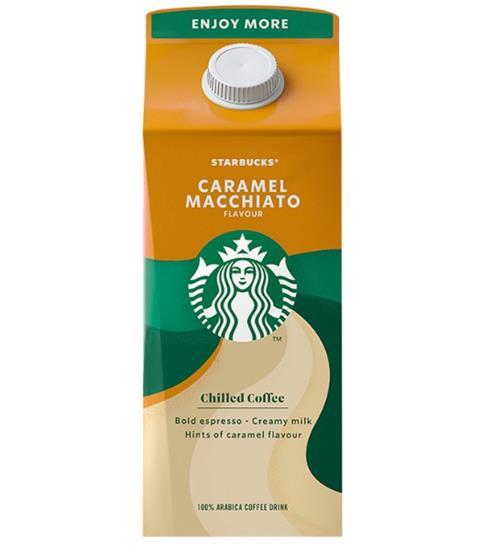
Finally, for those avoiding lactose but still seeking the taste of cold coffee drinks, Arla introduced in January an oat-based cappuccino and a caramel macchiato as part of its Starbucks Chilled Classics range. The plant-based pairing means consumers who do not drink milk have an RTD Starbucks alternative.
5. The right time?
According to Emmi, retailers can drive more frequent purchases by aligning promotions and deals with “shifting consumer missions”. What it means is that those buying chilled drinks do so for different reasons during the day, for example as a morning pick-me-up – where store owners could offer a breakfast item to complement the drink – or an indulgent lift later in the day, where it could be paired with a protein bar or snack.
6. Think big
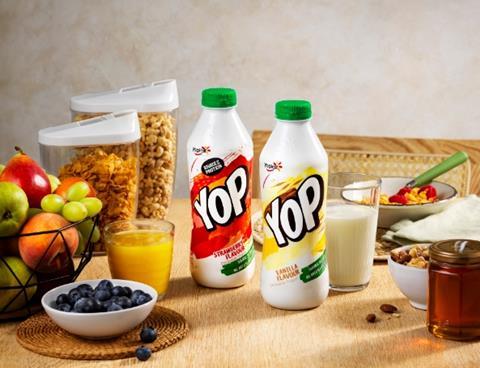
Formats of 250g, 330g and 500g are the norm in the market, but Yoplait broke the trend in 2023 with a larger 825g range of its Yop strawberry, raspberry, and vanilla yoghurt drinks. It says the launch encouraged new shoppers to try the product, with four-fifths of sales coming from those buying into flavoured milk for the first time.
The move was particularly interesting because Yop tends to have its “strongest resonance” with teenagers and young adults, who generally buy it ready to drink, according to Yoplait’s Hours. However, he says, “once an 825g multi-serve bottle is in the fridge it suddenly becomes of interest to the whole family”.
Arla says multi-serve is the fastest-growing segment in RTD coffee as “shoppers look to new consumption occasions and use the product more as a take-home drink”. Its Starbucks multi-serve range now has four 750ml SKUs: Skinny Latte, Caramel Macchiato, Caffe Latte, and Cappuccino. Its advice to convenience retailers: move multi-serve formats to the dairy aisle alongside core dairy for “take-home basket builders”.
However, not all suppliers are sizing up. Delamere recently unveiled 240ml glass bottles in four flavours to sit alongside its established six-flavour range of 500ml bottles (strawberry, chocolate, banana, iced coffee, vanilla, and salted caramel). It says the smaller bottles are “perfect for on-the-go opportunities”.
7. Go Local
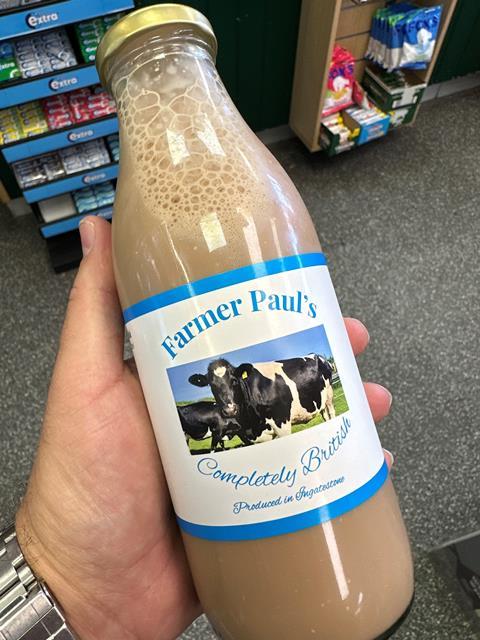
Goran Raven, who runs a forecourt and a separate convenience outlet in Essex, does well with established milk drinks such as Yazoo and Delamere “as people trust in those brands”. However, he also stocks milkshakes produced by a local dairy farmer who supplies them in glass bottles. Although premium priced at £1.99 for 500ml, they “sell well”, says Raven.
In July, the business launched a children’s competition in collaboration with the farmer – the winning drawing of a cow will appear on the product’s label in future.
Downloads
Starbucks caramel macchiato multiserve
Image, Size 0.92 mbStarbucks caramel macchiato multiserve
Image, Size 0.92 mb
