The government has committed to banning the sale of high-caffeine energy drinks to children under the age of 16 years. The Department of Health and Social Care is consulting to understand views on the action the government proposes taking and the proposals for enforcing the ban.
The government would like to hear from businesses in the retail and manufacturing sector, and industry bodies, as well as local authorities (reflecting the views of trading standards and environmental health officers).
The consultation is for England only.
What is a high-caffeine energy drink?
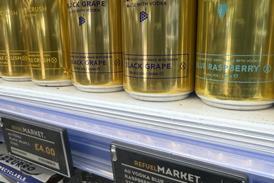
High-caffeine energy drinks are soft drinks that contain at least 150mg of caffeine per litre of drink, which is higher than other soft drinks. The European Food Safety Authority (EFSA) suggests that some energy drinks can have up to double the amount of caffeine found in an average mug of coffee, similar to the amount of caffeine in five cans of cola.
Why is the government concerned about children consuming high-caffeine energy drinks?
The Department of Health and Social Care is concerned there has been an increase in the consumption of high-caffeine energy drinks by children, particularly those living in deprived areas and from lower income households.
Growing evidence suggests a link between consuming high-caffeine energy drinks and a range of possible negative outcomes on children’s physical and mental health, as well as their education, including headaches, lack of sleep, and increased risk of anxiety and depression. There is also a concern around the sugar content in high-caffeine energy drinks.
The proposed action
The government proposes the following:
- Banning the sale of high-caffeine energy drinks to children
- Introducing a minimum age of sale (16 years old)
- All high-caffeine energy drinks legally must be labelled ‘High caffeine content. Not recommended for children or pregnant or breast-feeding women’. This includes any drink, other than tea or coffee, that contains over 150mg of caffeine per litre.
- Banning the sale of high-caffeine energy drinks to children under 16 years should apply to all sellers, retailers and businesses of all sizes in England, including in store and online sales. This includes restaurants, takeaways and delivery services, pubs and cafes. It also includes retailers that do not primarily sell food and drink, such as clothes retailers and newsagents.
- Banning the sale of high-caffeine energy drinks in vending machines. The government have proposed two options: Option 1 is banning sales from all vending machines regardless of the age of the person buying them or Option 2 is the business or organisation where the vending machine is located is responsible for the age of sale ban.
- The person who controls or manages the premises where the vending machine is located would be liable if the ban was breached, consistent with liability for the ban on selling tobacco in automated machines.
Of the two options for the vending machine ban, the government proposes that Option 1 is most likely to be effective and enforceable, but invites views and information on its potential impact to businesses.
Implementing the ban
The government proposes that a six-month implementation period is appropriate, since many retailers already have processes for the sale of other age-restricted products they can build on. The government is interested in views on the proposed timescale to implement the ban, particularly from retailers or businesses selling high-caffeine energy drinks and authorities who would enforce the ban, or their representative bodies.
- The government intends to use powers in the Food Safety Act 1990 to ban the sale of high-caffeine energy drinks to children under 16 years. Local authorities as enforcement authorities will be responsible for enforcing the ban.
- Under the Food Safety Act 1990, underage sales of high-caffeine energy drinks will become a criminal offence. The government proposes that local authorities should be permitted to issue fixed monetary penalties (a fine) as an alternative option to the criminal penalties outlined in the act.
- Local authorities can assess a person or retailer’s compliance with the age of sale ban on high-caffeine energy drinks in response to information or complaints obtained (including from the public) about underage sales from specific premises. To issue a penalty, local authorities must gather evidence beyond reasonable doubt that a person or retailer has failed to comply.
- If the regulator is satisfied, they would serve a notice of intent, followed by a final notice to impose a fixed monetary penalty. The person or business has 28 days from the date of being issued a notice of intent to either discharge liability or make representations, and 28 days from the final notice to pay the penalty in full or appeal.
- If the penalty is not paid or appealed within 28 days of issue, the penalty will be increased by 50%.
The consultation document sets out in detail the level of fixed monetary penalty for underage sales of high-caffeine energy drinks, from £1,500 and up to £3,750.
The government has asked for views on all the elements of the proposed ban and all the proposals for implementing the ban. The government would also like to understand the impact of the proposals on people with protected characteristics and welcomes any further information to inform the final impact assessment.
The consultation is open for 12 weeks and closes at 11:59pm on November 26, 2025. Responses are provided by completing the online survey.
- Written by Winckworth Sherwood senior partner Robert Botkai and trainee Emma Dangerfield.