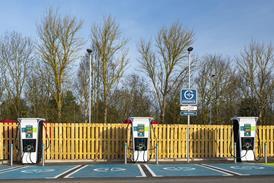
















At a recent social gathering an old friend spent over an hour gleefully telling me about a recent report which said that most EV drivers, of which he is one, hardly ever use a public charger, and that many of the charging networks are losing vast sums of money. His parting shot – “Give it a couple of years, and there won’t be any need for petrol stations or charging stations – we’ll all be charging our cars for free at home.” Well, maybe…
Now regular readers may remember that I touched on the point about EV drivers getting out of the habit of using any forecourt except in an emergency, a year ago or so. And yes, the recent You Gov survey simply confirms what a lot of anecdotal evidence already suggested. But in my view both it and my friend’s polemic really relate only to the recent past and the near future. Looked at from a slightly longer perspective, things might be quite different.
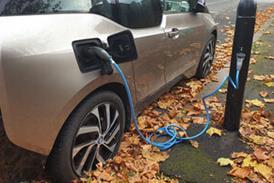
Let’s start with my friend. He’s one of those people fortunate enough to live in a large exurban property, with a lot of parking space on his drive; he’s also well-off enough to have invested several tens of thousands of pounds in solar PV panels and large storage batteries at home. Hence, he proudly tells me that not only does he use his car ”for free”, but that so far this year he’s exported more power to the grid than he’s used – so his electricity hasn’t cost him anything. Lucky fellah! Those less well-off, or living in crowded areas without off-road parking, or blocks of flats, will always have to use some form of public charging facility.
Secondly, domestic EV chargers are essentially limited to deliver 7kW, and there’s very little practical possibility of that changing in the medium-term – the supply infrastructure won’t support it, the cost of doing it is prohibitive, etc. Now that’s fine for those who use their EVs only locally and keep them trickle-charging on the drive for 20 hours a day. But at a time when the Chinese and Korean car manufacturers in particular are constantly launching new cars boasting large batteries and five- to 10-minute re-charging, domestic chargers will look extremely poor performers for anyone using their new car more frequently or for longer journeys. Fast or ultra-fast charging will only exist beyond the home.
Thirdly, while governments are inconsistent about the precise timing, at some point within the next 10 years sales of new petrol/diesel vehicles will stop. Perhaps hydrogen will finally come into its own by then, but otherwise there’ll be vastly more EVs out there than today. And again, domestic charging won’t be able to cope.
As for the current state of the charging networks, that is absolutely par for the course with every new technology: from the independent TV network in the 1950s, through to satellite TV in the 1990s to the major web-apps in the early 2000s, all have lost millions in their first few years. Some survived to make billions later, those that didn’t, almost invariably got swallowed up by those who did. It’s called investment; sometimes it produces returns in the long run, sometimes it doesn’t. That’s what is called capitalism…
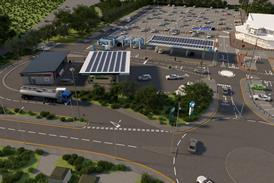
The point of this is that while the major fuel retail groups, as well as newcomers to the charging station concept, continue to invest in charging technology, I sense that many independent forecourt retailers are still reluctant to follow. Yes, it’s expensive, but that expenditure goes onto your balance sheet and only slowly gets amortised onto the P&(L). It will produce a revenue stream over time; and that’s before the availability of capital allowances for infrastructure investment which can reduce you tax bill quite considerably in the short-term.
So, despite the present state of the EV world, I would suggest that there will always be a need for re-fuelling stations, whether oil, hydrogen, or electric, in the foreseeable future; but those unwilling to make the appropriate investment now will struggle to be there in five or 10 years’ time.
- Jan Mikula represents nationwide franchise accounting company EKW Group – ekwgroup.co.uk