



















The fact that around 70 of the 214 petrol stations listed on Fuel Finder as being on motorways don’t meet the criteria for this classification is small fry in the grand scheme of things – but a more significant issue lurks beneath this.
Briefly, the government’s position is that a filling station should only be listed on Fuel Finder as a motorway site if it is at an official Motorway Services Area (MSA). Being on a major trunk road doesn’t cut it, nor does being on a roundabout just off a motorway junction.
No, to be classed as a ‘motorway’ site on Fuel Finder a forecourt must be located at an MSA – somewhere like Fleet, Tebay or Watford Gap Services. Such sites have to offer certain provisions to gain this status and be advertised from the motorway with blue signs.
MSAs need a minimum number of free parking spaces based on a percentage of traffic flows on the road they serve; fuel and hot food must be available 24 hours a day; and shower facilities with secure lockers have to be available for HGV drivers, to name but a few criteria. Such rules, not to mention expensive build, staffing, lease and maintenance costs, go some way to explaining why MSA fuel is so expensive, which is why it is important to be able to accurately filter out these sites when analysing prices by brand or geographical area.
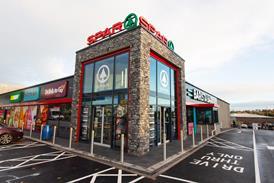
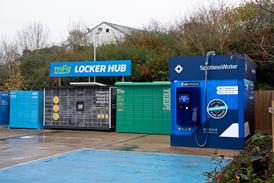
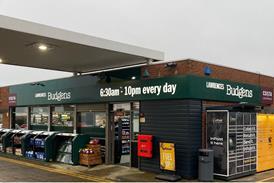
None of this is to say that forecourts and services that are adjacent to motorways but lack MSA status aren’t worth visiting – indeed, many of these facilities represent far nicer stop-offs than some official sites. But, as far as Fuel Finder is concerned, if it isn’t at an MSA, it isn’t a motorway site.
It would have been helpful, one might think, if the Department for Energy Security and Net Zero, which has oversight of Fuel Finder, had communicated this detail to forecourt operators. Same goes for VE3 Global, which won the contract to build and run the system.
But while DESNZ was happy to tell me that “only those forecourts that are directly accessible within a Motorway Service Areas (MSA) should be labelled as motorway in Fuel Finder”, and VE3 said “the ‘motorway’ field in Fuel Finder is intended to identify sites located at official Motorway Service Areas” at least one retailer who runs an non-MSA services by a motorway got in touch to say this was the first they had heard of it.
I wasn’t able to find a trace of this requirement online, and it seems that while those running Fuel Finder were aware of the MSA clause, it had slipped their mind that forecourt firms might need to know this detail.
Here’s where things get more concerning, though. While DESNZ is responsible for overseeing Fuel Finder’s definitions and requirements, and VE3 Global built and runs the IT platform and is contracted to check and validate the data uploaded to it, the government’s Competition and Markets Authority (CMA) is meant to enforce the rules.
Before the CMA gets involved with any potential breaking of Fuel Finder rules, though, VE3 Global, a private company with no previous experience in fuel retailing, is meant to detect and “work through” issues with operators, only contacting the CMA if it is unable to resolve matters in this way.
Yet while VE3 was aware of the motorway/MSA rule on Fuel Finder, it had apparently not detected that dozens of filling stations were listed not in accordance with this – a fairly significant and easy-to-spot oversight that I found after an hour or so’s digging.
Given this, it is reasonable to ask if VE3 will notice other, more serious, breaches that may arise in the future. Indeed, one independent retailer recently told Forecourt Trader they are aware of a disreputable operator who was uploading one set of prices to Fuel Finder, then selling petrol and diesel at significantly higher rates to drivers, who may have been drawn to their site by the promise of cheap fuel. On being alerted to this, the CMA said VE3 would be the first port of call and cited a LinkedIn post written by a senior figure some weeks prior – not what one would call a robust response from a government watchdog.
The introduction of Fuel Finder has created a mandatory, nationwide and open-access database of (near) live petrol and diesel prices in a spreadsheet format that makes them easy to analyse.
So as well as a newfound ability to broadcast false prices, the system offers fresh opportunities for unscrupulous firms (which are in the minority in the forecourt world, but nonetheless exist) to engage in unfair pricing practices using information that wasn’t previously available, or at least not so easily.
Given the lackadaisical response to dodgy pricing, and the easily detectable motorway issue apparently being news to VE3 Global, DESNZ and the CMA, this does not bode well.