


















I’ve only been writing for Forecourt Trader for a couple of months, so you might read the above and think “who the heck are you to make such grand pronouncements?”
But a headline is no good if it doesn’t make people take notice, and I hope I speak from a place of at least some authority.
I’ve been writing about cars and transport for the last decade, investigating everything from smart motorways and low traffic neighbourhoods, to zero-emission mandates and vehicle safety scandals, so I’m familiar with the intersections where policy and reality meet.
As for forecourts, well, I’m a little rusty here as it’s been 20 years since I ran my 3mlpa site, but the underlying principle of the business remains a constant: millions of drivers visit filling stations every week for fuel, and it makes sense to offer other things for them to buy as they’re stopping anyway.
There have, of course, been changes since I stood behind a till. The business model was in a far more precarious place back then, when sites were often sold up only to play host to low-investment, low-regulation firms that did little to enhance their surrounding areas.
Today it’s a very different story, with healthy fuel margins and a near endless stream of trade (no doubt helped by the population boom that’s occurred since the early 2000s) seeing retailers compete to acquire, rather than offload sites.
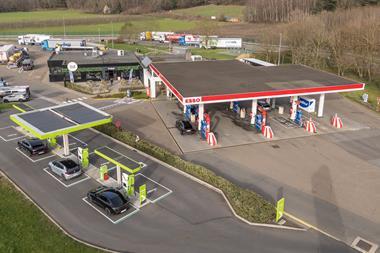
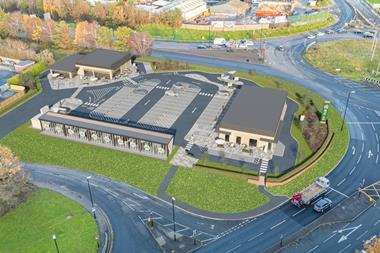
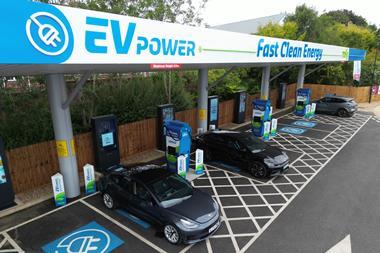
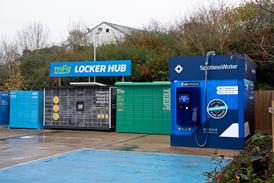
Operators are also embracing, far more than I remember, the fact that in addition to selling petrol, diesel, valeting services and convenience, forecourt firms are landlords as much as anything, and the sky’s the limit in terms of what can be offered on site, from laundry facilities and parcel lockers, to bespoke butchers and EV chargers.
Which neatly brings me on to the three-tonne SUV in the room: the mandate to outlaw petrol and diesel cars and allow only zero-emission (read: electric) cars to be sold from new come 2035, a policy embraced by all ministers, regardless of what colour rosette they sport, and one that is diametrically opposed to the forecourt sector.
The electric issue
We may talk of forecourts, sites, or PFS, but to most people they’re simply petrol stations, and it doesn’t take a genius to work out that if you ban new petrol cars, the petrol station will disappear along with them.
This clearly won’t happen overnight: we’re a decade away from the ban, and it’ll be another 10 or 20 years until the remaining fossil-fuel cars reach the ends of their lives. But there nonetheless remains a mutual exclusivity between the electric car and the petrol station, and the ZEV mandate is an iceberg that looms larger on the horizon with each passing year.
Diversification, hedges and alternative income streams are clearly on everyone’s minds, and the naturally convenient locations of forecourts make them well-suited to being retail hubs of one sort or another. But without the ‘hook’ of petrol to bring people in? Trade will undoubtedly get tougher as EV mandate percentages ramp up.
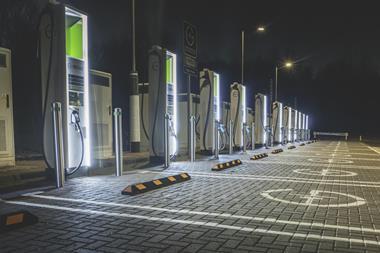
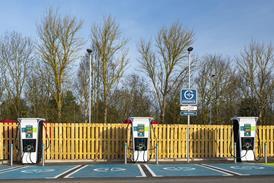
Replacing every fuel pump with an ultra-rapid plug is a nice idea, but it’s one that offers false hope, because as well as recharging times making customer flows far slower than with petrol, roughly 60% of the population has off-street parking and will charge at home, where electricity will always be cheaper.
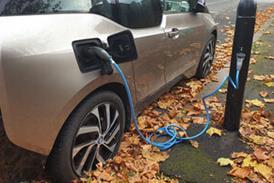
The million or so EVs on the road mean charging stops on busy routes and in urban centres should always see a steady stream of trade, but it’s worth noting that because homes with driveways are worth more than those without, many future customers will, as well as being far smaller in number, have less disposable income, as only people without driveways – ergo people in less valuable homes – will use public chargers, save for business travellers and those on long journeys.
I’ve liked most of the many EVs I’ve driven and would happily have one if I could make the tax breaks work, using these to psychologically offset the additional inconvenience inherent to recharging. But I wouldn’t have one unless forced or incentivised to, and many others take the same view. You can see this in electric-car sales, where retail buyers make up only 10-20% of the market; this, not the subsidised corporate sector, denotes the natural scale of EV demand.
Thing is, it doesn’t have to be this way, partly because government policy amounts to no more than agreed words on a page, and partly because most people don’t want this version of the future.
If the majority doesn’t don’t want it, and the forecourt sector faces existential threat from it, something must clearly be done about the electric issue.
Automotive alarm bells
The good news is that the populace will resolve a great deal of this: you can take a man to a car showroom, but you can’t make him buy an EV. Eventually, too late to avoid a lot of damage, sure, but eventually ministers will twig that their electric dreams are just that, the car industry is too big an economic driver to let dwindle, and people must be allowed to buy what they actually want, which is hybrid cars, at the very least.
In short, given the EV mandate has changed at least five times since it was announced less than 10 years ago, there will – not might – be further revisions, such as the one announced at the beginning of April due to poor target-to-sale ratios.
But the forecourt sector has too much at stake and too much to offer to just sit back and wait for market forces to sort this mess out. The tens of thousands of jobs this industry supports, the countless local communities it serves and the billions in tax and the duty it pulls in for the Treasury – not to mention its entrepreneurial spirit and welcoming nature it offers people from all walks of life – make this industry too good, and too important to let wither.
Car makers have already seen what happens if they just go with the political EV flow: thousands of job losses, vastly reduced revenues and unprecedented competition from foreign markets are just three of the consequences of blindly nodding along with the poorly conceived transport policies the UK and EU have embraced.
The forecourt sector must avoid a similar fate, and there needs to be a serious conversation about what is to be done. Fortunately there is – if we act now – enough time to navigate around the approaching iceberg. While ministers remain wedded to spreadsheets, academic consultants and dinner-party-friendly ideas that fundamentally misjudge how infrastructure and economies function – not to mention what the pesky electorate wants – the people in charge of our transport policies must be politely but firmly told: “No. You have got this wrong”.
We can see just how wrong with the UK’s HGV policy, which is too bonkers to go into in detail here, but effectively mirrors the EV car mandate, albeit with a five-year delay.
This is sharply illustrative of the disconnect between the real world and those in power, who love nothing more than coming up with what I term ‘limo policies’: ideas that might sound great from the back seats of a chauffeured ministerial car, but are completely impracticable when the rubber hits the road.
An electric car’s battery is, at its core, a £10,000 fuel tank that weighs 600kg and has terrible energy density, which seeks to replace a £50 plastic tub that weighs perhaps 50kg when full, and which can be replenished 10 times more quickly.
All this is being done, don’t forget, to reduce global CO2 emissions, but with UK cars and vans accounting for just 0.2% of these, upending our entire private transport infrastructure system will bring about gains negated simply by a couple of new gas-fired power stations coming on stream.
Given EVs cost more than petrol cars despite their ranges and refuelling times making them less capable machines, this is a perfect example of people ”being asked to make financial sacrifices and changes in lifestyle when they know the impact on global emissions is minimal”, as Tony Blair recently described the UK’s net zero policies.
Shifting the narrative
EVs aren’t the only option, and as well as continuing to allow hybrid cars to be sold past 2035 (a change that I predict will be enacted within the next three years), those in power should take a less monomaniacal approach to fuel types. From hydrogen (both fuel-cell and combustion) for haulage, to synthetic fuels and hydrotreated vegetable oil (current scandal aside), as well as traditional fossil fuels and, yes, some battery power, a blended approach is needed for transport energy.
Good thing is, I know just the industry to spearhead this approach, and have a small contribution to offer as an idea – and it’s more constructive than a petulant ’no’.
Give a big forecourt, perhaps at an MSA, over for a few days or weeks to demonstrate all the fuel options available today. Kit the site out temporarily with hydrogen tanks, synthetic fuels, chargers, traditional pumps, and any other tech that firms want to showcase, along with driveable vehicles of all powertrain formats to demonstrate these fuels actually work, and you have a realistic and agnostic showcase for the future.
Come up with a snazzy name (‘the fuel lab’ has a nice ring to it), organise for as many media and political types as possible to turn up, and you might just create the publicity splash that narrative needle-shifts require. At the very least, such an initiative would show the country’s millions of motorists that at least someone is paying attention to what they want. With a bit of investment, a bit of planning and a bit of hutzpah, it could be just what’s needed to kick-start a conversation that’s desperately needed.