


















‘Misinformation’ is a favourite chant of politicians, with the Prime Minister claiming those who spread untruths “debase themselves and the country” – so how should we perceive the government when it consistently facilitates the dissemination of falsehoods?
We’re talking, of course, about Fuel Finder, and while the data this service contains is apolitical, given firms can be fined up to 30% of their turnover for not complying with regulations and the system has been spoken about from the despatch box, it’s clear those in power think it important.
Yesterday we published the latest in a series of articles charting problems with the scheme. First, there was registration, which opened over two weeks late; next came fuel detailed on the database as being available for 1.3p a litre; then there were forecourts listed in the middle of the ocean, followed by ‘motorway’ sites nowhere near motorways.
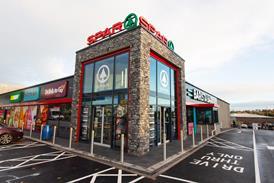
Now, we’ve discovered that every petrol station operated by one of the big four supermarket chains is marked as not being a supermarket site, while seafaring forecourts and preposterously priced fuel still feature.
So that’s false information about fuel prices, and forecourt locations and types, being shared via a government web page that price-comparison services use, despite the Department for Energy Security and Net Zero (DESNZ), which oversees the scheme, being told about such mistakes weeks and in some cases months ago.
Fixing these errors should be easy: it’s the work of a moment to upload latitude and longitude coordinates to an online mapping service, at which point maritime filling stations could be identified and their entries corrected. This is basic, basic stuff.
A simple algorithm would be capable of flagging £19-a-litre diesel or £16-a-litre unleaded for review (both available today, if you believe Fuel Finder), while 1,400 forecourts run by supermarket chains being incorrectly labelled means 19% of petrol stations on Fuel Finder are listed alongside misinformation.
DESNZ’s response to much of this has been to point the finger at forecourt firms, with the department recently telling us “fuel retailers are responsible for submitting accurate information to Fuel Finder”.
Leaving aside the fact that for 1,400 supermarket sites run by four major chains to consistently feature the same mistake indicates an error with the system rather than retailers, it is indeed the responsibility of forecourt firms to submit accurate information – but VE3 Global, which built and runs Fuel Finder, is contractually obligated to ensure the data it collects and circulates is correct. Here’s the relevant section from the government tender:
“Given the number of PFSs [petrol filling stations] reporting data on a near real time basis, an Aggregator [the firm that runs the scheme] will ensure that data is efficiently collected in the agreed formats, cleanse the data, validate the data, convert the data into agreed formats and disseminate the data to Third Parties.”
So from day one, the government recognised that with thousands of petrol stations submitting myriad price changes each day, errors would make their way into the database; those drafting the contract had the foresight to mitigate against this by placing responsibility firmly on the shoulders of the company that was chosen to run the scheme to cleanse and validate all data.
We’re now more than three months into forecourt firms being legally required to use Fuel Finder and the system is still riddled with mistakes that are being shared with the public via official channels, despite these errors being flagged repeatedly to VE3 and DESNZ by Forecourt Trader.
The only sensible course of action is to recognise that despite its best efforts, VE3 is unable to meet the terms of the contract, and Fuel Finder should be given to a company that can.
I doubt this will happen, as it would send the message that government procurement officers made a mistake when they chose a firm with no previous experience in the sector to run Fuel Finder, and I suspect face is too valuable a commodity – even compared to petrol – to lose.