













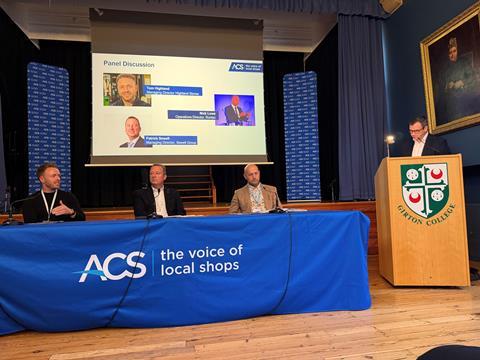
Forecourt operators must be actively planning for and no longer just thinking about the Deposit Return Scheme. That was the message at the launch of the Association of Convenience Stores’ annual forecourt report this week.
“Obviously the introduction of the Deposit Return Scheme across forecourts and the convenience sector is going to be a huge challenge for 2027,” said ACS chief executive Ed Woodall.
“We have started moving from a point where we are talking about principal discussions to practical ones around implementations, and it’s going to have big commercial impacts.”
With operators typically spending an annual £14,810 per store, according to the report, the decision to invest in reverse vending machines to take part in the scheme will be significant.
“Half the budget of a typical forecourt site would be wiped out by the introduction of the solutions around DRS, so that has implications around investment being made elsewhere,” explained Woodall.
“Our role at ACS is to make sure that the commercial implications of those challenges are properly reflected when people are making policy decisions.”
With the legislation coming into force next October, many forecourt operators are still deciding on how to approach the requirements of the scheme, which will be different in Wales compared with England, Scotland and Northern Ireland.
Tom Highland, managing director of the Highland Group of six petrol stations, one of three panellists at the event, said that he plans to introduce reverse vending machines before most operators will be legally required to do so, in order to obtain a competitive advantage.
“DRS, I think potentially could actually be a positive thing to get that spend back in store,” he said. “I think, and this is just my opinion, that if I’m an early adopter to it, and people get used to coming to my store for it, then they’ll always have a routine for that.”
Fellow panellist Patrick Sewell, managing director of Sewell on the go, who has been talking to recycling company TOMRA about installing equipment ahead of the legislation, added: “I think retailers don’t entirely understand it [the scheme]. I don’t think the wider industry has got a grasp of it, despite the ACS’s attempts and that of DRS companies.
“I think it will still come as a surprise to some retailers. I also think it will come as a surprise to the customer base as to really understanding it. They will get over it, but it will take quite a bit of change.”
And Nick Lowe, operations director at Rontec, said that with 30 sites in Wales, the Top 50 Indie was “a bit concerned” about the inconsistencies between there and the other nations of the UK.
“As a business we like to know the answers, and we’ve been in the business a long time so we do know the answers to most questions. This is one area that we do not know the answers to and it is quite difficult,” he said.
According to the ACS, some 44% of forecourt operators surveyed in April were not even aware of the DRS scheme. But Woodall said that retailers should be making plans now, with the machines affecting everything from store space to connecting with the internet and epos systems. “There is a lot more to it than at the front end,” he said.
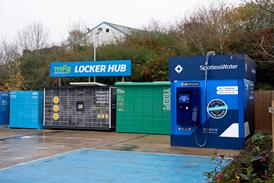
With 82% of independent forecourt operators’ shops under 2,000sq ft, according to the report, and concerns around the hygiene of storing the dirty bottles and cans included in the scheme, many operators will be looking to place the machines outside.
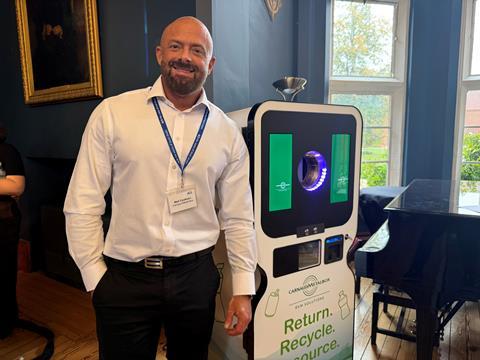
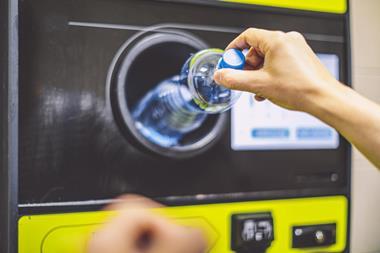
But Neil Cookson, senior national commercial manager of reverse vending machine supplier RVM Solutions, said that placing the units outside would be a missed opportunity. The business is developing a counter-top version of its Carnaud Metalbox machines for those with limited space.
“They [reverse vending machines] need to be inside as part of the customer journey of receiving the voucher and spending it in the shop. It’s about catching people in the moment with strong promotions,” he said.
Forecourt Trader’s Legal Doctor explains more about the Deposit Return Scheme here.