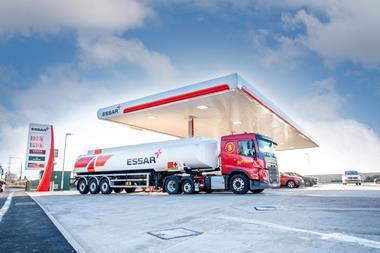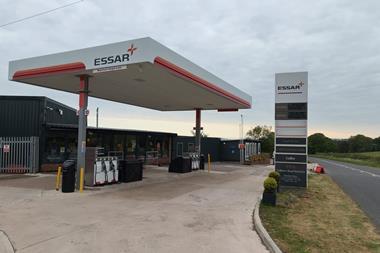
















Two more oil brands – Essar and Texaco – have stepped forward to throw a lifeline to Harvest Energy dealers who have been left to source alternative fuel supplies following the collapse of the Prax Lindsey Oil Refinery this summer.
Like Murco, the first to stick its head above the parapet, the two businesses are offering short-term contracts, giving operators relief from having to buy more expensive fuel on the spot market.
The arrangement specifies that the contracts will end immediately if the beleaguered Prax Group subsidiary starts supplying fuel again. In the meantime, the trio are providing Platts-based pricing, and reliable delivery terms, more akin to the relationship dealers had under their original Harvest Energy contracts.
Essar Energy Transition (EET) Retail’s chief executive Narayan Bhatra, says that by offering a stop-gap solution for Harvest Energy and Total Energies dealers while they wait to see if they will be released from their contracts, it has given a “decisive and empathetic response to a volatile supply landscape”.
He adds: “Essar is not only stabilising operations for independent retailers, but also reinforcing its commitment to long-term partnerships built on trust and resilience.”
Having recently invested in its own Stanlow refinery at Ellesmere Port in Cheshire – including a $130 million turnaround project – Bhatra says that EET Retail, a division of refinery owner EET Fuels, was ready to “respond decisively and effectively” to other operators also impacted by the disruption.
The administration of the Prax refinery, in North Killingholme, North Lincolnshire, has had a wider effect than purely hitting Harvest Energy’s 125 dealer and 87 company-owned sites. It is the second refinery closure in the UK this year, after Grangemouth in April, shifting the landscape of the supply base in the UK.
BP, for instance, was initially hit by the unexpected closure of the Lindsey refinery, causing a short interruption in its supply. One operator told Forecourt Trader at the time that he had instances of unleaded tanks running dry over a week and a half of disruption. In a letter to its dealers at the beginning of August, BP’s senior dealer manager UK Natalie Cattermole said the problem had been resolved, and she did not foresee further issues.
“We have refreshed our supply plans without reliance on Prax supply, including the acceleration of a project to bring unleaded into BP Hemel Terminal through an alternative route,” Cattermole said in the communication.
“Whilst we expect supply to remain stable, we continue to assess all our supply options and to further improve resilience,” she added.
Bhatra says that the closure of the Lindsey refinery has prompted many fuel retailers and dealers across the UK to reassess the resilience of their supply networks.
“As one of the few remaining UK refineries, Lindsey played a significant role in regional fuel supply and employment. Its closure has understandably raised concerns among dealers, hypermarkets, and independent forecourts already navigating tight margins and fluctuating demand,” he says. “For many, the immediate question was how quickly alternative suppliers could step in to ensure continuity of fuel deliveries.”
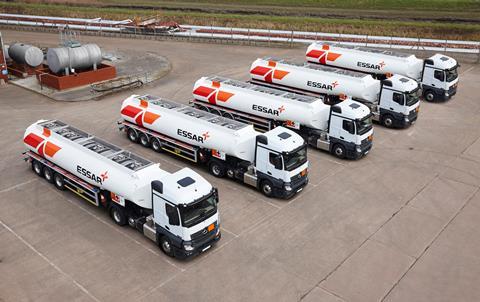
Bhatra says that as well as offering competitive pricing, increased credit lines, and flexible supply agreements, EET Retail was able to meet the surge in demand with maximised capacity at Stanlow, and an expanded fleet.
The business has been utilising its national network of terminals including Kingsbury, Oikos’s Canvey Island storage facility, Grangemouth, and Northampton to provide UK-wide coverage reaching even the most remote locations, he says.
“At Essar Energy Transition Retail, we recognised the urgency of the situation and acted promptly to support affected customers,” he says.
“The improvements at Stanlow have significantly enhanced both output and operational efficiency, allowing our team at EET Fuels to scale up supply rapidly. Within days of the announcement, we had mobilised additional resources to meet the surge in demand.”
He adds: “We’ve also engaged with new customers to help diversify their sourcing strategies and reduce risk. Many dealers have taken this opportunity to reassess their supply arrangements, and we’ve been proud to offer them a reliable and flexible alternative.”
The UK has seen a gradual decline in domestic refining capacity over recent decades, and the closure of the Lindsey refinery may signal further consolidation in the UK refining industry, says Bhatra, highlighting the need for “robust contingency measures and strategic investment”.
Bhatra says he is open to working collaboratively with government bodies and industry partners to strengthen supply chains and ensure long-term energy security. According to the Energy Institute’s 2025 Statistical Review of World Energy, UK refining capacity has contracted while imports and storage infrastructure have grown. “This trend raises important questions about the future viability of domestic refining and the strategic role of companies like ours in maintaining national supply resilience,” says Bhatra.
“At EET Fuels, we remain committed to supporting our customers and the wider industry. We still have additional capacity available, underpinned by the recent turnaround at Stanlow, and we stand ready to assist should further challenges arise. Our goal is to provide not just continuity, but confidence, ensuring that our partners can operate without disruption, even in uncertain times.
“For forecourt operators, the message is clear: robust supplier networks and proactive planning are essential to maintain continuity and avoid disruption.”
- Valero, responsible for the Texaco brand in the UK, declined to comment.