

















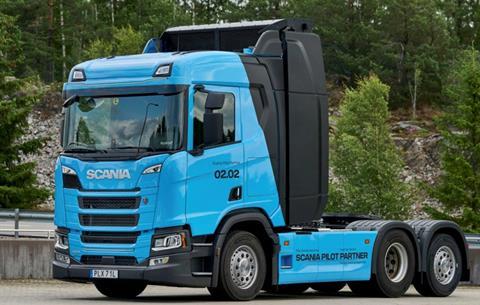
HyHaul Mobility has confirmed it will purchase three hydrogen refuelling stations and deploy up to 30 hydrogen fuel cell HGVs along the M4 to create the UK’s first zero-emission commercial hydrogen trucking corridor by summer 2026.
This is a result of the company’s decision to take a £14m Final Investment Decision to purchase the hydrogen refuelling stations. The £14m investment is said to be the largest of its kind ever in UK hydrogen heavy duty vehicle refuelling and officially launches the government-backed HyHaul project.
Victoria Saunders, innovation lead – hydrogen in transport at Innovate UK, says the announcement marks a crucial step forward for HyHaul Mobility in establishing a ”pioneering hydrogen HGV refuelling network across the UK”. Innovate UK is delighted to support the delivery of this ambitious project, as part of the wider Zero Emission HGV & Infrastructure Demonstrator (ZEHID) programme, which is vital for accelerating the transition to decarbonised heavy-duty transport,” she adds.
Transport and green hydrogen industry leaders Novuna, Scania Group, Reynolds Logistics and Protium have joined forces with HyHaul Mobility to demonstrate how a strategic network of hydrogen infrastructure can deliver annual savings of 1,900 tonnes of CO2.
Chris Jackson, chairman, HyHaul Mobility and CEO, Protium, says: “Nearly four years since the project was first conceptualised, it is incredibly exciting to see the UK take its first concrete steps towards commercialising hydrogen heavy duty transport applications at scale. HyHaul will be the pioneer that unlocks part of the UK’s decarbonisation journey, as we are incredibly excited to be leading the charge together with our incredible partners.”
Since 2014, domestic transport has produced the most greenhouse gas emissions (GHG) of all UK sectors. Heavy goods vehicles account for 17% of that, emitting 19.1 million tonnes of CO2 in 2022.
The UK government has a target to end the sale of all new non-zero emission HGVs by 2040, however their weight and the distance they travel make them difficult to decarbonise. Hydrogen vehicles offer a range and refuelling time that is similar to fossil-fuelled vehicles, meaning many logistics companies believe the technology could be the right option for their needs.
Recent research published by the UK Road Haulage Association found that 12% of predominantly larger HGV operators (fleets of 25+ vehicles) plan to bring hydrogen vehicles into their fleets within the next five years. Lack of public hydrogen refuelling infrastructure was listed as the top barrier to adoption, an issue that HyHaul says it will directly help to address.
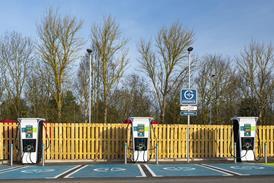
The hydrogen fuel cell HGVs used in this project will be supported by a strategically located network of hydrogen refuelling stations. Located at points along the M4 corridor, including Avonmouth and Reading, these refuelling stations will aim to provide the critical infrastructure needed to enable zero-emission trucking at scale.
The green hydrogen used in the project will be supplied by Protium, which will be producing the hydrogen at production facilities in Wales.
Chris Ashley, net zero lead at the Road Haulage Association, says: “This is encouraging news from HyHaul. Our recent Net Zero Survey showed that hauliers and coach operators recognise hydrogen’s potential as a solution to reduce carbon emissions, particularly for hard-to-decarbonise operations such as long distance or heavy haulage.
With time now pressing to meet planned phase-out dates for new diesel vehicles, we look forward to seeing hydrogen-powered lorries and coaches on our roads as quickly as possible.”