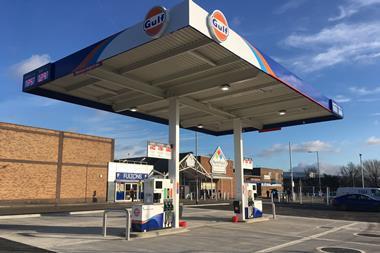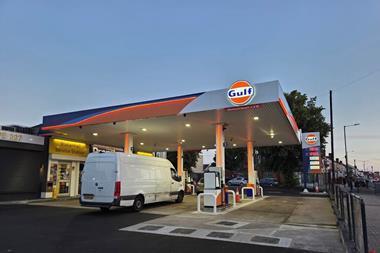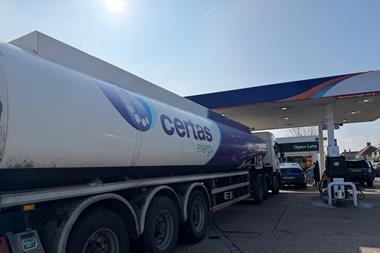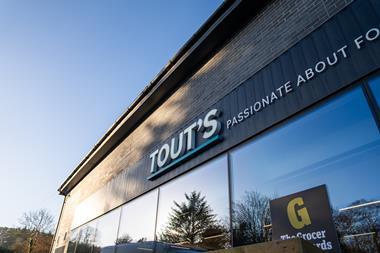










It is business as usual for Certas Energy following the approval of the sale of its parent company DCC: with the oil distributor/fuel retailer pressing ahead with ambitious growth plans, and a £10m upgrade of its UK company-owned forecourts, unmanned petrol stations, HGV bunkering facilities and truckstops.
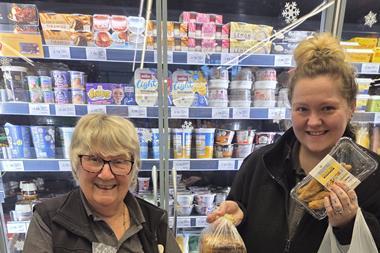
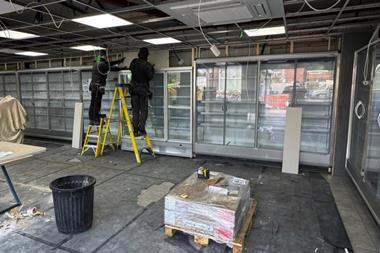
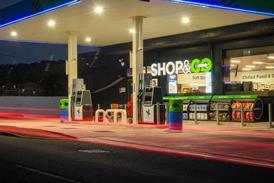
The year-long network upgrade will conclude in March 2027, with all 37 of the Certas company-owned/company-operated sites being refitted and sporting new fridges, a rollout of its electric vehicle charging Evolvo brand, new valeting equipment and knockdown rebuilds at its Bradbury forecourt and Felixstowe bunker site, in its scope.
The business has also upgraded its back-office systems to enable it to run a more sophisticated version of its Oomph loyalty app, which is about to be launched. Eventually, it will include all forecourt services, shop and fuel purchases in the loyalty scheme, and to use its data to target marketing at specific subsets of customers.
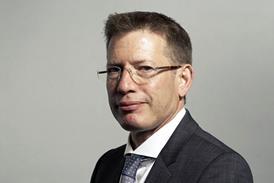
So said managing director of UK mobility Bryan Main in an exclusive interview with Forecourt Trader. He has been tasked too with plans to oversee by the end of the decade a doubling in the size of the business, which currently operates 78 company-owned petrol stations, including 41 unmanned sites under the new-look Gulf, or Pace, or Fuel Express brands.
Main, who took up the challenge of heading the mobility division in spring 2024 after more than 19 years with Certas, says bringing its own sites up to scratch will be pivotal in recruiting dealers. It has 392 dealer sites – with 307 of them with Gulf branding and 85, Pace.
With sites coming and going, the number of dealer outlets has largely flatlined over the past 12 months, but it has signed up 25 dealer sites over that time, and further momentum is expected with former EG Group executive Vijay Hindocha joining the business as head of retail estates.
While strong in Scotland, coverage for Certas in the rest of the UK is “quite patchy” admits Main. “The Midlands is okay, but we probably don’t have enough sites for instance in the southeast of England.” Sites tend to be rural, but Main says there is no reason Certas cannot target larger opportunities with both dealer and company-owned sites.
Main believes that the business will see the full benefit of getting its own estate modernised in the next two to three years. “The investment we are making is the equivalent of a mid-sized acquisition, but it is important that this brings us a much more modern look and feel, and that we showcase exactly what we can provide to dealers in partnership with us,” says Main.
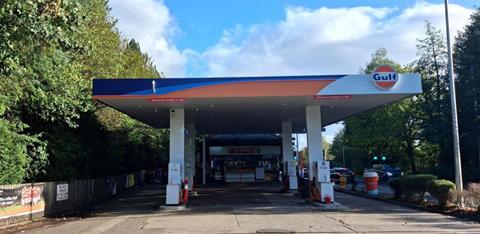
Ebbw Vale: Certas’ vision for the future
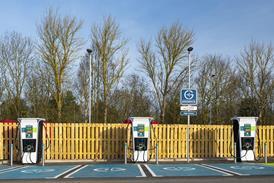
He points to the business’s flagship Ebbw Vale forecourt in southwest Wales, which he says has become a “poster child” after undergoing a near £1m redevelopment, in the past 11 months, with more than £500,000 of that going on six bays of 150kW Evolvo chargepoints.
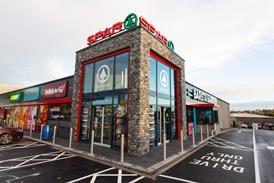
Its Spar shop was also refitted, a new rollover WashTec carwash installed, and the canopy was updated with solar panels and the new Gulf branding – the first company-owned site to go live with the tweaked look.
It is also one of five Certas forecourts to trial Reviva coffee machines from Gulf Oil International, which could be available to dealers pending the results. “There’s a lot of marketing behind coffee and it is a very sensitive topic,” says Main, who adds that the brand already has activations with Swansea Football Club, Williams F1 and Welsh Rugby.
Main says: “The Ebbw Vale site represents our best vision of a forecourt for the future. It’s a smaller site with under 4mlpa, and it is the best that we would see in terms of a range of products and services.”
Charging ahead
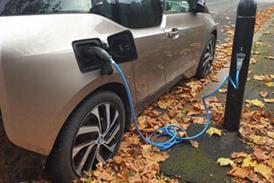
Ebbw Vale is also the first of its forecourts to install its own-brand Evolvo chargers, with the company-owned Witton Gilbert Service Station at Kaysburn, Durham, likely to be next. Main is also investigating the merit of replacing slower InstaVolt technology at up to 10 Certas sites.
And he says the first dealer site to take the Evolvo technology, at Gulf Bishops Rise Service Station in Hatfield, Hertfordshire, is now online with two 240kW hoses. He maintains that other dealers are interested too in its revenue share, or outright purchase options.
“We will pivot, as most companies will do, into energy transition. We ask ‘can we reduce costs by installing solar panels, or heat pumps to replace boilers for hot water and heating? Can we use battery storage to pull off the grid and then push it onto the EV charging network, for example?,” he adds.
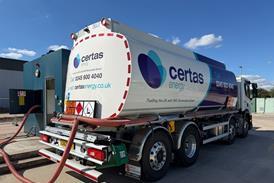
Renewable diesel – aka hydrotreated vegetable oil (HVO) – is also part of its energy transition. It has introduced HVO at sites which already offered super diesel, including 16 bunker locations and at least three roadside: representing a tiny proportion of the 1,200 sites its supplies with fuel.
It will be a slow process to gain acceptance of HVO in the UK where there is little knowledge about the fuel, says Main, unlike in the Republic of Ireland where “the market seems to understand it” and HVO is prominent, he explains.
An EV driver himself, Main says that he has personally benefited from the coverage of chargers increasing across the UK, and he says he will consider introducing the technology at unmanned sites. But he says “it’s a deep play”, with a large initial outlay, challenges with connection and payback at 10 years taking more than double the time of petrol pumps.
Ebbw Vale for instance took over a year to get chargepoints in place. “Even when we were getting the connection done, we still had a delay of about two months just between coordinating the right engineers and the right people to literally flick a switch,” he says.
“As an EV driver just now, it can be challenging if you’re on a site and it’s offline. But the good news is the density of fast charging is improving all the time. When I had my first EV in 2022 when I was continually driving down the M6, I could only actually stop in Gretna and that was it between Glasgow and Warrington, whereas now I can stop every 20 miles. Whether the sites work, that’s a different, conversation.
“But the reality is the investment hurdles, and the returns on those investments are a lot longer than that of the traditional fossil fuel market that we’ve been in for quite some time.”
Unmanned opportunity
EV chargers are also a consideration for Certas to introduce on its unmanned portfolio, which largely operates under the Fuel Express banner, and is seeing a renewed push from the business.
Main says that Certas has “quite a robust pipeline” for more unmanned sites. He says: “We have just reignited that pipeline, and we need to add about eight [unmanned] sites per annum until the end of the decade.
“The stark reality is that coco [company-owned/company-operated] sites are very expensive things to run, particularly when we employ the staff directly. So, for me personally, I think there’s some headwinds in that business.”
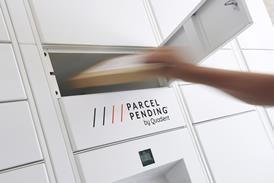
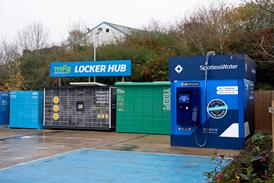
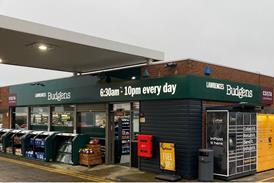
Some unmanned sites might be given dog washes and parcel lockers too, with vending machines also being a good fit, says Main. “We are looking at opportunities with people like Karma Coffee and Flying Turtle,” says Main, who while interested in hot food machines believes that replenishment of them might be an issue, at the sites which are often in rural locations.
“We have to be careful not to overload the sites. While hot food would be an aspiration, and car care potentially, I’m just quite happy to have basic vending of snacks, convenience, soft drinks, and maybe coffee,” he adds.
Brand ambitions
Gulf, which Certas sub-licences, remains the primary brand for the business. “I like the face of the Gulf brand which has a heritage of motorsport and resonates with a lot of people,” says Main.
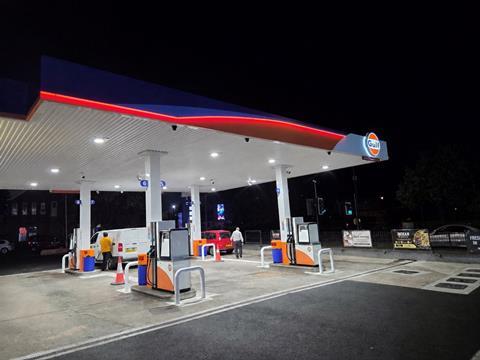
The business is now using the revised look branding, signed off by Gulf Oil International, with Mapleleaf’s Blakenhall Service Station in Wolverhampton the first dealer site to take the new look in September.
For smaller sites though, with volumes sub 1mlpa, the Pace brand which is owned by Certas is more appropriate. “At some stage would we like to stick with Gulf being the only brand?,” asks Main. “Yes, but there is a cost prohibition for that,” he adds.
“If the site isn’t turning over a certain volume, it can be quite costly to get an agreement for the Gulf canopy. Because we own the Pace brand that gives us a bit of flex,” he explains.
Having “a low-cost solution” means that Certas does not have to ”shoehorn itself into finding a solution that’s uneconomical for a dealer”, he adds.
“It is about establishing the best partnership between Certas and operators. We don’t just see ourselves, and have never seen ourselves quite frankly, as just a fuel supplier. We look at opportunities for our partners to grow, whether that is with a convenience food offer, EV or some other transition product. We have a variation of products and services to help the businesses grow.”
And so the takeover of DCC, expected early 2027 by private equity outfits Energy Capital Partners and KKR, will not stand in the way of Certas’s growth ambitions this decade, maintains Main. “We clearly want to invest in our roadside network, truck stops and our HGV business, so that hasn’t changed or wavered in any way, shape or form.”