















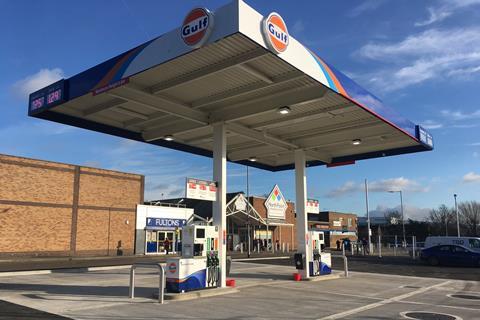
Fuel firm Certas Energy is restarting the rollout of its unmanned Fuel Express forecourts, with seven new sites set to open by spring 2027.
Certas opened its first Fuel Express site in 2016, completing 41 unmanned forecourts in three years before pausing expansion in 2019.
Now, the company is pressing ahead with fresh unmanned projects, with a new forecourt near Swansea in South Wales set to be the first to open early next year, ahead of a further half dozen.
“This is a business model we see growth in, and we want to double the size of our unmanned estate by 2030”, says Sam Edwards, Certas Energy’s head of Fuel Express – mobility.
About 95 million litres of petrol and diesel currently flow through Fuel Express pumps each year, and while Certas initially sought out specific types of business for new sites, now the bar is wide open.
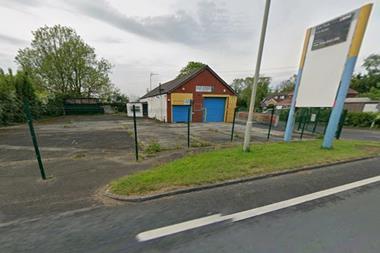
“Initially we looked at undervalued assets,” Edwards explains. “Typically an MOT station that had fuel pumps that weren’t the main focus of the business – and we approached the owner to see if we could run the fuel side of things.
“Now, we’ll look at anything: parcels of unused land, car parks, closed sites, hand car washes, retail parks, airports.”
Broadly speaking a new-to-sector site costs Certas between £750,000 and £1m, while bringing a dormant site back into service or rejuvenating an existing one is around half that, with capital expenditure typically being recouped in five to 10 years.
To help keep build costs down the firm leases rather than buys the land for its Fuel Express forecourts, with 20-year contracts the most common.
“From a top-level perspective we work out the CapEx model, negotiate with the landlord, engage with the local council and petroleum officer, then the engineering team builds the site,” Edwards says.
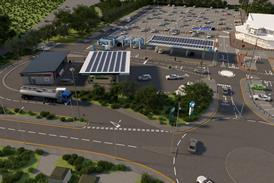
“The beauty of our model”, he adds, “is that it’s plug-and-play – we have the financial framework, we know what to do with planning and building and we can operate from a piece of land as small as a third of an acre – we just need the right space in the right place.”
The unmanned model presents no more challenges than a traditional forecourt where planning permission and petroleum officers are concerned, partly as Certas takes a belt-and-braces approach to compliance.
“We are so strict about everything and go above and beyond. We undertake Phase 2 Environmental Site Assessments for our sites, for example, which involves digging boreholes and analysing the ground beneath, and is something most forecourt firms don’t do as a matter of course.”
Once a forecourt is up and running Certas’ second, operational model is implemented. “We have a caretaker system that comes in. They’ll check each site three times a week on average, making sure everything looks okay, refilling sand buckets, that sort of thing.
“We also have a first-responder team in case of emergencies. It varies from site to site, but most petroleum officers want them to be able to get to a forecourt within 30-45 minutes of an issue arising.”
Certas uses an agency for those operational aspects, and the 24-hour remote monitoring service required for all unmanned sites.
“That’s done for us by a company based in London. Each time a pump is picked up that will automatically show up on a supervisor’s screen, and they can remotely shut the pumps off if there’s an issue.”