















Did you notice it? Something really quite odd happened within the last few weeks; or more to the point, something didn’t actually happen which normally would have, and I’m still trying to work it out.
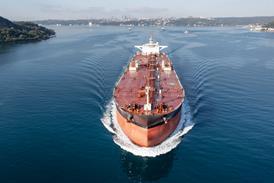
In the middle of June, the Israelis launched their attack on Iran and not unexpectedly, some of the news media were running headlines eagerly anticipating World War Three. Well, they do like to scare their readers witless, and this particular scenario has been well-rehearsed in the past, so no great surprise there. Then, to make the situation even more dangerous, President Trump decided to join in, and so on June 22 the Americans bombed Iran themselves. This time it wasn’t just the tabloids that were predicting major consequences: even the less melodramatic news media were predicting that the Iranians would almost certainly retaliate by blocking the Straits of Hormuz. That’s the channel through which a quarter of international oil shipments go through.
Now history never quite repeats itself exactly, but we have been here before in recent years. And what happened in the past whenever these dangerous games were being played in the Middle East was that crude oil prices shot through the roof. So, when the news headlines were coming in over that period, I expected to see crude oil prices well over $100/barrel, perhaps even to somewhere between $125-$150. I might also add that I really also expected to see UK pump prices go up by a few pence per litre almost instantly. The odd thing is that nothing really happened. On June 12 there was a very brief peak of around $76; the price then hovered around the $70-$73 range for a week. The next peak was around $75 on June 19 – only to fall back to around $65, where it’s been since.*
I’m still having difficulty getting my head around this. Not only do Iran and Israel go to actual, direct war, but the US sends B-2 bombers to drop massive ordnance on Iran’s nuclear facilities, and the oil markets show virtually no reaction. How, why? Did they know something that nobody else knows? Is there so much unsold oil sloshing around in transit and storage that even a near complete blockage of Middle Eastern crude wouldn’t be noticed for a couple of months? Answers on a postcard please.
And while we’re on the subject of fuel prices, I see that the Competition and Markets Authority have chimed in again, saying that “…fuel margins remain high compared to historic levels despite lower prices at the pump in recent months”. Now to me that’s something of a bizarre statement; it appears to show a wilful disregard of why margins have to be higher than ‘historic’ levels. In recent weeks I’ve read around a dozen news articles – many of them local – regarding well-known businesses that have shut their doors for the last time. And of course, there’s Poundland – which had some 825 stores and 16,000 staff when it was sold for £1. The retail analysts who talk about these events always mention things like the business going out of fashion, why they failed to keep up with the market, and so on. All true, I’m sure. But the recurrent themes that I’ve read in almost every interview with the (former) owners are employer’s National Insurance Contributions, business rates and property rents. Two of those, at least, are of prime concern to fuel retailing. And both are at ‘higher than historic’ levels. Or is the CMA unaware of that?
- Jan Mikula represents nationwide franchise accounting company EKW Group – ekwgroup.co.uk
* Article was submitted on June 30 2025.