














The latest Iranian conflict has dominated news cycles and markets since it began less than two weeks ago, with petrol and diesel prices surging as the cost of oil spikes. Here, we consider both the current situation, and what the coming weeks may bring.
The current landscape
At time of writing, a barrel Brent Crude is trading at $86, and West Texas Intermediate (WTI) $89, both around $20 more than before the war began, but a significant drop on the $117 high WTI experienced at the beginning of the week.
Forecourt retailers buying wholesale fuel on a daily spot price have been most vulnerable to market fluctuations, with some charged 20p more for a litre of diesel last week than they were just a couple of days previously. This cost is inevitably passed onto drivers, and it’s a cost that bigger firms buying on two or three-week pricing cycles have been somewhat shielded from.
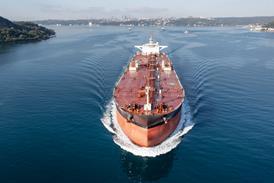
Comments from Donald Trump on March 10 that the conflict “is very complete, pretty much” went some way to quell markets, but such is the volatility of trading, and the impact of social media, that oil fell by 17% following a (since deleted) post from US Energy Secretary Chris Wright proclaiming that American forces had escorted a tanker through the Strait of Hormuz; this has been closed for some days now due to insurers not covering freight along the narrow sea passage, through which a fifth of the world’s oil flows.
Also worth noting is that much of the oil produced by Iran and passing through Hormuz is of a Goldilocks quality, yielding high volumes of petrol and diesel, and being easier (and therefore cheaper) for refineries to process than oil from the US and Venezuela.
Industry insight
James Hitchman, commercial director for Portland Pricing notes that wholesale unleaded prices have risen by 12ppl since the beginning of March, with diesel up 28ppl.
That hasn’t fully filtered down to forecourts, where an average litre of unleaded is up 5.3p, and diesel 9.4p, on the start of the month.
Hitchman notes that “there is therefore a high chance that we will see further price increases at the pumps even if headline Brent prices started to fall”, adding that “prices aren’t likely to have peaked just yet”.
He warns: “Even if wholesale prices continue to fall, which is a big if, unleaded may well reach 141-143ppl and diesel 165-168ppl.”
As for the reason diesel has risen far more than petrol, this is due both to the UK using twice as much diesel due to its use in heating, shipping and haulage, and that while the UK is a net exporter of unleaded, we refine far less diesel and are therefore dependent on imports.
Hitchman adds that a combination of a volatile market and the different ways forecourt operators purchase their wholesale fuel mean there remain significant variation between different forecourts’ retail prices.
The retailer’s perspective
A spokesperson for EG On The Move, which operates 159 filling stations in the UK, told Forecourt Trader that the recent price volatility “is clearly creating pressure across the fuel supply chain”, and that the company’s priority is “to manage our fuel procurement and pricing responsibly while continuing to offer customers reliable access to fuel and good overall value”.
EGOTM says that it works with “a range of supply partners and purchasing arrangements to help manage volatility in wholesale markets”, and that “while retail prices inevitably reflect movements in underlying commodity and refined product costs, we aim to take a balanced, measured approach to any changes to remain competitive locally and maintain transparency for customers”.
The firm added that it “will continue to monitor market developments closely while doing what we can to manage the impact for our customers”.
The market watcher’s view
The RAC notes that the retail cost of a litre of unleaded has risen by a penny, and diesel 2p, in just 24 hours, with the former now 139p on average, and the latter 155p.
The firm’s head of policy, Simon Williams, predicts: “If oil were to settle at around the $90 a barrel mark and the pound were to maintain its current position against the US dollar, drivers in the UK could expect average petrol prices to reach around 140p a litre, and diesel around 167p a litre.”