

















Over 2,000 UK forecourts are not signed up to the government’s Fuel Finder mandatory price-reporting scheme, leaving them in breach of the law.
As of 9am today on February 2, 2026, the date by which forecourts are obligated to report their fuel prices to the government, just 6,243 of the UK’s 8,279 filling stations have registered with Fuel Finder, leaving 24.6% at risk of being fined up to 30% of their turnover.
That compliance data comes from My Automate, the firm behind PetrolPrices. The company’s head of operations, James Hitchman, also detailed that when pulling data from the system this morning, “so far today no prices are being returned by the scheme”, indicating the system continues feature glitches, even on the day parliament decreed it must be up and running.
Fuel Finder has been beset with problems almost from its inception. Initially the Department for Energy Security & Net Zero wanted fuel-grade availability to be detailed by operators, before relenting after it was explained that such a requirement would be riddled with difficulties.
Then, questions were raised about whether a lack of experience in the fuel sector from VE3 Global, the firm that won the government tender to implement the scheme, made it a well-chosen contractor.
Registration for the scheme, meanwhile, opened two weeks late, leaving forecourt operators significantly less time than expected to integrate Fuel Finder into their systems. Yet despite this delay, the February 2 ‘go live’ date by which all firms had to be signed up and reporting could not be altered as it was specified in legislation.
Another issue concerns the design of the data-entry system for Fuel Finder. Operators updating prices manually, rather than relying on integrated IT systems to do so automatically, are able to enter non-numeric characters when updating the pence-per-litre field, while entering a site’s fuel brand is done via ‘free text’ entry, allowing popular oil majors to be misspelled, leading to a lack of standardisation.
Some sites, meanwhile, have entered their latitude and longitude data the wrong way around, leading to geographic anomalies such as forecourts appearing to be located in the middle of oceans. And while Westminster devised and mandated the scheme, there will be no central government website for motorists to view pricing data, with this service instead being provided by third-party firms, such as Petrol Prices, which existed prior to the legislation.
The Competition and Markets Authority, which will be overseeing the scheme’s operation, has said that during the first three months of Fuel Finder being live its focus will be on “supporting businesses to comply with the new regime rather than enforcement action”. But with firms liable to fines of up to 30% of their turnover for non-compliance, that is likely to be cold comfort for the 2,036 companies that find themselves in breach of the law as of this morning.
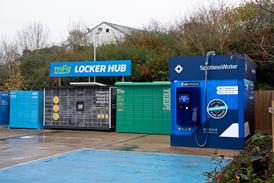
In addition to reporting fuel prices, firms must also tell Fuel Finder what “amenities and facilities” individual sites offer. The CMA initially wanted dozens of these included in the scheme, but after intervention from the Petrol Retailers Association (PRA) agreed to reduce this to a handful, namely: AdBlue, air, water, and LPG availability; whether there are car wash or toilet facilities; and if fuel is available on a 24-hour basis. Sites must report any changes or outages to these facilities within three days, although the CMA has said it will focus on “proportionality” when it comes to enforcing this rule, and penalties are not expected for these aspects.
Commenting on the launch of Fuel Finder, PRA executive director Gordon Balmer says that the association’s members ”have worked hard to collaborate with the government to ensure a successful launch of the scheme”.