
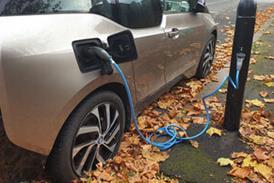


















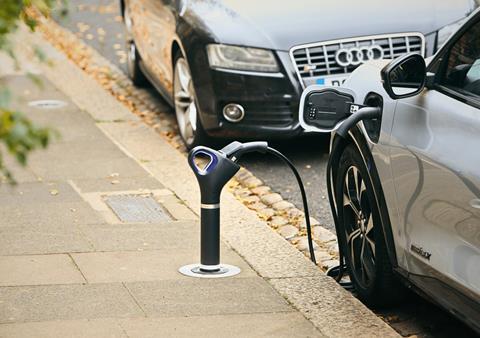
The riddle of how people who can’t have a home EV charger due to a lack of off-street parking looks closer to being solved, with the continued roll-out of a new type of ‘invisible’ charging system.
Trojan Energy’s ‘flat and flush’ solution sees chargepoints buried in the pavement outside motorists’ homes, with these hidden sockets connected to the homeowner’s electricity supply via cabling buried under the pavement. That cable is then connected to a control module on the home’s electricity supply, allowing Trojan to differentiate normal electricity from that delivered to an electric car.
The Trojan system was first deployed in partnership with a handful of councils in London, but it has now been adopted by Coventry City Council, albeit on a trial basis, indicating the invisible chargers are gaining wider take-up.
Trojan offers two models: Home, and Hub. The Home system sees motorists get a socket installed outside and connected to their house for free, with them then paying £50 a month and being given a ‘lance’ that allows them to plug into their socket, while using their own electricity at prices as low as 7p per kWh. Drivers subscribing to Trojan’s Home system can charge at other Trojan points at the same price.
The firm’s Hub model sees Trojan install between five and 10 sockets per street, with these not being directly linked to individuals’ homes, and delivering electricity at 23kW. Anyone living on a selected street can get a lance for free, while paying either 45p or 55p per kWh depending on the time of day and the agreement negotiated with the local council.