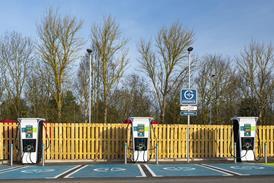
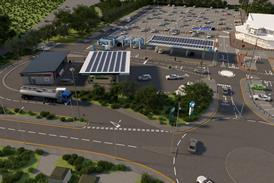

















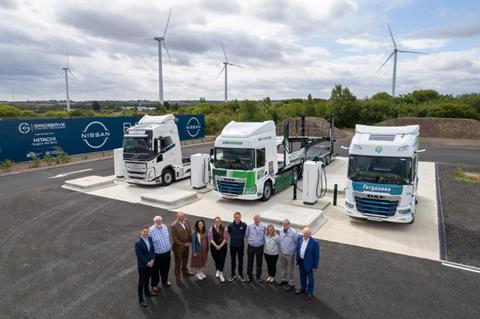
It may be a decade until sales of new diesel HGVs begin to be banned, but Nissan has taken the first steps to future-proof its pivotal Sunderland plant by installing a charging station for electric trucks at the site.
The £1.4m hub comprises seven chargers allowing up to 10 eHGVs to recharge at speeds of up to 360kW, potentially saving up to 1,500 tonnes of CO2 from entering the atmosphere. The hub will support a fleet of 25 eHGVs as they carry out 60 deliveries to the plant a day.
Nissan says the trucks will deliver parts from as far afield as Derby, 160 miles to the south, while also taking completed vehicles set for export from the Port of Tyne, just five miles to the north of the plant.
Back in 2023 the Conservative government earmarked £200m to catalyse recharging infrastructure for HGVs.
The Department of Transport’s Lilian Greenwood of the current administration said: “It’s great to see Nissan taking advantage of our scheme”, adding: “Our £200m zero emission HGV programme is helping businesses across the country to power the electrification of its fleets”.
Michael Simpson, Nissan’s vice president for supply-chain management for Africa, the Middle East, India, Europe, and Oceania, said the new facility is “a big step forward in Nissan’s EV360 vision, which brings together electric vehicles. zero carbon energy and battery manufacturing”.
Nissan’s Sunderland plant remains one of a handful of mainstream automotive manufacturing centres in the UK following the closure of Ford’s Bridgend engine plant in 2020 and Honda’s Swindon factory in 2021.
Toyota, JLR, MINI and Vauxhall maintain facilities here, alongside several smaller, prestige manufacturers including Aston Martin, Bentley, Lotus, McLaren, Lotus, and Rolls-Royce.