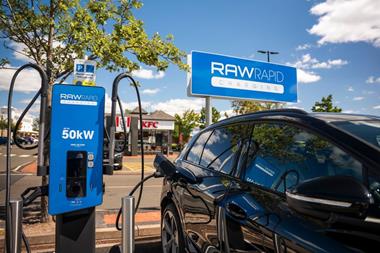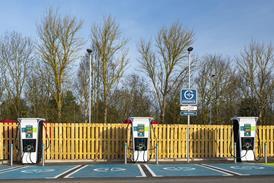


















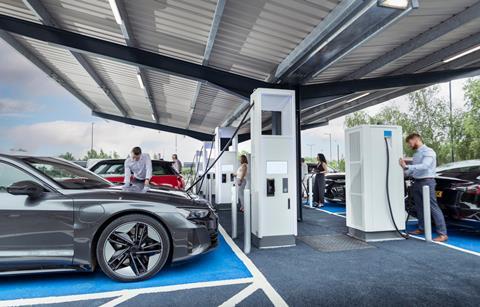
Public EV charging could soon become significantly cheaper after a tax tribunal ruled commercial electricity at public points should not attract the 20% VAT rate it currently does, but the 5% rate levied on domestic power.
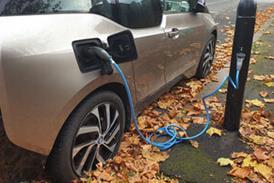
EV advocates and chargepoint firms have long argued it unfair that while people with driveways can charge their cars using domestic power, which receives a low VAT levy, those without off-street parking, and motorists who must charge on-the-road, are subject to an additional ‘pavement tax’ due to the 20% rate for commercial juice.
This could be set to change, though, following a legal challenge mounted by Deloitte on behalf of Charge My Street, a social enterprise that installs and operates EV chargepoints.
The argument set out by Deloitte’s lawyers centres around a VAT rule that ‘de minimis’ (IE too small to be significant) amounts of electricity, defined in tax legislation as a person receiving under 1,000 kiloWatt hours (kWh) a month from a particular premises, should be considered a domestic rather than commercial amount of power.
Oliver Jarratt, a Deloitte solicitor who worked on the case, says that “even if an EV driver always charged at the same public chargepoint, it would still be nigh-on impossible to exceed 1,000kWh per month”.
The firm argued an individual charger could be considered a premises, and that challenge was accepted by a first-tier VAT tribunal. The judge deemed that the 20% VAT rate for public chargers amounts to a “breach of fiscal neutrality”, and that it “has the effect of disadvantaging less well-off consumers who do not have their ‘own’ premises at which they can charge their EVs”, adding: “There can be no justification for such an outcome”.
While the ruling can be appealed by HMRC, which stands to lose millions of revenue if it is implemented, it paves the way for the removal of what has long been considered an unfair policy that discourages EV update.
Commenting on the tribunal, Tom Rowlands, managing director for Global EV solutions for Corpay, which owns fuel-card company Allstar, says the ruling “marks an important step forward for consumers, as it suggests that public EV charging in a direct B2C context should be eligible for the reduced 5% VAT rate where usage remains below the domestic threshold.”
Rowlands cautions, however, that were a 5% rate to be implemented, it would not apply to business-to-business charging sessions, such as those carried out by drivers using fuel cards to pay for public electricity.
He adds that the ruling could introduce “added complexity for the wider market”, as chargepoint firms could need to apply “different VAT treatments depending on the end user, while smaller businesses and those with low usage sit in a grey area where the treatment is not yet clear”.
Rowlands concludes that while HMRC can appeal the tribunal’s ruling, “clear and consistent guidance” is essential “to avoid confusion and ensure the market can move forward with confidence”.