



















Porsche will be the first manufacturer to introduce wireless charging for a mass-produced electric car, with the launch of its Cayenne Electric SUV due to be available late 2025, doing away with cumbersome cables.
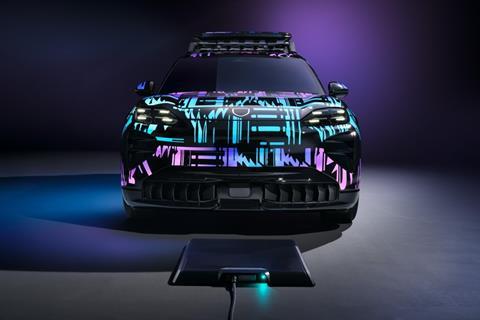
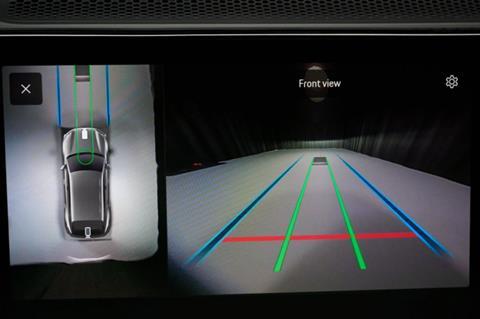
The system can deliver electricity at speeds up to 11kW and operates in the same way as a mobile phone with wireless charging capabilities, albeit on a larger scale: owners get a 117cm by 18 cm inductive charging pad that sits 6cm tall and weighs 50kg, then, aided by a front-facing camera with super-imposed guidelines, drive their Cayenne nose first over this so the car’s built-in charging plate sits above the pad.
The Cayenne’s charging plate is positioned between its front wheels and has protection against rain and stone chips, while the wireless pad can be placed indoors or outdoors. Porsche says charging can take place “over a distance of a few centimetres”, though the car automatically lowers onto the pad for better efficiency.
The pad is strong enough to be driven over without suffering “significant damage”, while charging stops if “a living creature gets between the vehicle and the floor plate”, or if a metal object is detected on top of the pad.
Porsche will organise for an electrician to install the plate at customers’ homes, with no additional wallbox or control unit required – though owners may need to upgrade their home electricity supply to receive 11kW, or even get the 7kW speed most commonly associated with home charging.
The Stuttgart-based firm claims the system offers energy efficiency of 90%, meaning only a small proportion of energy is lost through the magnetic field over which electricity is transferred. While ultra-rapid wired public chargers boast almost 100% efficiency, Porsche’s figure is nonetheless high for a wireless system.
With the company infamous for its extensive options list, the only unknown is how much the charging pad, which will be available in Europe from 2026, will cost, with customers having to tick the box for the Cayenne’s optional Wireless Charging pre-installation and Porsche Wireless vehicle plate package.
This isn’t the first time a car maker has offered wireless charging: in 2020 BMW launched a similar system, though this could only deliver electricity at 3.2kW (domestic plug speed), was only offered with the plug-in hybrid 5 Series 530e, and provided an efficiency rate of around 85%
The new system stands as the first time a mass-produced electric car has been available with wireless charging. As is often seen in the automotive sector, other manufacturers are likely to scrabble to bring rival systems to market. Also looking ahead, public ‘destination’ stations designed for longer recharging sessions as seen at hotels, leisure centres and the like could potentially offer wireless Porsche pads in the future.
Porsche’s research indicates 75% of its customers charging sessions take place at home, while the firm’s premium image is likely to be enhanced further for customers who don’t have to faff around with cables when they park up on their driveways.
Dr. Michael Steiner, Porsche’s deputy chairman and member of the executive board, research and development, comments: “We are proud that inductive charging will soon be available in series production at Porsche. Charging an electric car at home has never been so easy and convenient.”