ardglassimage10_11330

Source: Henderson Technology

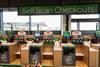
Self-checkouts help absorb peaks, keep queues moving, and give customers a faster option for simple purchases, while staff remain central to the operation

Renowned forecourt operators such as David Charman and Joseph Richardson have extolled the virtues of self-checkouts in busy sites. But the equipment, while allowing staff to concentrate on other jobs, is not the panacea for every outlet, admit two epos suppliers we spoke to.

What is the role of self-checkouts in forecourts?

Henderson Technology’s retail technology operations director Darren Nickels:

Self-checkouts (SCOs) play a supporting role in forecourts, helping retailers manage peak-time pressure, speed up simple transactions and improve overall site flow. They work particularly well for basket-light missions such as food-to-go, drinks and snacks, where customers value speed above all else. Importantly, it isn’t about replacing staff, but about giving customers choice while freeing colleagues to focus on service, compliance and operational tasks across the site.

In forecourts, self-checkouts are about efficiency and flexibility. They help absorb peaks, keeps queues moving and give customers a faster option for simple purchases, while staff remain central to the operation.

Adoption across the forecourt sector continues to grow steadily, driven by labour pressures, longer trading hours and changing customer expectations. Many operators are choosing hybrid and modular solutions that can scale with their business and adapt to site-specific needs.

Forecourts aren’t rushing blindly into self-checkout. They are taking a considered approach, trialling solutions that fit their space, customer mix and operational model. The retailers seeing the best results are those treating self-checkout as part of a wider, connected ecosystem rather than a standalone fix.

TSG Solutions’ head of sales retail & systems Simon Burnett:

Self‑checkouts are steadily becoming part of standard forecourt design. Industry reports and trade commentary show operators prioritising technology and till systems to remain competitive, with continuous upgrades across the estate. Adoption has accelerated in recent years as retailers look for ways to manage higher operating costs and improve the customer journey.

Retailers often see an uplift in items customers prefer to buy discreetly, such as personal care and indulgent treats, when an SCO is available.

Not every shopper is comfortable with tech. Without nearby assistance, frustration can rise. Simple coaching and quick interventions solve most issues.

Some customers prefer a staffed checkout. Keeping one staffed position at busy times preserves choice and keeps satisfaction high.

Forecourts face rising rates, energy, national insurance and wage pressures. SCOs help manage labour and improve service without adding permanent headcount.

Faster throughput and autonomy match modern expectations, particularly for quick missions and food‑to‑go.

SCOs provide reliable capacity across trading hours and smooth out staffing variability.

And while hardware, software and set‑up costs require planning, ongoing savings and throughput gains offset these over time.

How should forecourts incorporate self-checkouts with manned checkouts?

Darren Nickels:

The most successful forecourts use a blended model, where self-checkouts sit alongside manned tills as part of one connected epos environment. Manned tills remain essential for age-restricted sales, customer service, fuel queries, exceptions and high-value transactions. Self-checkouts should be positioned to complement this, not compete with it, allowing staff to supervise multiple lanes and step in when needed.

The goal is balance. Forecourts work best when self-checkouts and manned tills are fully integrated into one epos system, so staff have visibility and control without juggling multiple platforms.

Simon Burnett:

Position self-checkouts as the first choice at the counter and signpost them clearly.

For the first week, place a team member at the counter to greet customers, encourage use and show how simple it is. This breaks habits and removes any hesitation.

If a queue builds, send the second cashier to help customers on the SCO rather than opening another staffed till. This keeps the momentum at the SCO and builds confidence.

Brief the team to answer quick questions, resolve age‑restricted checks and intervene politely when needed. Simple, consistent support turns first‑time users into regular users. One colleague can oversee several SCO positions, helping contain costs while maintaining service coverage.

Tips on making self-checkouts work for forecourts?

Darren Nickels:

Getting self-checkouts right in forecourts comes down to simplicity and oversight. Clear signage, intuitive user journeys and fast payment options are essential. From an operational perspective, real-time monitoring, AI-assisted alerts and strong loss-prevention tools help staff stay in control without slowing customers down.

Self-checkouts need to be easy for customers and easy for teams to manage. Features like AI monitoring, instant alerts and seamless integration with the core epos are key to making them work in a forecourt environment.

Simon Burnett:

Put the SCO front and centre. Visibility matters. An SCO tucked away after the staffed tills will underperform.

Small changes make a big difference. Swapping the SCO into the lead position and refreshing signage has transformed usage on sites, turning the SCO into the main till and reducing staffing pressure.

Theft concerns tend to centre on set‑up and oversight. With good placement, clear sightlines and active colleague support, operators report stable outcomes rather than higher losses.