

















Exclusive interview with Zakir Hasan, director of EV and energy at EG On The Move
If the government is removing VAT from household electricity bills to help with the cost of living, there is also a strong argument that the same principle should apply to public EV charging.
That’s the view of Zakir Hasan, director of EV and energy at EG On The Move. He says this would create a fairer system for drivers who rely on public charging, encourage wider EV adoption and support more investment in charging infrastructure. “It would also help ensure that those without access to home charging are not financially disadvantaged as the transition to EVs continues,” he explains.
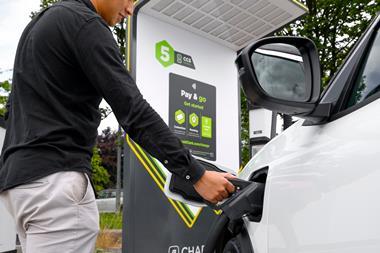
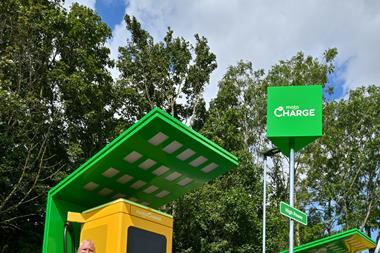
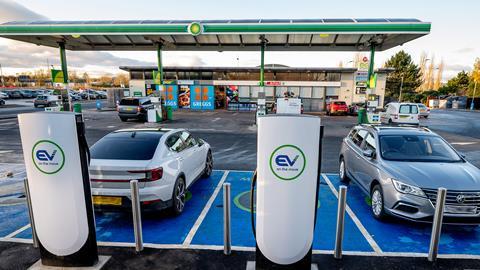
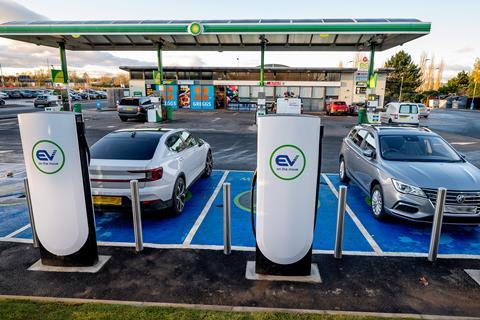
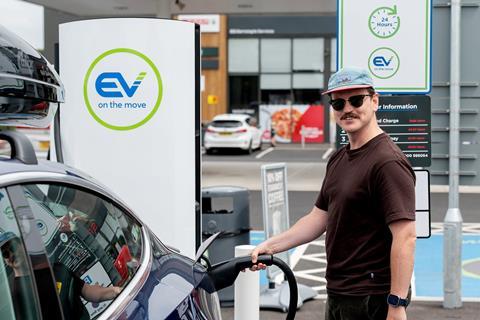
The inclusion of EV chargepoints has been good for business across the ever-growing EG On The Move estate, with current dwell time from EV drivers at the EV On The Move hubs averaging 30-40 minutes, and many drivers making purchases from the site’s shop too.
“During those 30-40 minutes, many EV customers make use of our wider retail and foodservice offering, with coffee and something to eat proving particularly popular.
“Customer feedback has been very positive, with drivers valuing the convenience of being able to relax, refresh and make productive use of their charging time rather than simply waiting by their vehicle. This reinforces our strategy of providing high-quality foodservice and retail facilities alongside our EV charging infrastructure to enhance the overall customer experience.”
Strong demand
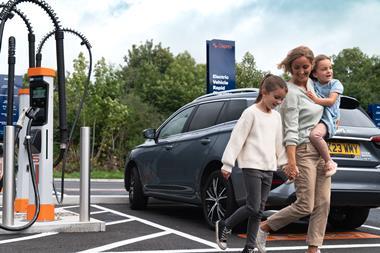
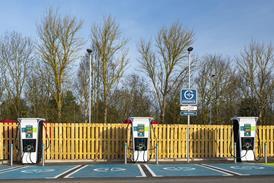
Of its current 285 sites, 56 offer EV charging from 326 chargepoints available to customers. And Hasan says the company is currently working towards a site investment plan for EV charging and is in the process of rolling it out across the network.
“Utilisation of our chargepoints does vary by location, reflecting factors such as traffic volumes, local EV adoption and journey patterns. However, across our EV On The Move network we are seeing consistently strong demand, with an average utilisation rate of 65% during peak operating hours (7am-7pm), which is above the sector average. This demonstrates that our charging infrastructure is well used overall, while also highlighting the importance of investing in the right locations where customer demand is strongest,” explains Hasan.
He says the busiest locations for EV On The Move rapid charging are typically those situated close to major link roads, motorway junctions and larger cities, where there is a combination of high traffic volumes and strong EV adoption.
“These sites attract a mix of long-distance travellers requiring rapid charging and local drivers topping up as part of their daily journeys. While demand varies across the network, strategically located sites on key transport corridors consistently experience the highest utilisation, reinforcing the importance of investing in charging infrastructure where customer demand is greatest.”
Consumer survey after survey highlights the importance of reliability of chargers and Hasan says it is a key priority for EV On The Move.
“We work closely with our hardware partners to ensure our chargers remain available for customers whenever they need them. We have robust service level agreements (SLAs) in place with our hardware providers, targeting 99% charger availability across our network.
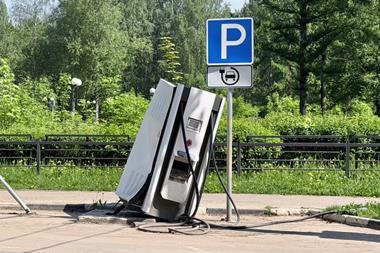
“To maintain this high level of uptime we benefit from same-day callouts for diagnostics and immediate fault resolution. In the small number of cases where a hardware component requires replacement, the typical turnaround for parts and repairs is around three days. Importantly, the majority of our locations feature multiple charging units, providing built-in resilience and ensuring customers can continue to charge their vehicles even if an individual charger is temporarily out of service.”
He says queuing is generally not an issue across the network, as charger utilisation is well distributed and customers are able to plan their visits in advance. “Through our website, drivers can check real-time chargepoint availability and view any known charger issues before they travel, helping them choose the most convenient location and reducing the likelihood of waiting.
“Where we have received feedback regarding queues, it has been limited to a small number of sites that currently have a relatively small number of charging bays (typically two-to-four chargers).
“As demand for EV On The Move charging continues to grow, we continue to monitor utilisation closely and use this data to inform future investment and capacity planning, ensuring our charging infrastructure meets customer demand while maintaining a positive charging experience.”
As well as the aforementioned site investment plan, EG On The Move is looking at introducing incentives for EV drivers to use the company’s chargepoints.
“While our focus today is on providing a reliable, convenient and high-quality charging experience and growing rapid charging accessibility across our network, we are also developing additional benefits for EV drivers.
“We are currently working on the launch of the EV On The Move customer app, which will provide access to discounted charging rates, alongside exclusive cross-promotional offers from many of the leading convenience and foodservice brands along with ancillary services like car wash that are available across our network.
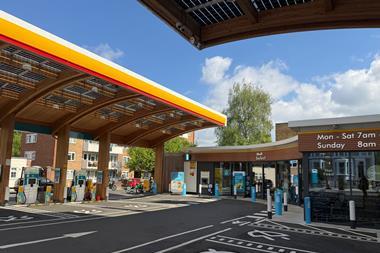
“Our sites already offer customers significant added value beyond charging. Our charging locations are well lit, easy to access and provide a wide range of amenities, including quality coffee, freshly prepared food and grocery shopping. This enables drivers to make the most of their charging time by enjoying convenient services in a safe and welcoming environment.”
Voracious appetite
Of course, EG On The Move is renowned for its voracious appetite for new sites – think its Applegreen, MPK and Prax acquisitions – and Hasan says that when evaluating new or acquired sites, investment in fast EV charging infrastructure forms a key part of the commercial and strategic due diligence process undertaken.
“Market mapping considers current and forecast EV adoption with local catchment, traffic volumes, journey types, grid capacity, and the competitive landscape.
“Financial evaluation should include capital expenditure, grid connection costs, operating costs, utilisation forecasts and expected return on investment. Grid connectivity and groundworks are usually undertaken, with the capability to add charger units as demand grows.
“Our business model also allows us to consider opportunities to increase customer dwell time and drive higher spend across convenience retail and foodservice offers while customers charge.”
He says EV On The Move’s preferred charging technology partnership with Tesla supports scalability for future expansion and aligns well with EG On The Move’s long-term sustainability. “More importantly, it addresses EV charger reliability and “range anxiety” or stress issues faced by drivers. In summary, consideration of EV charging as part of new site acquisition and development decisions helps future-proof the network portfolio, diversify revenue streams and strengthen the site’s role as a modern mobility destination.”