




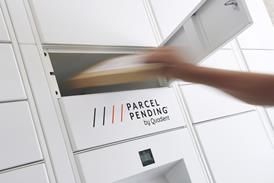
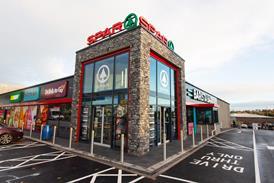
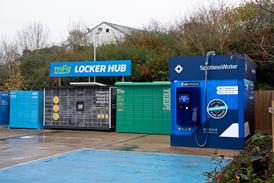
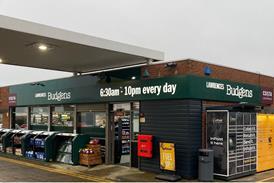






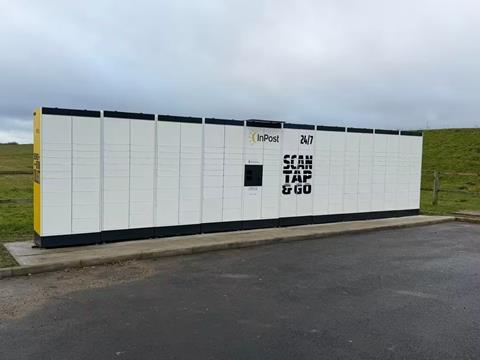
Visit Penny on the Move Scaling Dam Services, next to the Scaling Dam reservoir in the North York Moors National Park near Guisborough and Whitby, and you’ll be hard pushed not to notice the 10-metre run of InPost parcel lockers in the car park.
It is the largest locker space within the Penny Petroleum network and provides customers with a convenient solution for sending and collecting parcels rather than having to travel more than 10 miles to access similar services elsewhere.
Emma Shell, head of compliance and business development at Penny Petroleum, says parcel lockers are a key part of the company’s incremental income strategy, adding another reason for customers to visit its sites while strengthening its “ultimate convenience” proposition. “They provide a valuable customer service and create opportunities for additional spend,” she explains.
Although not available at every Penny on the Move site, Shell says they aim to provide a parcel locker offering across all sites where possible. “We work closely with our partners to identify the best opportunities and locations, with the ultimate goal of having an offering across the entire estate.”
Shell says working closely with store teams gives valuable on-site feedback to help understand local customer needs and identify the best opportunities.
Of course there are many parcel locker providers out there and Shell says each provider brings something different, with unique collection and delivery opportunities and links to different popular shopping outlets. “For us, it’s about offering the right mix of options to maximise convenience for our customers and coverage across our estate.”
Making space for lockers can be problematic, especially 10 metres of them, but Shell says at Scaling Dam, they had an area of unused land that provided “the perfect opportunity to install the lockers without losing valuable customer parking”.
And the lockers themselves are not problematic as she says any collection or delivery issues are handled directly by the relevant locker partner, so there is minimal impact on site teams.
Shell admits that it is difficult to accurately measure the direct revenue impact of lockers but says Penny on the Move believes they make a positive contribution to sales by bringing additional customers to locations. “What we can say with confidence is that lockers drive hundreds of thousands of customer visits each year, creating additional opportunities for customers to shop with us.”
Everyday habit
Paul Selvey, group network director at InPost UK, confirms that forecourts have an important role to play in the growth of the company’s network. “Our ambition is to make out-of-home delivery an everyday habit in the UK, and that means putting lockers in the places people already live, work, shop and travel.
“Forecourts are particularly well suited to that because they combine accessible locations and extended opening hours with journeys millions of people are already making. Whether someone is filling up, charging their car or stopping at the shop, being able to collect, send or return a parcel at the same time makes InPost another useful part of that journey.
“Ultimately, we’re building a delivery network around people’s lives, rather than asking people to organise their lives around deliveries, and forecourts have an important role to play in making that possible.”
Selvey says it is the flexibility of the forecourt that makes them particularly valuable. “Many are open late or 24/7 and have convenient parking, giving people greater freedom to manage their parcels around their own schedule.
“That’s increasingly important because expectations around delivery are changing. Consumers want greater choice and control, rather than having to wait at home or plan their day around a delivery window. Our recent research found that 58% of consumers believe lockers are better than home delivery.
“For forecourts, this creates an opportunity to offer a service that fits naturally around customers’ existing routines. It also means that parcel collection and returns can be accommodated outside traditional retail hours, making forecourts a particularly valuable part of a convenient and accessible out-of-home network.”
Selvey says there is a compelling commercial opportunity for hosts too. “An InPost locker creates an additional reason for consumers to visit a site, and our research found that 83% of convenience store and forecourt locker users would switch to another location if the lockers were removed. This highlights the important role lockers can play in influencing where consumers choose to shop and helping operators attract and retain footfall.
“For forecourt operators, the opportunity therefore isn’t simply to host a piece of parcel infrastructure. It’s to become part of a growing delivery network, introduce a service consumers increasingly want and create an additional revenue stream, while giving customers another reason to choose their site.”
As for specifics about the value of hosting parcel lockers, Selvey says that every site is different, so the commercial arrangement will vary and there isn’t a single figure that applies to every forecourt.
“However, hosting an InPost locker provides operators with rental income, alongside the wider commercial benefits that additional footfall can bring.
“Beyond that rental income, our research points to a clear opportunity for secondary spend. We found that 54% of visitors go on to make a purchase when using a locker at a forecourt, spending an average of around £16.40.
“This demonstrates the potential for a parcel collection or return to translate into an additional retail purchase. For forecourt operators, lockers can therefore help make productive use of space, attract customers who might not otherwise have visited and create opportunities for incremental sales.
“As we continue to grow our network, we’re keen to work with well-located forecourt partners that want to diversify their services, unlock additional value from their sites and make sending, collecting and returning parcels more convenient for consumers across the UK.”
MFG boost
For Yeep!, MFG’s agreement and subsequent relationship with the company has been really important not least, says CEO Jamie Dickinson, because it has demonstrated just how well the forecourt environment works for parcel lockers.
“What we’ve learned from working with MFG reinforces our view of the sector. Forecourts give customers accessible, familiar locations with long opening hours, while operators can use a relatively small amount of space to add another service and another reason to visit.
“When our 1,000th UK locker went live at MFG Haverhill in May 2025, MFG already had around 130 Yeep! lockers and plans were in place for a much larger rollout across its estate. Since then Yeep! as a whole has grown to 4,000 locations, so the business is operating at a very different scale today.”
Dickinson says lockers and forecourts are a good fit commercially: “A locker gives the forecourt another reason for somebody to visit. They may have come for a parcel, but once they are on site there is an opportunity for them to use the shop, buy a coffee or fill up.”
He says there’s also a practical advantage to Yeep! that’s particularly relevant on a forecourt. “Our lockers don’t need a mains electricity connection, so there’s no need for cabling or extensive groundworks, making installation considerably simpler.
“For the retailer, it means a relatively small piece of space can generate rental income and gives customers another reason to come onto the site. Every parcel collection or return is another person coming onto the forecourt, and therefore another potential fuel, shop, coffee or food-to-go customer.”
Yeep! is an open network, which means its lockers can be used by different carriers, which Dickinson believes gives the locations more long-term value. The company currently works with DPD and UPS – and has plans to expand on that.
Obviously some retailers choose to have a variety of lockers from different operators and Dickinson says there can be a good argument for having more than one network represented.
“MFG is a good example of that. It has worked with several parcel locker providers, including Yeep!, rather than treating lockers as a single-supplier category.
“Our view is that the important thing is making out-of-home delivery genuinely convenient for the customer and we think open networks are a big part of that because one piece of infrastructure can ultimately serve multiple carriers. As the market matures, I think retailers will increasingly look at utilisation, customer demand and the return they get from the space rather than simply how many different locker brands they can put on a site.”
Big opportunity
Finally, when it comes to who is actually using parcel lockers, Valentins Kirillovs, location planning consultant grocery retail, at data and tech firm CACI, says that across the UK, around 14% of consumers use a self-service pick-up station at least once every few weeks.
“The most frequent users are affluent, urban groups, with our Acorn Group data indicating that the ‘flourishing capital’ demographic – wealthier households found mainly in and around London – is leading the way: 34% of flourishing capitals use lockers frequently, more than double the national average. Upmarket families (19%), up-and-coming urbanites (18%) and prosperous professionals (17%) are also well above average. These groups tend to live in well-connected areas where lockers are easy to reach, and shop online often, as their working patterns make missed doorstep deliveries more of a challenge.
“Tenant living is the exception. Despite lower incomes,19% of this group use lockers frequently. That’s likely because students make up a large share of the segment, and shared housing and irregular schedules make secure pick-up points an obvious fit. Constrained pensioners (8%) and limited budgets (9%) use lockers the least. For retailers and carriers, the next opportunity is to grow adoption beyond the cities and campuses where lockers are already popular, and market them effectively as an option for a greater proportion of the population.”