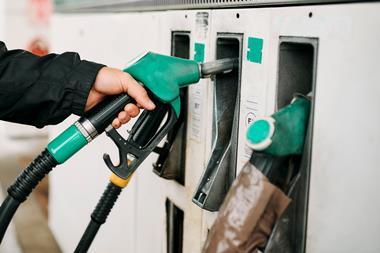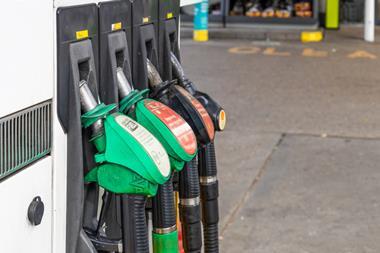



















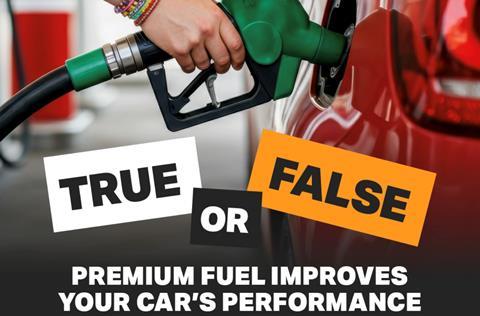
Earlier this year Halfords put out a question on Instagram. It asked: ‘True or False – premium fuel improves your car’s performance.’ Its answer was ‘False’, with the explanation: “Unless your car’s manual specifies higher octane fuel, using premium won’t necessarily improve performance. Most modern engines are designed to run optimally on regular fuel.”
It’s an interesting answer given that so many forecourts choose to give space to premium diesel and unleaded on their sites. Indeed Shell told Forecourt Trader that on its company-owned sites one in five customers buy Shell V-Power. However, a Halfords spokesperson said: “Our social post from April reflects a question many everyday drivers ask about whether the price of premium fuels justifies potential benefits. In this case, the question related to performance specifically, and the conclusion was based on a number of sources, including the RAC, which outline that - unless driving a high performance model - paying extra for premium fuel “won’t necessarily” improve performance.”
On the Shell website it says its range of premium fuels is designed to keep engines running as good as new. “Choose Shell V-Power every fill to keep your engine at its best,” it adds. Although there is a disclaimer that reads: “Removes and protects from the build-up of performance-robbing deposits on key fuel system components such as intake valves and/or fuel injectors. Cleanliness and engine performance recovery demonstrated using industry standard and Shell proprietary tests. Actual effects and benefits may vary according to vehicle type, vehicle age, vehicle condition and driving style. No guarantees provided.”
Rob Exelby from Exelby Services – which is bubbling under in our Top 50 Indies list – offers Shell V-Power at four of his sites, where V-Power unleaded can account for up to 25-30% of sales.
“Shell is the market leader in performance fuel and that is backed up by our penetration/ratio of premium fuels versus standard fuels,” he says, adding that the typical price difference between V-Power and standard Shell fuel is 16ppl.
As to who buys V-Power, Exelby says: “The obvious answer is car enthusiasts and petrolheads, but I’ve seen plenty of people fill up who don’t appear to fit the “petrolhead” label, they just simply want to look after their car by using premium fuels.”
Exelby says consumers should try the premium fuel: “I’d suggest they fill a tank on regular, then next time premium, and see if they find a benefit in mpg or performance. For me, there is an obvious benefit, if you’re happy to pay the differential.”
Ron Perry & Son’s A19 sites sell Shell V-Power and operations director, Dan Perry, reports that sales are fairly strong.
“I think Shell produces a very good premium fuel in the form of V-Power and the current Ferrari marketing around V-Power is fantastic,” he says.
For anyone who is unfamiliar with the marketing, Scuderia Ferrari HP cars use Shell V-Power Racing fuel when they race and the racing version of the fuel contains 99% of the same type of compounds found in the Shell V-Power road fuels available to regular drivers.
Perry adds: “V-Power is a more efficient fuel: It’s more expensive but you get all the benefits; you get what you pay for.”
Meanwhile, Kumar Sharma from Top 50 Indie Sharma Garages Group says they have premium grade unleaded and diesel at all 10 of their BP sites. He says the price differential between the premium and standard fuel is 14-15p, dependent on the site, and the premium fuel accounts for between 10 and 12% of fuel volume.
Trusted fuel brands
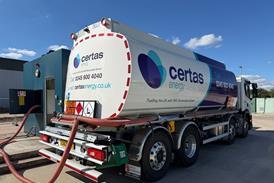
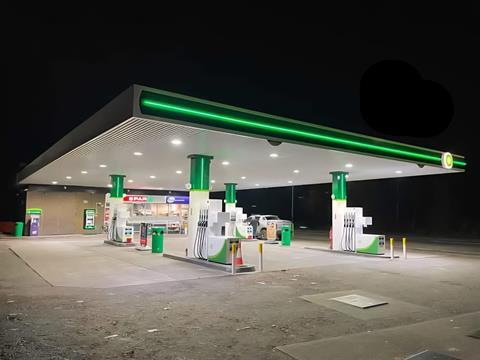
Another Top 50 Indie, Penny Petroleum/Penny on the Move, partners with a wide range of trusted fuel brands including Harvest (Total), Essar, P66, Esso, BP, Shell, Texaco, and will soon add Certas to that list.
CEO Vicky Hennessy explains: “We carefully select these brands because strong partnerships are at the heart of Penny On The Move’s success. A strong brand reputation, combined with simple yet effective loyalty and rewards schemes, ensures we deliver value and consistency to our customers. Just as importantly, we prioritise high-quality fuels that drivers know they can rely on.
“We believe fuel brand plays an important role in customer choice, especially when it comes to high-quality premium grades. Many drivers are loyal to a particular brand or grade because they trust the performance and reliability it delivers. We regularly see customers choose to fuel up with their preferred premium grade at our sites, often bypassing other stations to do so.”
Penny currently offers premium grades at 84 of its locations . “It’s important to provide customers with choice, and offering higher-grade premium fuels is a key part of that. With the recent change in ethanol content in standard unleaded, we’ve seen more drivers opting for super unleaded to ensure the best performance and protection for their vehicles,” says Hennessy.
Premium grade fuels account for around 8.5% of Penny’s sales with the typical difference in price between them and the standard grades being 12p-15ppl.
Putting HVO front and centre
After limitations that were brought in regarding the sale of red diesel, Dan Perry is hoping that HVO will be the ‘next big thing’ for him fuel-wise.
He’s had it on his sites for a couple of years but says: “New products that are more environmentally friendly can gain traction very quickly but I don’t think HVO has gained that traction just yet.”
Perry continues: “We’ve got HVO on our northbound site, on every HGV lane. On our southbound site, we’ve got one HVO pump with nozzles either side, but we’ve also got a huge HVO tank.
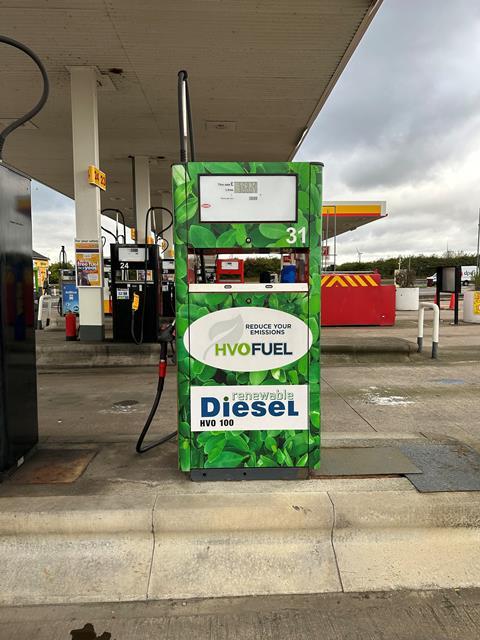
“We’re trying to put HVO front and centre. We’ve covered the HVO tanks and pumps with a leafy graphic to make them more eye catching. Some sites just have HVO written in block capitals, but we’ve got the leaf design to really stress that it’s a more environmentally friendly fuel. I mean, for me, the fact that there’s 97% fewer emissions is a soundbite in itself.”
Red diesel is still available at the Southbound site but mostly it’s been replaced with HVO. Perry says there was a ‘fair expense’ in cleaning out the old red diesel tanks to make way for HVO but it was an easy decision to make the switch because, unlike red diesel, anyone can buy HVO.
“We’ve got good regular customers that do pop in every now and again and buy HVO. They’re mainly from larger companies where the drivers are mandated to buy it but I think the price of HVO puts the general public off buying it. If it was priced in line with regular diesel, there would be more buy in.
“I think there needs to be government subsidies to get the price of HVO down. When I talk about HVO people get really excited by it but when I tell them the price, less so.”
At the time of talking to Perry, his regular diesel was priced at 147.9ppl while HVO was up at around the £2 mark.
“The price is prohibitive, but that will come down. Originally AdBlue was expensive, but that’s come down in price,” he says.

Hydrogen on hold
All eyes were on Rob Exelby when he unveiled his plans for hydrogen refuelling stations at two of his sites but, unfortunately, he says the momentum behind hydrogen has severely dropped off. “Our two projects we had planned with Element 2 are on hold for the foreseeable,” he explains. “The focus now seems to have shifted towards e-HGV mobility.”
Hydrogen expert Tim Harper, founder of Element 2 and Evove, agrees that hydrogen infrastructure in the UK is developing more slowly than some expected, but says the direction of travel is unmistakable.
“Like a tree establishing itself, the industry is putting down strong roots that will support growth for decades. In recent months we’ve seen several significant steps. The HyHAUL project has secured £14m to create the UK’s first dedicated hydrogen freight corridor along the M4, with multiple refuelling stations for heavy vehicles.
“Fuel Cell Systems has been appointed to supply HyFleet systems to the corridor, bringing on-site storage and dispensing to motorway logistics hubs. The government’s first Hydrogen Allocation Round (HAR1) has green-lit 10 commercial-scale projects, unlocking over £400m of private investment and signalling clear intent. At Fawley, Hynamics UK and Hy24 are moving forward with a major green hydrogen production project backed by international investors.”
Harper says against this backdrop, Element 2’s order for a first-of-its-kind mobile hydrogen station for Glasgow – in partnership with HRS and Russell Logistics – adds another root to the system. “With Russell’s 250-vehicle fleet alone capable of avoiding more than 25,000 tonnes of CO₂e emissions annually, the site demonstrates the commercial reality of hydrogen at scale.”
For forecourt operators, Harper says this matters. “Hydrogen is not going to arrive overnight as a fully built national network. Instead, clusters and corridors will grow steadily, supported by modular stations that can be deployed quickly and moved as demand builds. This incremental rollout is the same pattern we have seen with battery-electric infrastructure: slower than first promised, but steady and certain.”
“Hydrogen’s roots are taking hold — from motorway corridors to regional hubs. For those in the forecourt sector, now is the time to pay attention. The branches may be slower to appear, but the foundations for a zero-emission future are already in the ground.”
Road Haulage Association managing director, Richard Smith, believes hydrogen offers potential advantages for long-haul and round the clock operations.
“Our recent net zero survey found that 12% of larger HGV operators plan to bring hydrogen vehicles into their fleets in the next five years. The appeal is the ability to mirror diesel HGV equivalent performance characteristics. Cost remains a barrier for many though, and the pieces aren’t all in place yet, but we’ll be examining where hydrogen and all available alternative fuels fit into fleet futures.”
Electric route for HGVs
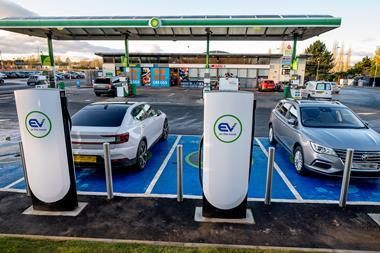
Last year, Shell added chargers specifically designed for eHGVs at its Markham Moor site, which is situated roughly 25 miles south of Doncaster and 25 miles south-east of Sheffield, adjacent to the A1.
More recently, it launched a new charging network for eHGVs, in conjunction with SBRS, a commercial vehicle charging firm it acquired in 2022. The new network aims to offer greater flexibility meaning eHGVs can charge at Shell Recharge sites, private chargepoints, semi-public depots and ‘roaming partner locations’ ie chargers operated by other providers. The overall aim of the scheme is to cut total cost of ownership of an eHGV by as much as 25%.
Rob Exelby reports that he is in ongoing discussions with Shell regarding introducing eHGV charging at his sites. “In principle, it looks good for small-scale charging (two to six charging bays, for example), but long-term transition for 1MVA chargers would require significant upgrades in electrical supply, well beyond what could be deemed practical or viable.”
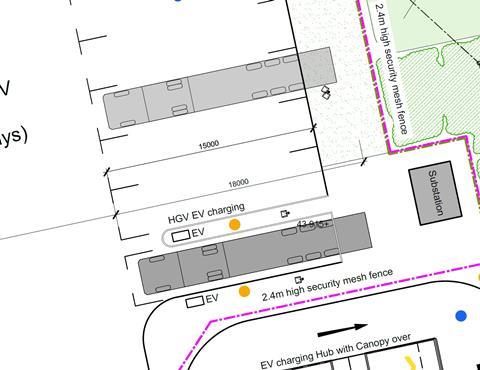
Another forecourt retailer who is gearing up for eHGVs is Dan Perry from Ron Perry & Son’s A19 sites; he has plans in for three eHGV chargers on his sites in the medium term. “This means that if eHGV suddenly takes off, we’ll be ready,” he explains.
However, there are hurdles to overcome with the practicalities of electric charging for big trucks. Perry says to rapid charge such a vehicle requires a megawatt charger.
My understanding is that charging an eHGV is very different to charging a standard EV. You can rapid charge an EV on a 350kW charger, whereas a 350kW charger used on an eHGV would be more of a trickle charge, because of the size of the batteries.”
He wonders therefore whether the eHGV process will go down the relay charging route, where drivers can charge for 45 minutes during one of their breaks, which might get them 100 miles further down the road.
“Perhaps the days of a lorry driver covering mass distances in one go will go by the wayside. It’s anyone’s guess as it’s all in its infancy at the moment. But Ron Perry Ltd wants to be at the forefront of the future fuels revolution. We’ve had a lot of conversations on the eHGV front and it’s going to be interesting to see which way it goes.”