















Forecourt retailers are renowned for reinvesting in and future-proofing their sites – and this includes the bits the public never see.
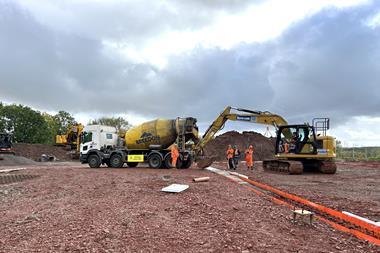
Tanks & Pipework Ltd aka FASS UK, recently worked on a major project in Melton Mowbray. FASS UK engineer Simon Procter takes up the story: “On this site we had three buried fuel tanks, two of which were double compartment. We had one large tank compartment and four smaller compartments. After a detailed assessment of the fuel flow in and out of the site, it was decided to baffle cut one tank to make two large-size tanks, which left two smaller compartments to accommodate the super grades of fuel.
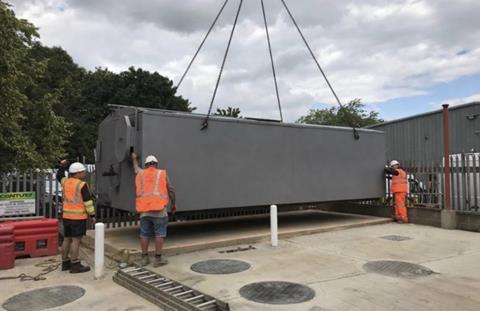
“To ensure the successful trading of the site moving forward, we added a 30,000l-litre capacity above-ground enclosed bunded steel diesel tank. The site is next to a busy dual carriageway so increasing the storage volume was a critical decision. The site was upgraded to a storage capacity of 80,000-litres which gave sufficient headroom for planning future efficient fuel tanker loads.”
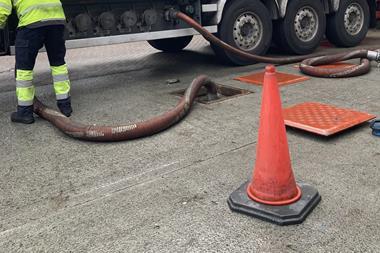
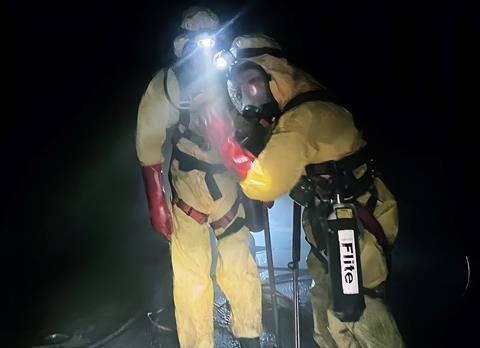
Procter says all fuel lines and vent pipelines were drained back and blown through, removed from the ground and disposed of. Each tank compartment was bottomed out, degassed, ventilated and cleaned.
“A full inspection was carried out and the internal structure was found to be in reasonable condition for 40-year-old steel tanks with only minor corrosion. Ultrasonic testing confirmed that there had been no noticeable degradation to the external shell plate. All buried tanks on site were ‘TRI-LINE’ lined and the FASS-UK 24/7 leak monitoring system was installed and commissioned, which means each tank/compartment is now permanently under test.”
Procter says the huge advantage with the lining system is a “beautifully smooth, easily cleaned, inspectable, non-corrosive bright surface” inside the tank which, when coupled with the strong steel tank is a great option for forecourts. And the lining system has the FASS-UK 10-year warranty.
The existing buried tank lids were serviceable and in good order with capacity for expansion so the team added additional suction flanges and fitted all new nitrile-based gaskets.
“We manufactured a new tank lid and security steel access chamber for the above-ground diesel tank. All the suction extract pipework was installed topside via the tank manlid/steel chamber,” he explains.
FASS-UK’s client required four fuel grades for cars and vans plus a fast fill commercial vehicle diesel pump. Tokheim Quantium delivery pump units were chosen for standardisation with the client’s other sites, which allows easier integration for head office administration.
Vast improvement
The vent risers for all buried tanks were relocated to the northern end of the site and a new offset fill point was installed for all tanks with vapour recovery between the fuel pump islands. Procter says this was a vast improvement on the previous direct filling at the buried tank farm and enabled the fuel tanker to easily travel into the tanker bay and exit the site without the site having to close because of the tanker maneuvering.
All new buried pipework installed was fusion welded, non-corrodible plastic pipework in line with the regulations for the fuel suctions, filling pipework, vent pipework and VR1/VR2 pipelines.
A full drainage survey was carried out and any blockages removed and repairs incorporated as necessary.
“The existing oil/water separator was in good order – an inspection and service were carried out prior to refilling. We added ACO drains around the tanker bay and offset fill points and the existing forecourt drainage was replaced because of its age.
“A large ACO was added for the road tanker stand and provision was made within the drainage plan for any future jet washes. The septic tank was upgraded as the existing chambers were very old and had low storage volume.”
At the tank farm, the company installed concrete block chambers and used large diameter composite heavy duty circular covers and frames which were sealed on to the chamber tops.
Interestingly, Procter says the company’s scope of work includes not just petrol forecourts but also commercial, industrial, aviation and marine with methods and products crossing industry boundaries.
“The fuel issues we see at forecourt level can be seen amplified in an industrial commercial setting and new interventions can cross over. For example, the floating suction units we use in aviation tanks we also use for reducing the transfer of microbial contamination from buried diesel tanks, because the fuel on a floating suction pipe is moved from the top of the fuel column and not from the tank bottom as with a conventional suction pipe.”
Five-step plan
Other companies that can help with your tanks and pipework include Eurotank Group. And if you’ve been taking an out of sight, out of mind approach to these important components, now is the time to put that right, says Jack Aplin, Eurotank Group sales director. He has a five-step plan to help you.
“Step 1: Ask yourself these questions: How old are my tanks and what are they made of? If you don’t know the answers, it’s time to find out. If they’re older than 35 years, it’s very likely that they’re single-skin steel tanks, and if they’re not being regularly cleaned as part of a planned preventative maintenance regime, it’s possible they have weak spots (as a minimum), which leads us to step two.
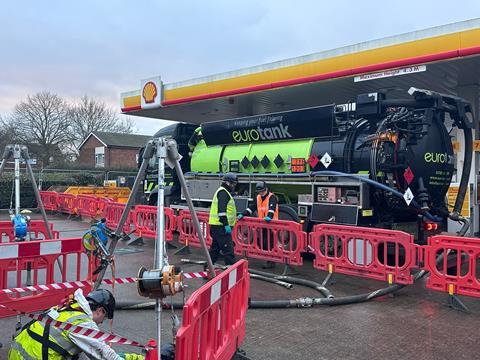
“Step 2: Get your tanks cleaned and inspected. Modern biofuels can cause corrosion in steel and Eurotank is seeing evidence of this on a weekly basis. The ‘I didn’t know’ defence isn’t going to stand up in court in the event of a tank failure causing pollution of the local environment and/or water course so find out what your risk is sooner rather than later.
“Step 3: Once properly cleaned, our team will carry out a thorough inspection, looking for areas of pitting and corrosion, as well as thickness testing of the tank wall to assess areas of possible weakness. This is followed by a full report with recommendations, or the team will move along to step four in the same visit if immediate action is needed.
“Step 4: If corrosion is found, Eurotank can make spot repairs and retest until the tank passes. We call this tank re-tightening.
“Step 5: In a minority of cases, a tank can be found in such poor condition that a minimum of a single-skin tank lining needs to be applied.”
Tank failure
Aplin explains that double-skin tanks weren’t mandatory in the UK until the 1990s so any site built before then will likely have single-skin steel tanks. “Without any secondary containment, tank failure of a single-skin tank can have huge consequences – both environmental and financial,” he warns.
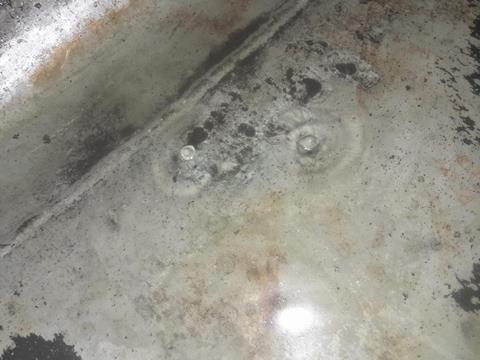
Aplin talks us through a recent case that Eurotank dealt with. “A jet of water appeared through a hole in a tank floor during a manned entry tank clean for a customer site in the north of England.
“Eurotank had been called to the forecourt after the filters on two pumps were getting blocked. The team discovered a leak as it removed sludge and compacted rust during the cleaning process.
“When the tank was emptied, a jet of water started coming up through the tank floor – the sludge and rust, which was causing the pump filters to block, had basically been plugging the hole.
“This leak point could have caused severe water ingress and vehicle breakdowns if it was not identified quickly enough through the gauging equipment.”
“The single-skin steel tank had never been cleaned before, but by carrying out proactive tank cleaning, the chance discovery has served as an early warning sign of things to come for this tank and others on the site.
“Single-skin steel tanks are at greatest risk of failure,” adds Aplin. “They are now at least 35 years old and unless regularly cleaned, a build-up of sludge and compacted rust could be masking significant corrosion.”