













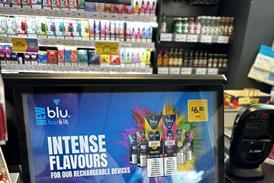









With smoking rates falling and regulation tightening, the nicotine category is being reshaped by dual-use behaviour, the rise of pouches and the shift to reusable vapes. Industry experts reveal how retailers can adapt to changing consumer habits and stay ahead of regulatory changes.
What are the main trends in tobacco?
Value is key with tobacco
How are pouches performing?
What role does flavour play?
Smoke-free is heating up
How is regulation affecting vape sales?
How should retailers prepare for upcoming regulatory changes?
What are the main trends in tobacco?
With smoking rates dropping, legislation biting and the illicit trade casting a shadow on the category, it’s tricky to find bright spots for retailers. Director of commercial operations at Philip Morris Limited (PML) in the UK and Ireland, Paul Dufourne, believes that growth will come from consumers switching things up. “Right now, one of the clearest trends in nicotine products is dual/poly-use. Adult nicotine users are choosing more than one product type as part of their routine. Some might use heated tobacco or a vape when they’re at home, then switch to nicotine pouches when they’re on the go. That mix-and-match behaviour is shaping demand in stores.
“Independent research conducted by KAM on behalf of Philip Morris Limited further highlights that legal age nicotine users seek variety. Findings show that 68% of independent retailers believe that success will hinge on offering a varied product portfolio – one that includes a full range of e-cigarettes, heat-not-burn products, and oral nicotine pouches, rather than relying on a single category as they may have done so previously with disposables.”
Dufourne says that retailers need to have a broad range to take advantage of this trend. “Adopting a multi-category product approach is critical if retailers are going to continue to meet different legal age nicotine users tastes and preferences amid changing legislation. Retailers have the opportunity to offer previous adult disposable vape users an alternative smoke-free option, preventing them from reverting back to cigarettes while also protecting their store’s bottom line. However, it must be supported by comprehensive information and education of the benefits of switching from cigarettes to better alternatives.”
Back to top

Value is key with tobacco
Rising cost of living is affecting all of us, even smokers. To help consumers feel like their money is going further, brands have been focusing on value options.
Marketing director at JTI UK, Lisa Anderson, explains how important a value proposition is. “With existing adult smokers increasingly influenced by price and with the cost-of-living crisis putting pressure on consumer spending, this has led to an increased demand for ultra value products, which lead the way in terms of share growth – currently standing at 20.5% of the combined tobacco market. Existing adult smokers are actively seeking premium quality products at a lower price point. That’s why we continue to innovate our value product offering. Launching new options from existing brands such as Mayfair Gold, meets demand and helps retailers drive sales, maximising sales in this important category.”
Head of marketing at Scandinavian Tobacco Group UK, Prianka Jhingan, agrees about value but urges retailers to consider it in next generation products as well. “Price point certainly remains important because the search for value is often a motivating driver of purchase for nicotine users. That’s why I always think it’s worth mentioning that our XQS nicotine pouches have an RRP of just £5.50, which is less than most of the other big pouch brands on the market.”
Back to top

How are pouches performing?
Big sales are coming from these small pouches as the sub-category continues to grow in the independent channel. JTI UK’s Anderson details the size of the prize. “The next gen pouches category continues to show significant growth and is now worth £8million a month in convenience and independents and £17.8 million a month total. We’ve seen this growth in our next gen brand Nordic Spirit which is now worth £5.3 million a month. As the second largest nicotine pouch brand in all outlets in the UK, and with a 27.7% market share, retailers can boost sales in this highly profitable and rapidly expanding category.”
Dufourne says the growth of pouches is another way that consumers are looking for a multi-product approach. “ZYN is a great example of how we are addressing variety. It’s a premium option but priced competitively for retailers and consumers. Its sleek new pack design lifts it visually into the premium space, while the expanded choice of strengths and flavours – including Spearmint and Apple Mint – launched in June – speaks to what adult pouch users are actually asking for. In this way, we’re bridging the gap. We offer a premium experience, the reassurance of choice, and the accessibility that keeps responsible adoption growing.
“In the UK, ZYN’s popularity has seen significant growth – ZYN nicotine pouches, in particular, saw a 497% increase in sales volume between December 2023 and December 2024.”
Jhingan says that pouches are benefiting from the disposable vape ban. “Nicotine pouches are fast becoming a key part of next gen nicotine. Following the disposable vape ban last summer, both tobacco smokers and increasing numbers of vapers are now entering the nicotine pouch category in growing numbers, with sales increasing accordingly. Our latest data shows total UK nicotine pouch sales have now reached £205.7m and are growing by 60% YOY in volume terms. Although more sales currently take place in the grocery channel, they continue to grow fastest in the convenience channel. In fact, our latest data show pouch volume sales have grown by 69% in the last twelve months in convenience stores, with our own XQS selling particularly well in this channel.”
Back to top
What role does flavour play?
With vaping designed to be a smoking cessation tool, flavours are a big part of helping consumers move away from traditional tobacco and need to be considered by retailers. ELFBAR’s associate general manager at ELFBAR, Angelo Yang, explains how vital variety is. “Flavours are increasingly important in helping smokers and ex-smokers transition to vaping as part of their quit journey. A December 2025 survey shows that the majority (63%) of regular adult vapers in the UK are now using fruit and other sweet flavours most often to quit smoking, up from 48% in December 2024 – a 31% increase in the past year. Additionally, 71% of vapers say that access to a variety of flavours helps them stay off tobacco or reduce smoking.
“Fruit-led profiles, particularly flavours like Pineapple Ice, Cherry Ice and Blueberry, continue to dominate adult preferences. Retailers should prioritise fast-moving flavours while retaining a balanced range to reflect different adult preferences, refined over time in line with sales performance and customer demand. Range reviews should prioritise best-selling flavours, give extra facings to high-turnover lines and remove slow movers to optimise sales and shelf space.”
Back to top

Smoke-free is heating up
As the category evolves, smoke-free products increase in popularity. PML’s Duforne explains how IQOS is helping retailers adapt to these changing trends.
“IQOS is a leading smoke-free alternative for those directly transitioning from cigarettes, so much so that of the brand’s 33.8 million users across the world, 22.4 million adult smokers have stopped burning tobacco entirely, heating it instead with IQOS. Revenues overtook Marlboro in early 2024, a real signal of where the market is heading. Smoke-free products make up more than 40% of our total revenues.
“As a brand, IQOS owns the heat-not-burn category, generating 95% of volume sales in the UK. Nearly 50% of UK nicotine users recognise the IQOS brand[1], and this level of awareness has led to more adult smokers switching to IQOS ILUMA. The UK is at a pivotal moment in its journey towards a smoke-free future; a downward trend in demand for combustible tobacco indicates a steady, but continuing decline in smoking itself.”
Back to top

How is regulation affecting vape sales?
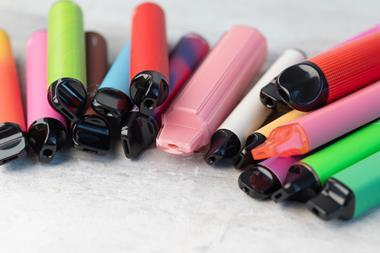
The disposable vape ban came into effect last June and caused seismic upheaval in the category. Nine months on, how has it balanced out in the sector? Yang explains. “Six months following the single-use vapes ban and a recent survey of 6,000 UK adults and smokers show that the majority of daily adult vapers have adapted, with nine in ten (90%) now using reusable devices, helping to stabilise the category. Among this group, 86% of ELFBAR and LOST MARY users are purchasing separate refills, with only 7% buying a new kit each time, reinforcing the role of refills as the new mainstream and strengthening the importance of in-store visibility and availability.
“With single-use vapes banned, reusable prefilled pod kits and their refills have become the dominant format in the vaping category, while high puff count products remain the fastest-growing segment, increasing their share from 10% to 36% over the past year across the total vape market.
The regulatory-driven shift to reusables has also reshaped purchasing behaviour and category performance. The significantly lower cost of refills for reusable prefilled pod kits across all device sizes, compared with buying a new device, has reduced consumer purchase frequency. As a result, overall category value has declined, even as volume has grown through sales of refill pods and containers.”
Back to top
How should retailers prepare for upcoming regulatory changes?
Between the generational smoking ban and the vape duty as well as last year’s ban on disposable vapes, retailers would be forgiven if the category is becoming a regulatory minefield.
Yang outlines what’s coming down the line and what retailers should be doing to stay on the right side of the law. “With the Tobacco and Vapes Bill still progressing through Parliament, key details that will affect retail operations and influence consumer behaviour are yet to be confirmed.
“The expected introduction of a retail licensing scheme for vaping products and confirmation of a vape duty from October will place greater emphasis on compliance and responsible retailing across the supply chain, from sourcing and distribution through to point of sale.”
Yang says retailers need to accept support from as many sources as possible. “Retailers that follow legislative developments, partner with compliant suppliers and brands, and prepare early for regulatory change will be best placed to navigate change.
“A commitment to compliance and responsible retailing is critical to futureproofing the vape category as it influences public trust, regulatory oversight and the long-term viability of the category. Robust age verification practices, ensuring only fully compliant products are stocked and accompanied by refills, meeting recycling obligations, and reporting suspicious activity to Trading Standards or anonymously to Crimestoppers (0800 555 111) all contribute to the category’s credibility.”
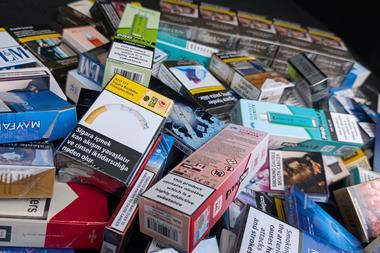
PML’s Dufourne says retailers felt the impact of the ban on disposable vapes but warned them not to be tempted by illicit products. “A 2025 Philip Morris survey revealed that 82% of independent retailers felt it was either ‘likely’ or ‘strongly likely’ that the illicit market for disposable vapes may increase after the ban on disposable e-cigarettes. Illicit products can contain unknown ingredients and lack the quality and standards found with legitimate alternatives. Retailers concerned about stocking compliant products can rely on our field reps and the PMI OPEN platform for reliable guidance. This comprehensive support ensures retailers can navigate the market confidently and avoid illicit products.”
Back to top











No comments yet