













At the pump, reliability has always been fundamental to a petrol station’s performance, but in today’s environment of tighter margins and rising customer expectations, its importance is only increasing.
That’s the view of Tim Firkins, senior key account manager at Dover Fueling Solutions (DFS).
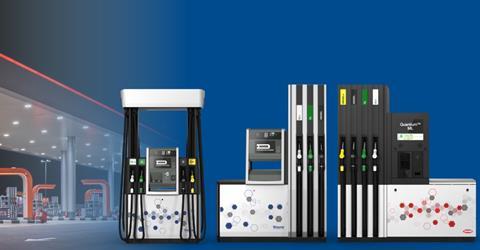
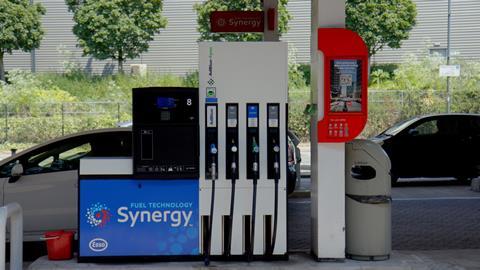
“The dispenser sits at the centre of the forecourt experience. It is the most visible and typically the most frequently used asset on site, so its performance directly shapes how customers perceive a brand.
“On top of that, the dispenser is such a central part of the fuel station experience, usage is expected to be absolutely seamless. Even small delays or issues quickly become noticeable. Whether it’s a slower start to dispensing, a temporary fault taking a dispenser out of service, or minor interruptions during a transaction, these issues can create major friction for customers. When sites are busy, they can quickly build into longer queues and reduced throughput. Over time, even a difference of a few seconds per transaction can have a meaningful cumulative impact.”
Firkins says reliability, speed and ease of use are therefore critical. “A dispenser that performs consistently under pressure not only keeps traffic moving but also helps maintain customer confidence, particularly during peak periods, and improves forecourt brand loyalty.”
Long-term performance
When selecting new pumps, he says reliability and long-term performance should be at the forefront of decision making.
“While upfront cost is an important factor, it needs to be balanced against total cost of ownership (TCO). Dispensers are long-term assets and their value is ultimately determined by uptime, maintenance requirements, service support and operational efficiency over time.
“Higher quality equipment can deliver clear advantages here, helping to minimise downtime, reduce service interventions and maintain consistent throughput, especially during periods of high demand. Integration is another key consideration. Dispensers need to work with existing payment and site systems, and modular equipment can help avoid unnecessary friction during installation.”
Firkins adds that retailers should also think about future requirements. “With timelines around petrol and diesel vehicle phase-out continuing to evolve, fuel stations are likely to operate mixed-fuel environments for longer than previously anticipated. This makes long-term flexibility even more important. Dispensers purchased today will need to perform reliably over many years, while also adapting to gradual shifts in fuel demand and site configuration. Investing in modular, upgradeable technology can help ensure that infrastructure remains fit for purpose as the market evolves.”
In addition, the user experience should not be overlooked. A clear, intuitive interface combined with reliable performance at the pump helps remove friction for customers and supports overall site efficiency, explains Firkins.
Fill up and move off
Eurotank’s group sales director Jack Aplin is with Firkins on the importance of customer expectations: “Customer experience is everything nowadays and from a refuelling point of view, motorists want to get in and off the forecourt as quickly as possible.
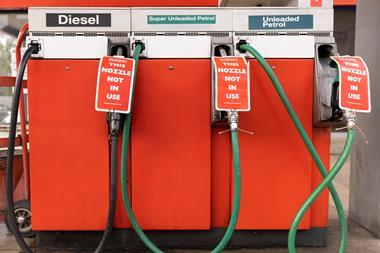
“No one really wants to go and fill up their cars, especially not at the moment while fuel prices are so high, so making that experience as painless as possible should be a priority. That means keeping on top of maintenance to ensure pumps aren’t running slow, keeping nozzle availability high – no one wants to see the dreaded yellow out-of-action tags – and making sure the area is clean, tidy and stocked with gloves and paper towels.”
When it comes to new pumps, Aplin says they might not be as expensive as you think. “There are a lot of good reasons for buying new pumps – and even with the push towards electric charging, petrol and diesel pumps will be needed for years to come. New pumps straightaway give the motorist confidence that you have invested in your site. People might say a set of new pumps is expensive but you can have them for 25 years. They sit there and they really add to the presence on the forecourt.”
He says another key point is that new pumps will generally pump faster than old pumps: “Usually, when a driver gets out of their car, they know how much petrol or diesel they intend to put in. Let’s say it’s £40. If the pump is slow, people get fed up, they’ll just put in £20 and go elsewhere. This means that if you put new pumps in, your volumes could go up based on having faster pumps that people would use to put in their intended amount – or even more. They could have intended putting in £40-worth of fuel but before they knew it, they had put in £50 because it was pumping so fast.”
Tom Buckley, general manager at Pricewatch, has recently had repumps at four of his sites.
He says: “The pumps across the sites were very old. They were constantly breaking down and it was hard to get parts for them. In addition, one site had a complete refurb and changed layout and the old pumps wouldn’t have worked there any more.
“We chose Mepsan for a few reasons: price; the five-year warranty; and our strong relationships with both Eurotank and the owners of Mepsan.”
Buckley says the repumping went very smoothly with the pumps removed in sections. The smaller sites had to close, but closures were kept to a minimum. On the bigger site the repump was done in two halves so it was able to stay open.
“The new pumps are good and very fast, which customers comment on. They look smart and modern and are easy to keep clean.”
Aplin says new pumps mean less meter drift and fewer maintenance costs.
“When you put in new pumps you get a warranty and, generally, like buying anything new, they don’t break down for a number of years. So, you have much more uptime, fewer yellow tags on pumps and lower service contract costs.”
Mepsan pumps were introduced into the UK market by Eurotank five years ago. These are described as a “cost-effective alternative” to the well established brands, but price isn’t the only benefit. Mepsan pumps are built with an integrated vapour recovery pump and motor component. This single component contains both the pumping unit to pump the vapour recovered from the nozzle and the motor to drive the pump. This development removes the need for a belt between two individual components, which is standard in the industry.
Aplin says: “For a maintenance company this is a brilliant development as it significantly reduces lifetime servicing costs and improves equipment uptime. The cost of maintaining Stage 2 vapour recovery can be more than maintaining the rest of the pump so it’s great to see Mepsan developing components to reduce that.”
Reliability
Another Top 50 Indie, Platinum Retail Group, repumped four of its sites last year.
Operations director Sathish Babu Chinnaswamy said the pumps on those sites (a mixture of Gilbarco and Tokheim) were old and kept breaking down .
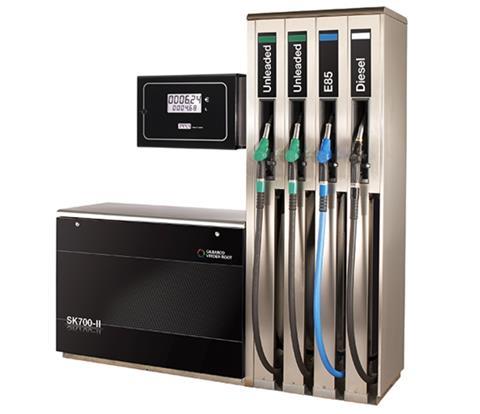
“When choosing new pumps we were looking for reliability, cost and a service/maintenance package. We chose the Gilbarco SK700s which come with a three-year warranty,” says Chinnaswamy.
He says the repump went smoothly with sites only partially closed during the installation. And customers have noticed the change, commenting favourably on the speed of the new pumps.
Finally, DFS’s Firkins reminds forecourt retailers that pumps are not standalone pieces of equipment. “Their performance is closely tied to a wider ecosystem of technologies, including payment systems, connectivity and site software. In practice, access to real-time performance data, from flow rates to error alerts and system uptime, allows operators to spot and address issues earlier, before they impact the customer experience. This moves sites away from relying solely on manual checks or on-site feedback, enabling a more proactive approach to maintenance that helps reduce unplanned downtime and keep dispensers performing consistently.”