



















Last month, anti-crime technology hit the headlines for all the wrong reasons when a customer at Sainsbury’s Elephant & Castle store was told to leave because facial recognition software had identified him as an offender.
However, Sainsbury’s was quick to acknowledge that this wasn’t caused by an issue with the tech but rather human error with the wrong person approached in its store.
The grocery giant uses Facewatch, which boasts a 99.98% accuracy rate. All matches that the tech flags are reviewed by trained managers, with additional training to ensure safeguards are consistently followed. A Sainsbury’s spokesperson says this is the first incident they’ve had of someone being wrongly approached by a manager in store.
And results from its stores that trialled the technology were “encouraging”, with a 46% reduction in logged incidents of theft, harm, aggression and anti-social behaviour, with 92% of offenders not returning to its stores.
When the incident at Elephant & Castle arose, Facewatch’s data protection team followed the usual process to confirm the man’s identity and verify that he was not on its database and had not been subject to any alerts generated by Facewatch.
Human error aside, a YouGov survey of more than 2,000 adults, commissioned by Facewatch, found strong public support for live facial recognition tech in retail settings, particularly where it is used to protect shop workers and deter repeat offenders.
Nick Fisher, CEO of Facewatch, says: “No retail employee should go to work expecting to be threatened, abused or assaulted. The public clearly recognise that shop workers are often the forgotten victims of rising retail crime, and they support practical, lawful steps that make stores safer.”
Fisher says support for the tech is even clearer when safeguards are explained:
• 70% of those surveyed by YouGov said they are more comfortable with facial recognition if they know their data is deleted immediately unless they are a known offender.
• 66% said they would support the use of facial recognition cameras in shops if images were only retained for known repeat offenders.
“There is a lot of misinformation around live facial recognition in retail. What this research shows is that once people understand that the system only retains data on known repeat offenders – and deletes everyone else’s data immediately – support is strong,” says Fisher. “Continued education about how the technology actually works is key, and we recognise we have a responsibility to be leading that charge.”
PROMOTIONAL CONTENT

VARS Technology facial recognition
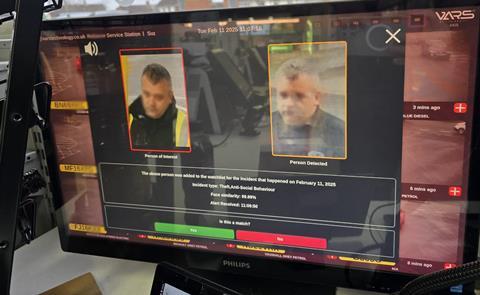
VARS Technology delivers comprehensive in-store protection with VARS Facial Recognition, alerting staff to problem individuals the moment they set foot in the premises. Safeguarding stock against theft and protecting staff from aggressive or anti-social behaviour, all whilst avoiding disruption to the shopping experience for customers. Shared alerts mean that all sites using the VARS system benefit from combined protection, with more serious incidents shared over a larger geographical area.
VARS offers a UK-based support line for customer sites, as well as a network of more than 40 engineers across the UK to ensure that installation, as well as any maintenance or repair work, is carried out quickly and efficiently.
Before being added to the watchlist, evidence is reviewed by trained members of the VARS team to ensure that the use of facial recognition is fair and accurate. Any personal data, including biometric data from facial recognition, is handled in full compliance with Data Protection requirements. VARS Technology holds ISO 27001 certification, an international standard that ensures rigorous information security is embedded into everything the business does.
https://varstechnology.co.uk/facial-recognition/

Proportionate and necessary
John Garnett, a director at VARS Technology, says data protection regulations require the use of facial recognition to be proportionate and necessary.
“We regularly review our systems and processes to ensure they are fair, accurate and compliant. Incidents are manually reviewed for accuracy, and any alerts are given a weighted score of severity before they are shared to other locations. The theft of a chocolate bar might only be shared to other shops in the immediate vicinity, whereas violence against staff would be shared more widely.”
Garnett explains that facial recognition doesn’t capture images of faces. Instead, it scans individual’s faces and converts that scan into biometric data that can be compared to an existing watchlist of problem individuals. If the system doesn’t find a match, the biometric data is deleted.
“Facial recognition systems are highly accurate, and thankfully incorrect matches are extremely rare. On the very rare occasion that a customer is flagged incorrectly, their experience from that point comes down to effective staff training. This should be no more than a polite conversation with a staff member where the problem is promptly resolved, rather than a confrontation.
“Before an individual is added to the watchlist, retail staff are required to provide comprehensive evidence that is reviewed by a trained member of VARS staff. This ensures that customers are not added to the watchlist incorrectly.”
Less disruptive
Garnett believes facial recognition offers a much less disruptive shopping experience compared to many other forms of in-store security. “Many anti-theft measures, such as entrance and exit barriers, display lockers or security boxes, can be effective but they also impact on the customer experience. With facial recognition, ordinary customers can go about their visit without disruption, while problem individuals are still effectively targeted.”
He says VARS has found that aside from alerting staff to problem individuals, the presence of the system and the signage that makes customers aware of it, is an effective deterrent in its own right. “Shelf signage placed close to frequently targeted items is particularly effective, and often enough to make potential thieves think twice, even if they haven’t been previously added to the watchlist.”
Garnett adds that facial recognition tech is not a one size fits all solution: “Not all forecourts require that level of protection. For small, low-footfall forecourts that only experience a small amount of crime and disruption, the cost of installing and operating facial recognition may not make sense.
“That being said, facial recognition is typically one of the most cost-effective anti-theft tools in terms of the impact it offers. At VARS Technology we offer a sliding price scale where retailers only pay based on monthly activity. This helps to keep the cost down and keep the system accessible and cost-effective for smaller retail sites.
“The other aspect that impacts on how effective facial recognition will be is how much shared protection it can provide over a given area. Clusters of retailers using the same system provide added benefit via shared alerts following incidents, ensuring staff are aware of potential threats in their area.”

Doubling up
Ben Lawrence has two Facewatch cameras at his BP Sholing Southampton forecourt. At first he had just the one at the door but thieves soon realised it was there and just hid their faces when they went into the shop.
The second camera – in the meat aisle – has caught thieves out as they haven’t noticed it’s there.
“The second camera is very hard to spot so it’s definitely worth having,” he says.
Lawrence also has security on the door, which costs him around £30,000 a year. “We use a third party and they provide us with a guard who does random eight-hour shifts on Friday and Saturday evenings. It is a deterrent but it’s not great having to spend tens of thousands of pounds just to keep an eye on our stock. I’d rather invest the money in more staff.”
Many of the thefts amount to £50-60 at a time which quickly adds up. Such is the theft at Southampton that only empty coffee jars are out on display; if a customer wants to buy coffee they have to ask at the till. Likewise, high value items like meat, baby milk and boxes of chocolates are single faced and have Chirp anti-theft tags on them.
Chirp Protect uses tamper-proof digital tags to protect high-theft products such as wine, spirits, meat, coffee, detergents and motoring accessories. Each tag has a loud on-product alarm that continues post-exit, aimed at reducing theft and keeping staff safe. Alarms can integrate with CCTV and staff headsets.
MFG reports impressive results with Chirp Protect while the manager at one Rontec site said that during the Christmas holidays, shoplifters walked in and left with nothing thanks to the tags.
A Chirp Protect spokesperson says: “Forecourts using Chirp Protect report up to 60% less theft, fewer repeat incidents and safer staff. With adoption growing across UK forecourts and convenience stores, it’s a practical, modern alternative to outdated EAS systems.”
Meanwhile, Lawrence says staff are keen to help with the crackdown on theft and will use part of their lunch breaks to monitor the CCTV system.
And the staff themselves can be a good deterrent: “We always have staff wandering the shopfloor and they can’t come off unless they have a replacement,” says Lawrence.

Staff safety
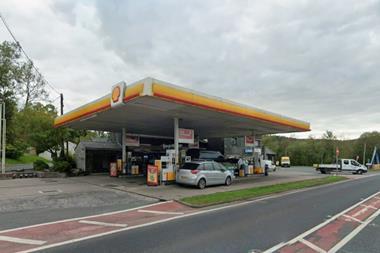
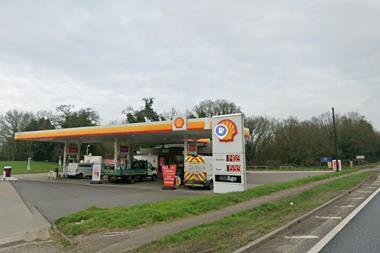
Tom Highland at the Highland Group has been successfully using body cameras at his Greenfield Service Station on the A505 dual carriageway near Royston.
“Cameras have been a really good deterrent when dealing with rude and aggressive customers. If I’m being totally honest, the main reason they work is because nobody wants to look like an a******* on social media. And the staff definitely feel safer wearing them.”
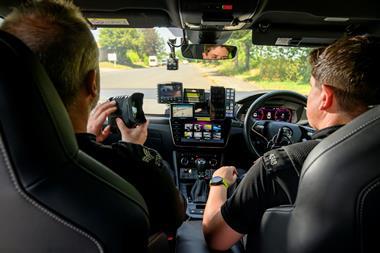
RS Sales & Distribution provides Highland with the cameras. The company’s business development director, Mark Hayfield, says: “Body cameras are all about investing in your staff. Tom has four cameras for staff at Greenfield and they act as a great visual deterrent. Staff have to alert the customer before they switch on to record them and in most cases once they have told the person this, they usually back down.”
Once the camera is put back on the charging dock, it downloads footage to a cloud storage space so it’s available if needed. Rrp is circa £350 per camera,
At Greenfield, Highland also has vibration sensors in the walls in the office and in the glass front of the shop to help prevent break-ins. “Having these means our alarm would be activated upon the first hit of a hammer when someone tried to get in. This will in turn call the police and set off our smoke cloak.”
Highland gets this equipment from South East Security. The company’s MD Jamie Purcell says: “Vibration contacts are small detectors fitted to windows or door frames that pick up the vibration caused by someone trying to force entry, smash glass or attack the frame.
“The idea is the alarm activates before they actually get inside. Installation is simple, the sensor is fixed to the frame, wired or wirelessly paired to the alarm system and then the sensitivity is calibrated and tested so normal movement doesn’t set it off. This usually only takes a few minutes per device.”
Purcell says cost wise, they’re typically around £60 to £120 per sensor installed, depending on the system and access for wiring.
Of course, with any deterrents there can be a worry that criminals will learn to bypass them but Purcell says with the sensors, it’s unlikely. “They’re designed to detect the vibration from physical attacks and on a properly designed alarm system they’re only one layer of protection, alongside door contacts and internal detectors, so avoiding them completely would be very difficult.
“We often also recommend pairing detection devices like these with other deterrents including smoke cloaks which render thieves blind if they do manage to force entry.”
Smoke cloak or “fogging” systems are security fog generators that fill a room with a thick fog if the alarm is triggered. Within a few seconds the visibility drops to almost zero, meaning the intruder can’t see what they’re doing and so they usually leave immediately.
Says Purcell: “Installation involves mounting the unit high on a wall or ceiling, connecting it to the alarm system and programming it so it activates on confirmed alarm events. It also needs a power supply, battery back-up and a quick test during commissioning.
“Cost varies depending on the size of the room being protected, but typically you’re looking at around £1,500 to £3,000 installed for a standard retail or commercial unit.”
Again he says getting around these would be very difficult. “Once the fog deploys, the room becomes completely disorientating within seconds, so even if someone expected it, they still can’t see well enough to steal anything. That’s why they’re often used in jewellers, phone shops, and high-risk retail sites as an extra layer on top of alarms and CCTV.”