Getty strait of hormuz

Source: Getty 

Events in the Middle East could affect your insurance cover

War clauses are standard exclusions in most commercial insurance policies. Put simply, that’s because insurers would not be able to afford to cover damages as a result of war.

So what you might say – we’re not at war so it doesn’t affect me. However, we’ve already seen with regards to rising prices – at the pump and in the shop –  that what’s going on in the Middle East is affecting us all.

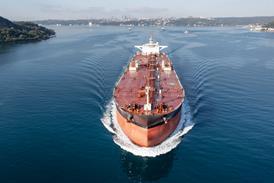
Niraj Mamtora, director at Forum Insurance, explains: “At the beginning of March, war-like activities threatened ships passing through the Strait of Hormuz. As a result their insurers suspended their insurance, and uninsured ships don’t sail due to the risk of being directly or indirectly damaged. This has created a secondary supply shock that affects forecourt operations in the UK.”

Years ago, war had to be declared by a sovereign nation for insurers to remove cover. Today, “war-like events” can result in losses caused directly or indirectly, for cover to be restricted and claims to not be paid out. For forecourt retailers, this creates several practical gaps in insurance coverage:

  • Business Interruption Cover: If fuel supply is delayed due to the conflict, the resulting loss of income is typically not covered if the root cause is classified as war.
  • Terrorism vs war: If damage to a site is caused by terrorism (and there is cover for terrorism in place), it will often be covered. However, if an incident is deemed an act of war, insurers can decline the claim
  • Cyber threats: This is becoming increasingly relevant. If a cyber-attack affecting pumps or payment systems is attributed to a state actor, war exclusions may apply
  • Physical damage: Any damage linked to military activity or conflict is generally excluded. 

“In short, war clauses remove cover at the point where geopolitical risk becomes the cause of loss,” says Mamtora.

War clauses are triggered when insurers determine that a loss stems from:

  • Declared or undeclared war 
  • Military action or invasion 
  • Hostile acts by a sovereign state 
  • State-backed cyber activity 

This is not limited by geography. A UK forecourt can still be affected if the cause of loss is linked to a war-related event elsewhere. The key issue is causation, not location.

Mamtora says insurers don’t notify retailers when war clauses are triggered. “War exclusions are already built into policy wordings. Insurers do not issue formal notices stating that they are “activating” them,” he explains.

In most cases:

  • The clause becomes relevant at the point of claim 
  • Retailers only become aware of its impact when a claim is reviewed or challenged 

Some brokers and insurers may provide general market updates during periods of conflict, but there is rarely a specific notification at policyholder level.

Getty tankers in strait of hormuz

Source: Getty 

Tankers queuing in the Strait of Hormuz

Can retailers protect themselves against these risks?

Options are limited, but there are practical steps retailers can take:

  • Review policy wording carefully: Pay attention to exclusions around war, cyber and terrorism. 
  • Consider terrorism cover: Terrorism cover is not automatically included as part of insurance policies and operates as a separate purchasable cover.
  • Scrutinise cyber insurance: Many policies now include explicit exclusions for state-backed attacks.
  • Focus on operational resilience: Insurance will not cover all geopolitical risks, particularly supply chain disruption. 
  • Work with a specialist broker: Forecourt risks are complex. Clear advice helps avoid unexpected gaps. 

There is no comprehensive solution that replaces cover excluded under war clauses.

April renewals

April remains a key renewal period in the forecourt sector.

Current market conditions suggest:

  • Continued insurer caution due to global instability 
  • Ongoing pressure from claims inflation (materials, labour, rebuild costs) 
  • Increased scrutiny of risk information at the underwriting stage. 

Retailers should review their insurance coverage and increase their cover with inflationary growth in mind rather than accept an automatic renewal.

In many cases, premiums are likely to increase but increases are not uniform.

  • Higher-risk sites are more exposed to pricing pressure 
  • Well-managed businesses with strong risk controls and good claims history may see more moderate adjustments 
  • Inflation is on the rise – as your index-linked cover increases, so will the premium.

The market is stabilising compared to previous years, but pricing remains firm overall.

Tips for retailers at renewal

Retailers should approach renewals proactively:

  • Check rebuild valuations to avoid underinsurance 
  • Present risk clearly (security, environmental controls, procedures) 
  • Review cover scope, not just price 
  • Use a broker with forecourt expertise 
  • Stick to known insurers backed by the FCSC scheme and regulated by the FCA. 

A structured approach can materially improve both terms and pricing.

“The Iran conflict highlights a gap many retailers don’t realise exists,” says Mamtora. “Insurance protects the asset, but it doesn’t protect the business from global shocks. When looking forward, expect geopolitics to make your insurance policy contain more exclusions, more scrutiny, and more pricing fluctuations.”